Arts, Music & Dance
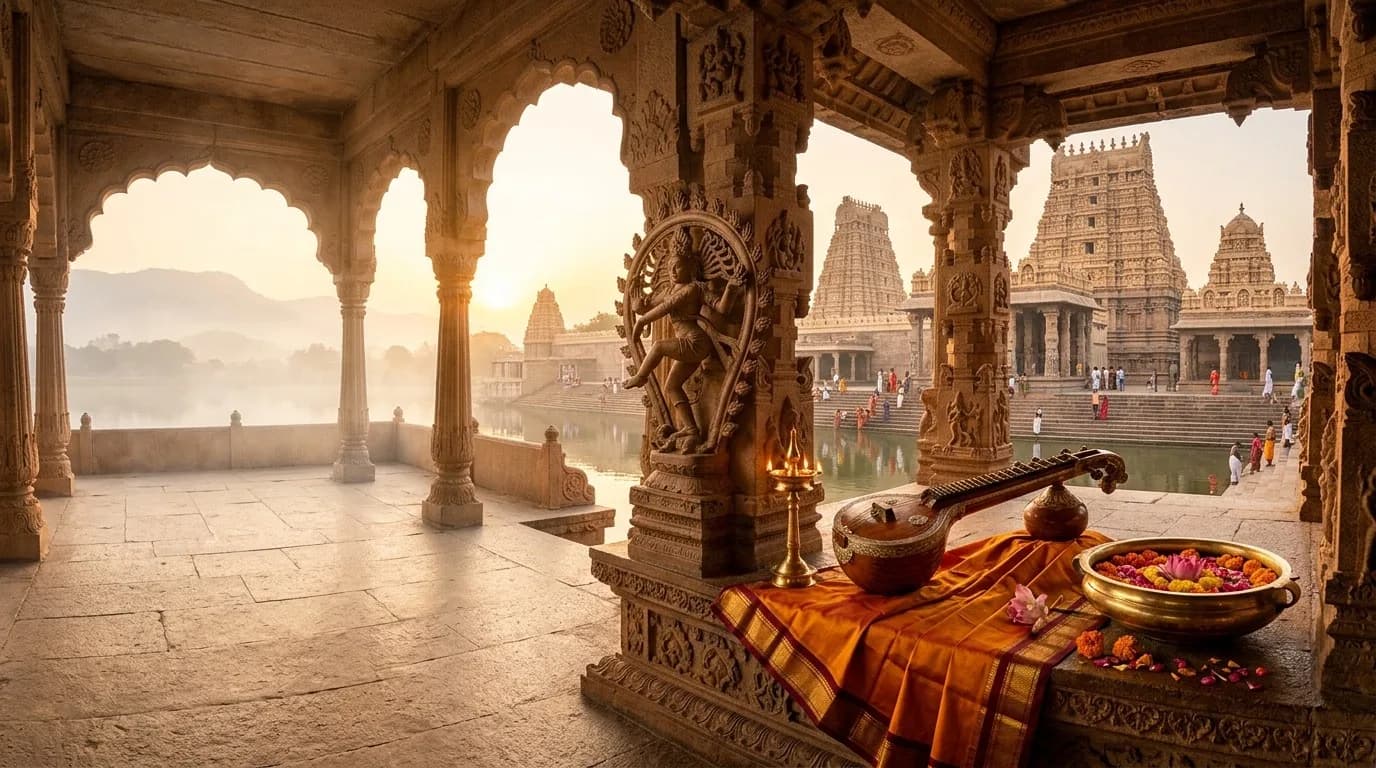
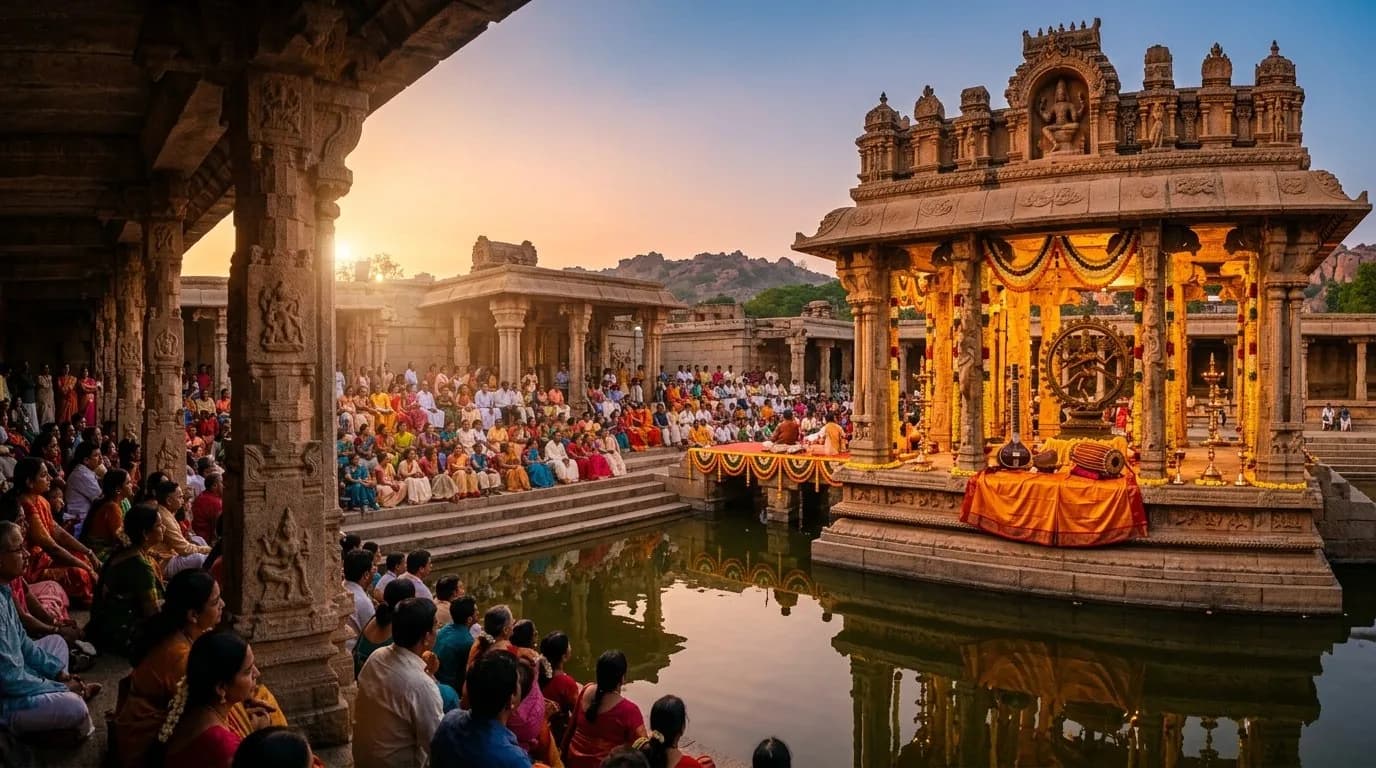
Classical Ragas, Natya Shastra dance forms, folk rhythms, and traditional visual arts that celebrate the divine.
Discover the art, music, dance, architecture, languages, and everyday customs that bring India's rich cultural heritage to life. Explore the regional traditions, creative expressions, and sacred knowledge that connect generations.
Our Heritage. Our Responsibility. Our Tomorrow.
कला, संस्कृति और परम्परा — भारत की जीवंत आत्मा ।
From classical arts and regional crafts to historic architecture and everyday customs, discover the diverse expressions of India's living heritage.

Classical Ragas, Natya Shastra dance forms, folk rhythms, and traditional visual arts that celebrate the divine.

A rich tapestry of distinct regional customs, architectural styles, vernacular languages, and local traditions.

The spiritual meaning behind traditional attire, sacred threshold art, hospitality, and daily life rhythms.

Sacred stone temples, subterranean stepwells, mountain forts, and ancient cities engineered in sacred harmony.

The ancient science of the Six Tastes (Shad Rasa), regional agricultural staples, festive feasts, and sacred offerings.

Time-honored handlooms, lost-wax bronze casting, indigenous pottery, and guild knowledge passed across generations.
The science of Nada Brahma, Ragas aligned with specific times of day, and microtonal Shrutis.
Natya Shastra, Abhinaya, and the metaphysics of embodied movement across eight living lineages.
Sacred visual art from Ajanta murals to Tanjore gold-leaf paintings and regional miniature schools.
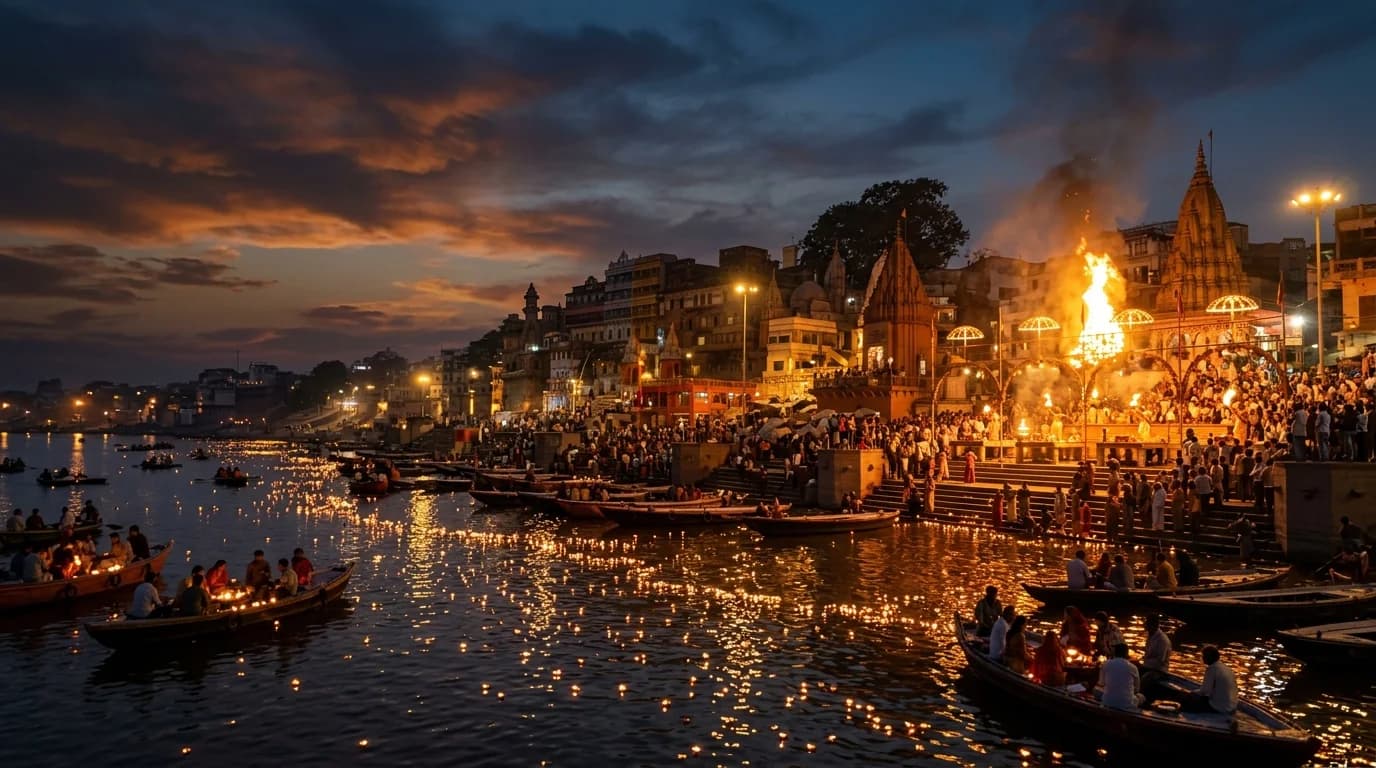
Himalayan Kath Kuni architecture, Awadhi needlework, and sacred riverfront ghat rituals.
Chola monolithic vimanas, Kanchipuram temple-border silks, and daily threshold Kolam arts.
Subterranean water sanctuaries, Patan Patola double-ikat, and vibrant Maratha citadels.
Bishnupur carved clay temples, Jamdani muslins, and lyrical Odissi temple sculpting.
The mathematical and spiritual significance of morning threshold rice-flour drawings.
Why dhotis, sarees, and angavastrams are preferred for meditation and sacred worship.
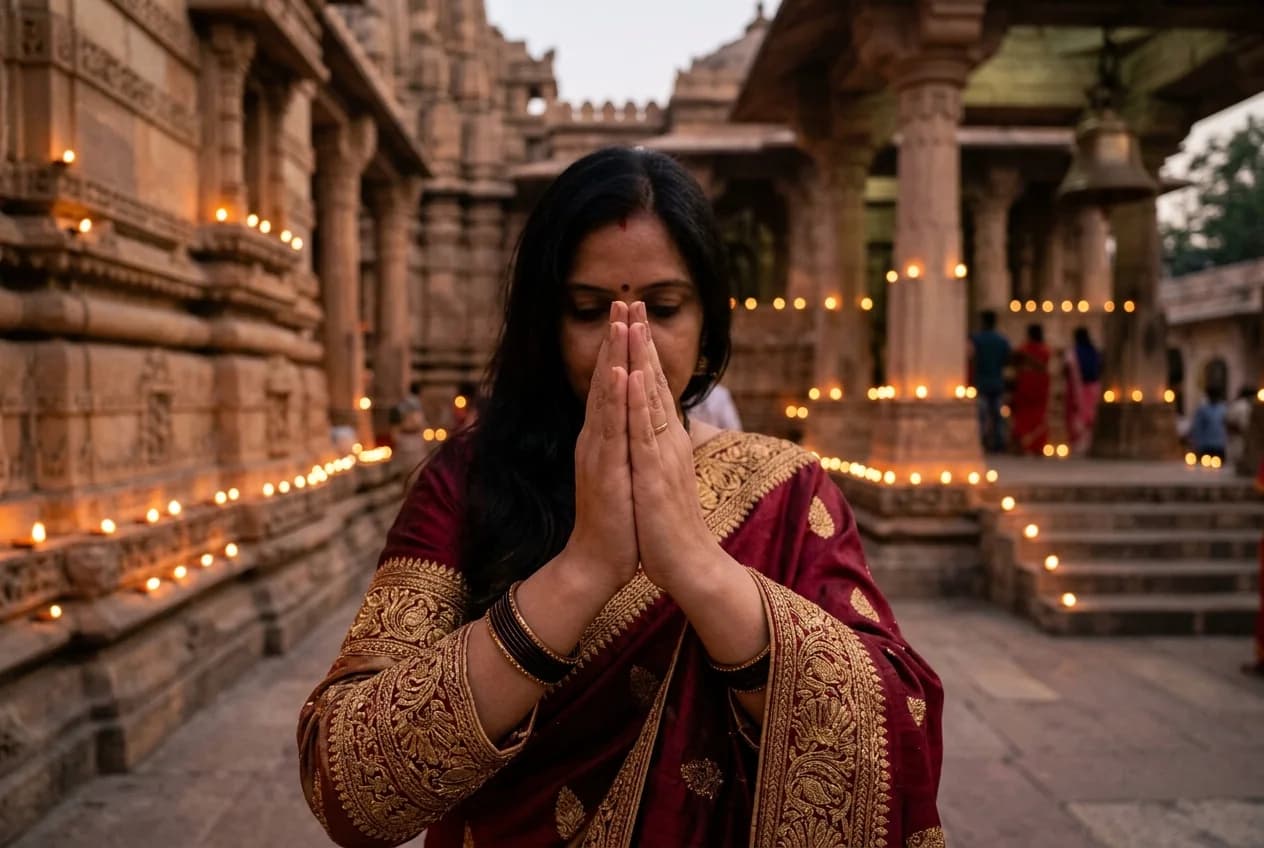
The metaphysical ethos behind welcoming guests and joining palms in Anjali Mudra.
Cosmological diagrams mapped into interlocking granite and sandstone mountain peaks.
Ingenious desert hydro-engineering that merged aquifer conservation with sacred art.
Balancing sweet, sour, salty, pungent, bitter, and astringent notes for holistic health.
The centuries-old tradition of offering food as Naivedyam before community Annadanam.
The mathematical complexity of Banarasi, Kanchipuram, Patola, and Chanderi weaves.
The unbroken Madhuchishta Vidhana method casting divine bronzes since antiquity.
India is a civilizational commonwealth rather than a monoculture. Explore the distinct vernacular architecture, sacred handlooms, classical ragas, and culinary philosophies across our sacred geographical zones.
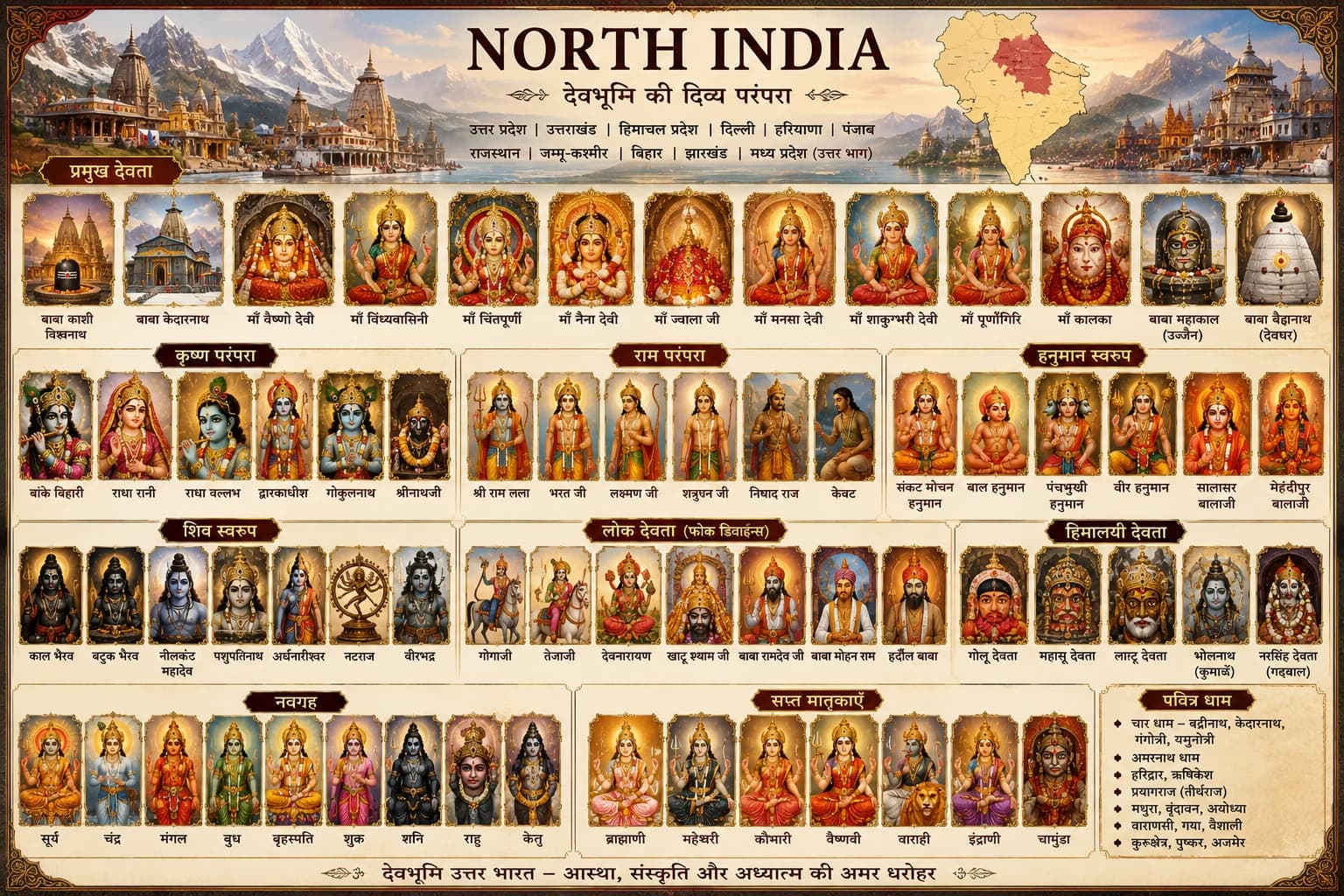
North IndiaHimalayan sanctuaries, sacred river valleys, and classical poetic lineages.
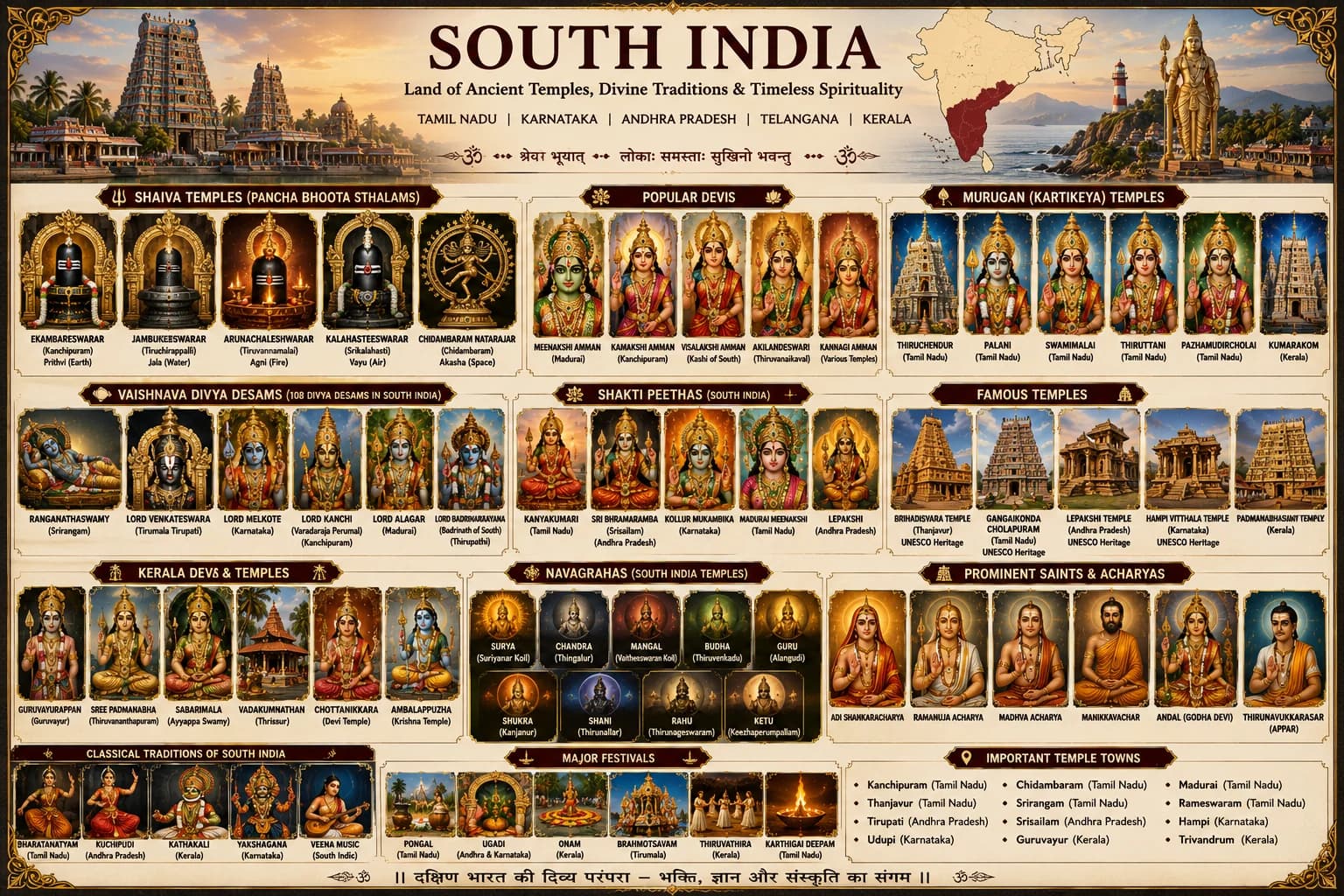
South IndiaGranite temple citadels, Carnatic devotion, and unbroken classical dance lineages.
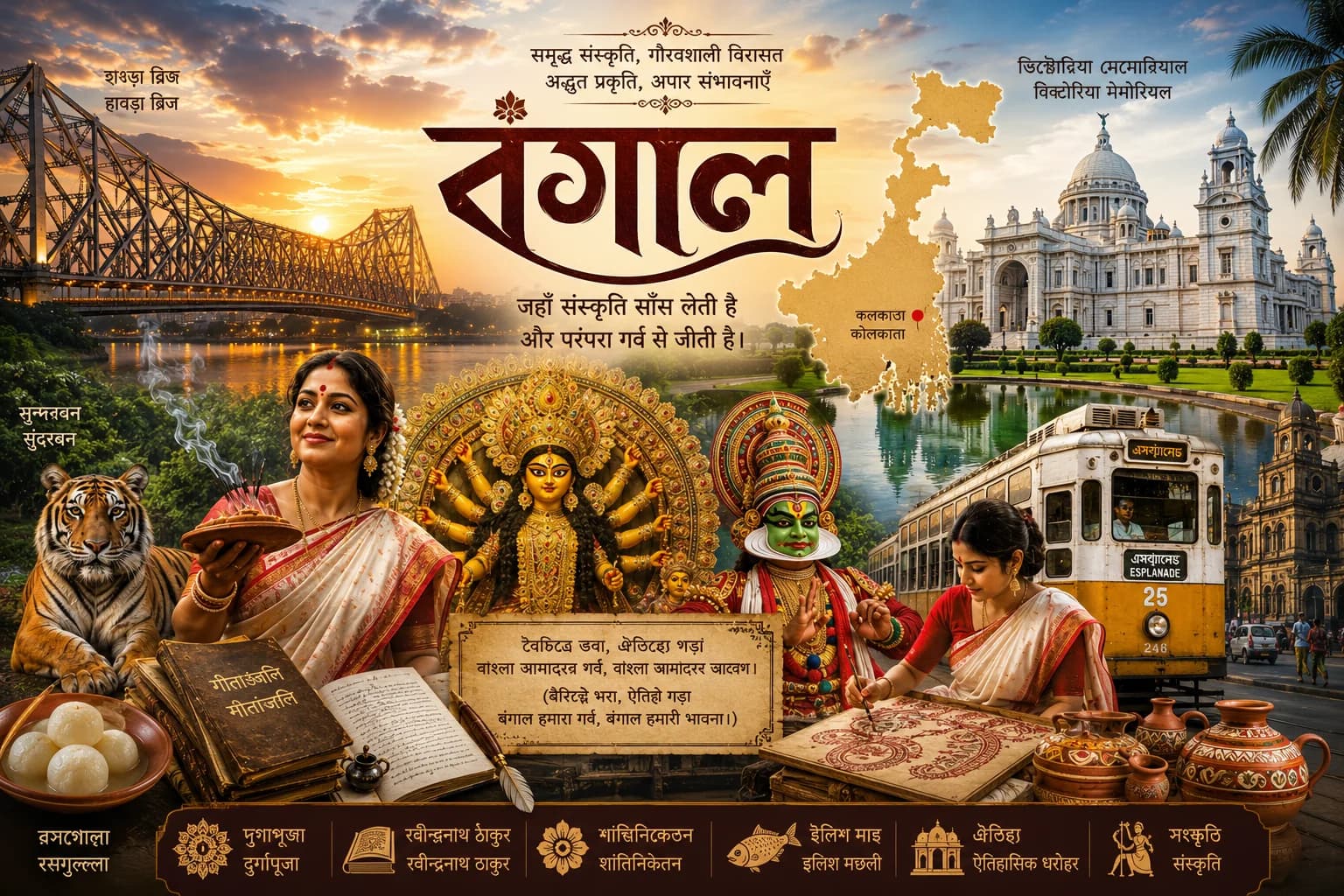
East IndiaTerracotta temples, mystical Baul melodies, and classical sculpture poetry.
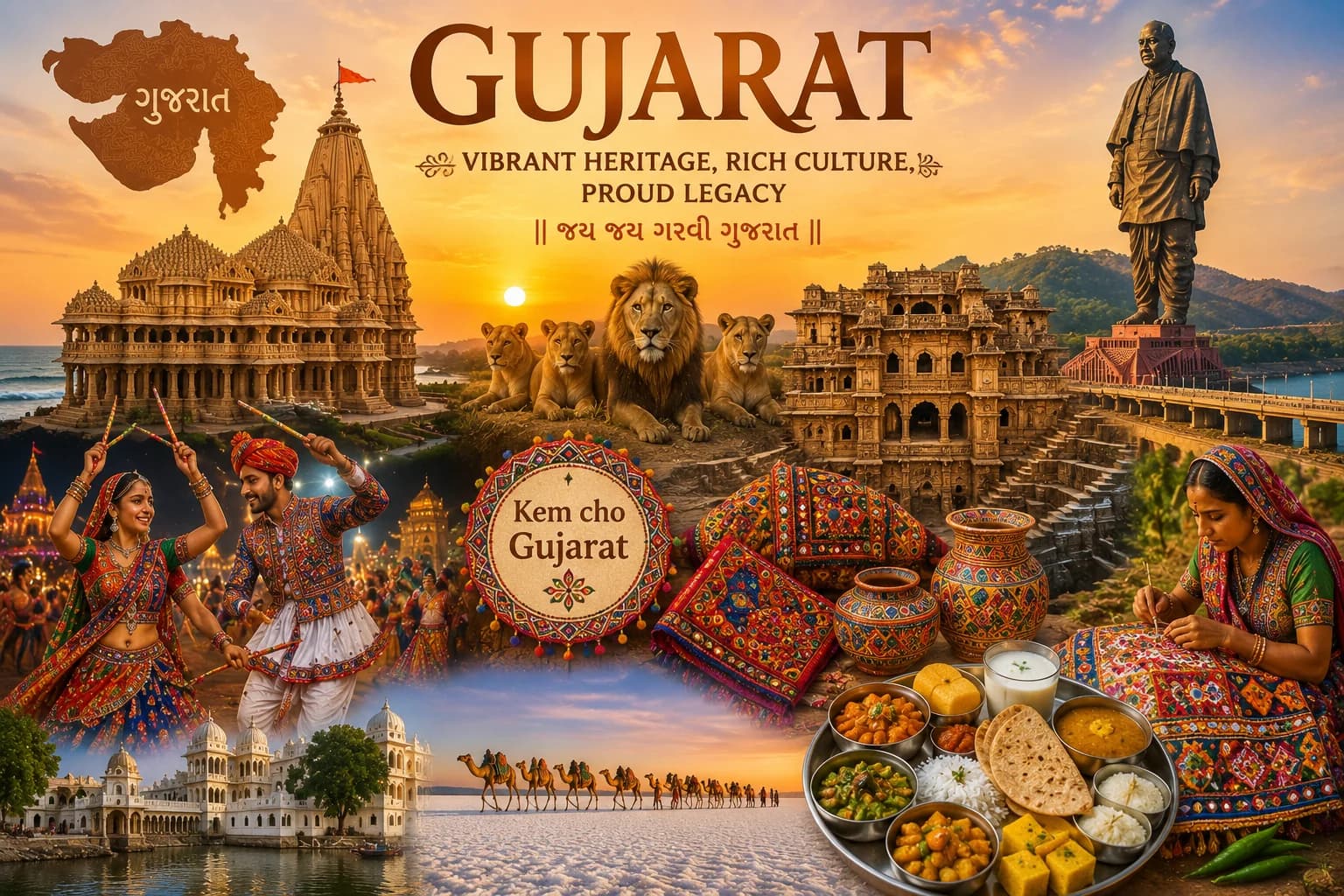
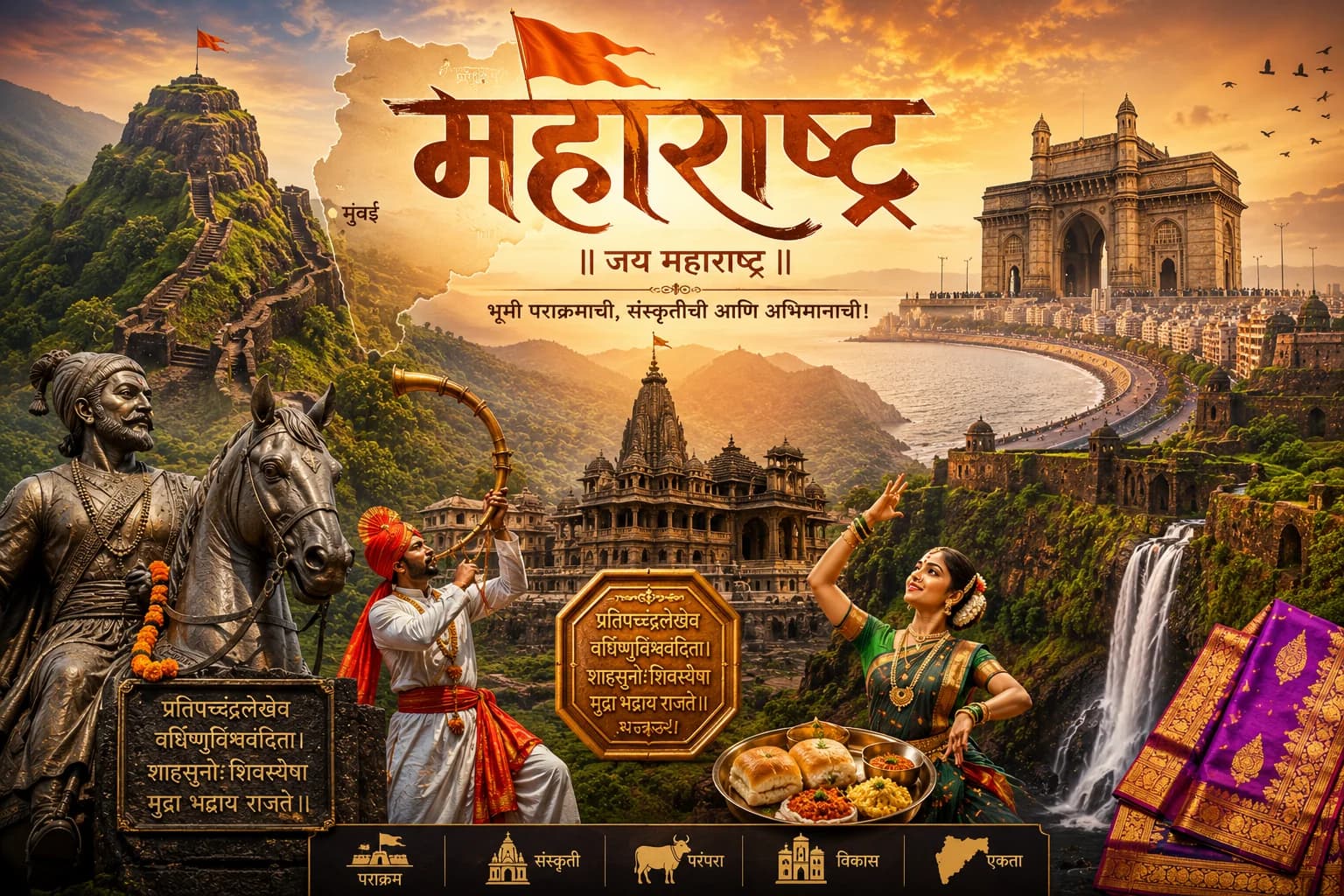
West IndiaSubterranean stepwells, rugged Sahyadri hill forts, and vibrant folk rhythms.
Central IndiaAncient sandstone carvings, tribal lore, and historic royal weaver towns.
Northeast IndiaGolden Muga silks, river island monasteries, and sacred bamboo crafts.
Rooted in Bharata Muni's Natya Shastra and the Samavedic science of sound (Nada Brahma), Indian classical performing arts evoke nine emotional essences (Navarasas) to elevate the mind toward tranquil realization (Shanta Rasa).

Indian classical music is founded on the concept of Nada Brahma (sound as divine reality). Unlike western harmony, Indian music develops melodically within a Raga (melodic framework evoking specific emotions and times of day) and rhythmic Tala cycles.
Each classical Indian dance tradition harmonizes Nritta (pure rhythmic movement), Nritya (expressive storytelling through Mudras), and Natya (dramatic representation). Every gesture, footwork pattern, and facial glance conveys specific metaphysical verses.
Folk traditions are spontaneous, vibrant celebrations of sowing, harvesting, seasonal transitions, and community folklore. Untethered from courtly rigidities, they represent the living heartbeat of rural India.
Ancient Indian theatre combined literature, mime, instrumental music, and philosophy. It aimed not at emotional agitation (catharsis), but at aesthetic tranquility (Shanta Rasa) and contemplation.
Traditional Indian painting uses organic mineral and vegetable pigments to depict spiritual allegories, cosmic diagrams, and epic narratives. From the cave frescoes of Ajanta to portable cloth scrolls, painting was considered an auspicious invocation.
Sculptors (Shilpis) followed precise proportional canons (Talamana) where the human form was stylized to represent transcendent ideals rather than mortal realism. Works range from monumental granite reliefs to delicate lost-wax bronzes.
Everyday customs in Indian homes are not arbitrary rituals. From daily threshold geometry that feeds insects to unstitched textiles promoting ritual cleanliness, our customs integrate ecological reverence with social harmony.

In ancient Indian thought, unstitched garments like the Saree, Dhoti, Mundu, and Angavastram were considered purest for worship because unstitched cloth was seen as unbroken and free from tailors’ needles.
Every morning across millions of homes, the threshold is washed and adorned with geometric designs drawn with rice flour, chalk, or natural pigments.
A guest arriving at an Indian home is traditionally welcomed with water, honored as a divine manifestation, and greeted with the Anjali Mudra (Namaste).
Touching the feet of parents, grandparents, and teachers before auspicious beginnings or upon returning from long journeys.
Ayurveda and cultural tradition divide the solar year into six seasons (Shad Ritus). Daily clothing, morning cleansing, and dietary spices change rhythmically to keep bodily doshas in equilibrium.
Traditionally, meals are eaten seated cross-legged on the floor (Sukhasana) and consumed with clean fingers of the right hand.
Engineered with interlocking dry-stone masonry, acoustic resonance chambers, and astronomical alignments, Indian architectural monuments embody geometric harmony between earth and sky.

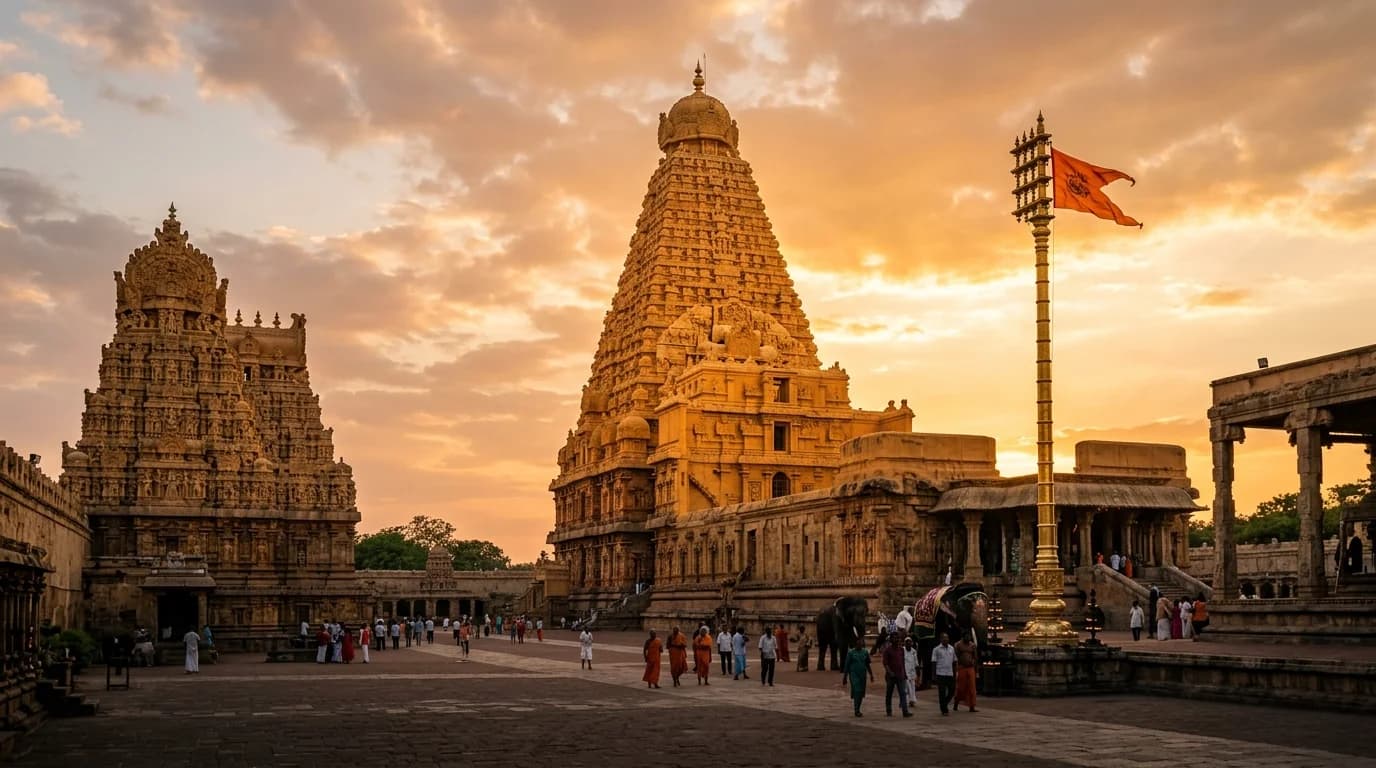
Characterized by rectilinear walled temple courtyards, towering Gopuram entry gateways adorned with mythological friezes, and stepped pyramidal Vimanas above the inner sanctum (Garbhagriha).
Originating in northern and central India, Nagara temples evoke the sacred peaks of Mount Meru. The central spire (Shikhara) curves gently inward toward the crowning Amalaka stone disc and Kalasha pot.
In water-scarce regions of Gujarat and Rajasthan, architects inverted traditional temple architecture downward into the earth, creating multi-tiered subterranean corridors with sculpted shrines to access shifting aquifers.
Monumental stone stairways stepping directly into sacred rivers, stabilizing riverbanks against seasonal monsoon floods while providing platforms for sunrise meditation, ablutions, and sacred cremation rites.
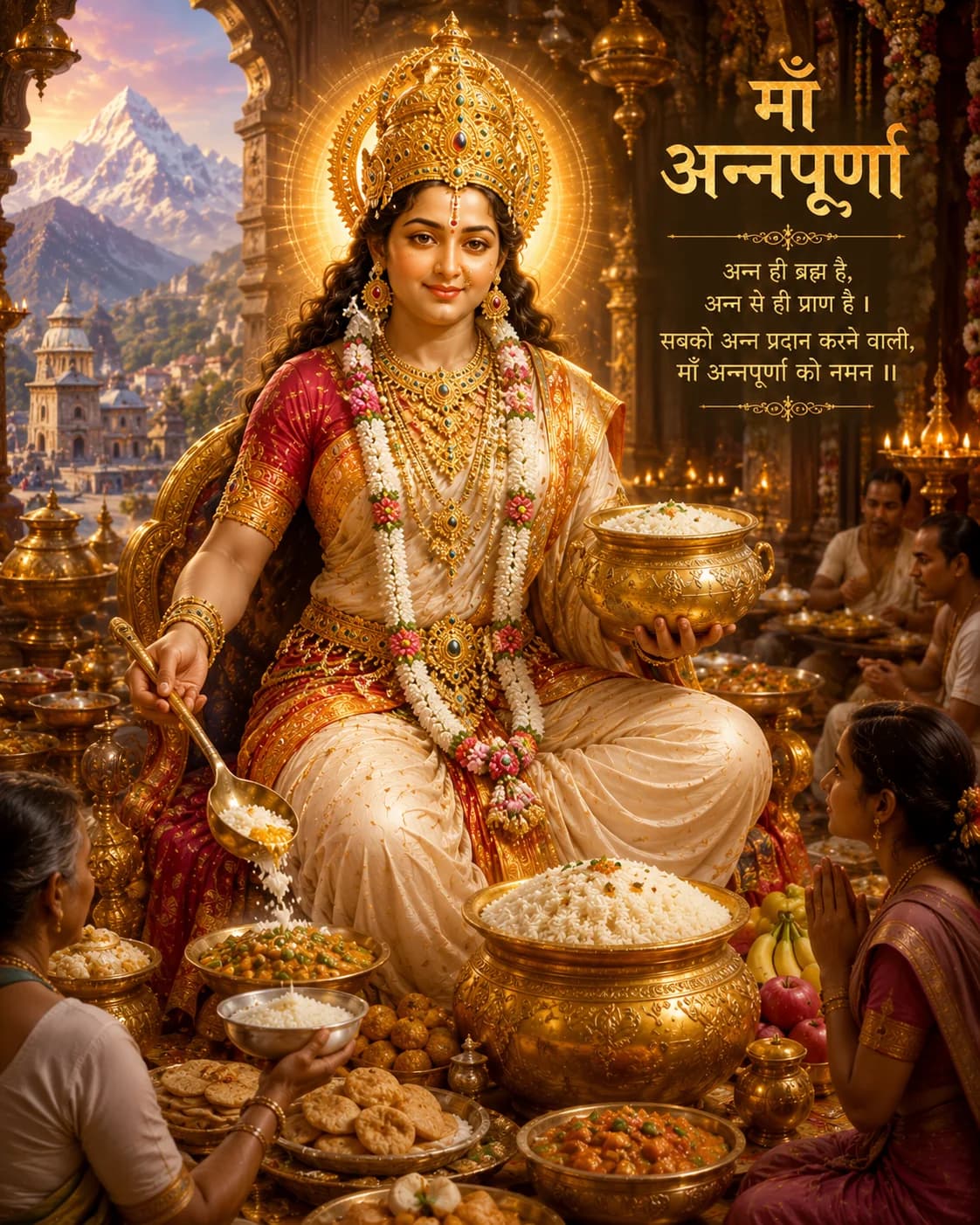
In Indian culinary philosophy, food (Anna) is sacred nourishment for body and consciousness. Guided by the science of the Six Tastes (Shad Rasa), indigenous grains, and sacred offering (Prasadam), eating is approached with gratitude and mindfulness.

Rather than counting calories, traditional Indian cooking uses the six tastes to stimulate digestion, calm doshic imbalances, and prevent cravings. Bitter fenugreek and astringent turmeric balance sweet grains and salty broths.
Millets formed the staple diet of common Indians for thousands of years before polished white rice and refined wheat gained dominance. They provide slow-burning energy, high fiber, and essential minerals adapted to regional climates.
Temple kitchens (Maha Rasois) operate under strict codes of cleanliness, using unrefined ingredients, pure cow ghee, and clay pot wood-fire cooking. Free community distribution of food (Annadanam) is considered the highest form of charity (Danam).
From the mathematical precision of double-ikat Patola looms to the lost-wax bronze casting of divine icons, Indian craft traditions embody unbroken lineages of material science and aesthetics passed through hereditary guild families (Shrenis).

Indian handloom weaving is a mathematical and artistic marvel. From the complex double-ikat of Patan Patola—where warp and weft are individually tie-dyed before weaving so that colors align perfectly—to the heavy mulberry silk and pure gold Zari of Kanchipuram and Banaras.
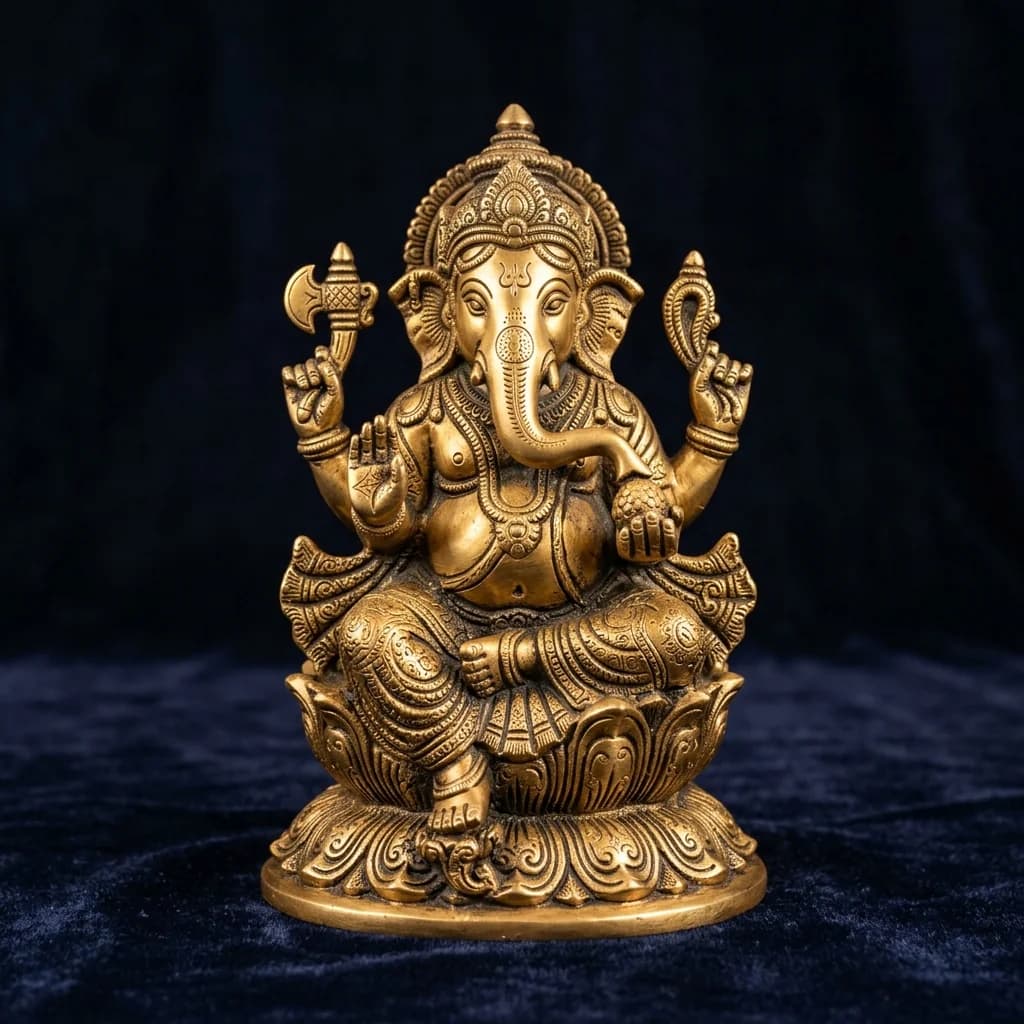
The ancient Madhuchishta Vidhana (cire perdue or lost-wax casting) technique dates back to the Bronze Age. An artisan carves the sculpture in beeswax, coats it in multiple layers of fine river clay, and bakes it so the wax melts away, leaving a cavity into which molten bronze or bell-metal is poured.
Clay pottery embodies the cycle of life, returning to earth without ecological footprint. Traditions include the monumental terracotta horses of Panchmura, the dark smoky luster of Nizamabad black pottery, and Jaipur’s quartz-based Blue Pottery.
Maintained predominantly by women on the walls of homes during festivals and weddings, folk paintings use natural twigs, fingers, and brushes to depict sacred flora, fauna, deities, and community rituals.
Explore in-depth cultural research, historical field investigations, and scholarly reflections published in the SattvaLok Journal.
A festival may be observed differently across regions, communities, and sampradayas. Explore why these differences exist and why preserving that diversity matters.
Digital archives, structured databases, AI, search systems, and multimedia can make knowledge more accessible. But technology also creates new questions about context, sources, interpretation, and authenticity.
Explore the history, tradition, significance, and cultural context of the Bhasma Aarti performed at Mahakaleshwar Jyotirlinga.
Continue exploring the traditions, festivals, spiritual knowledge, and cultural experiences that make India's heritage so diverse.
Discover SattvaLok →