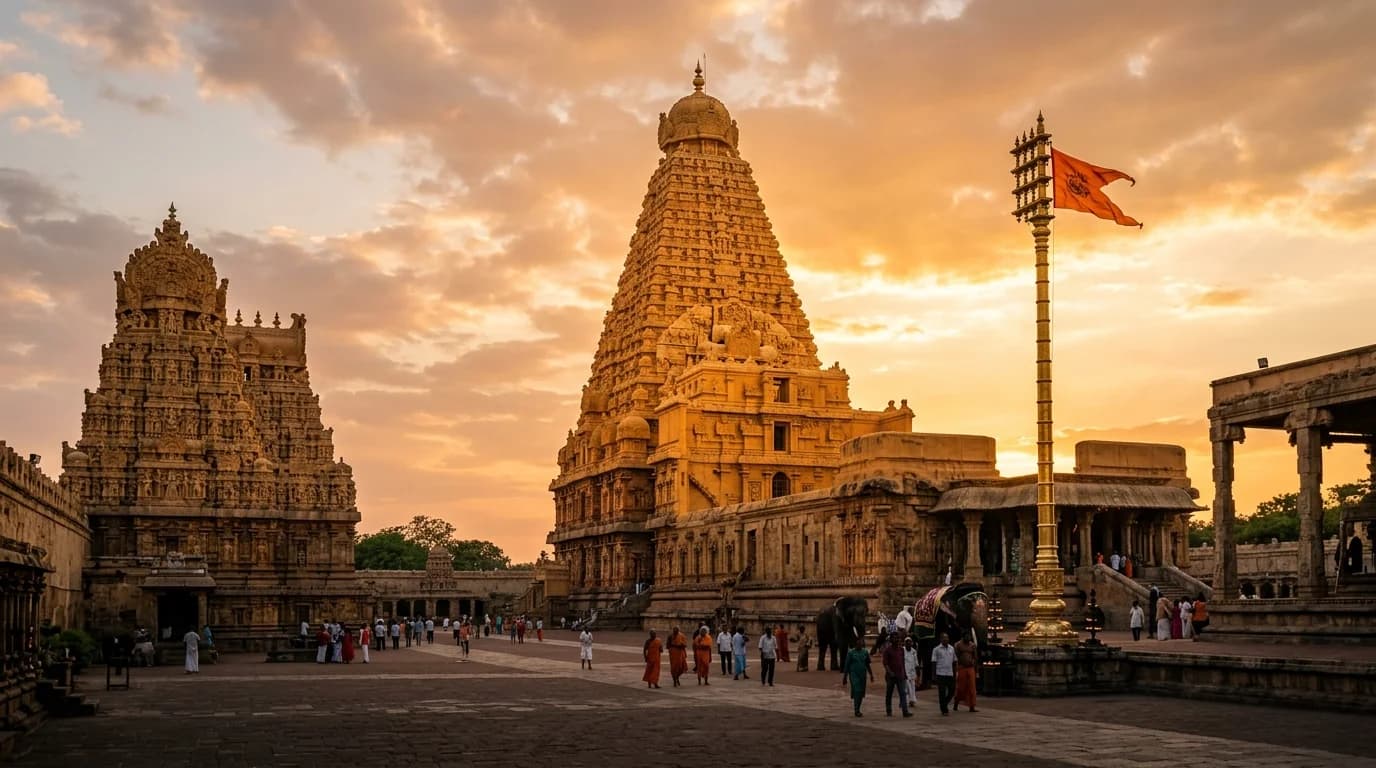
 Dravida
Characterized by rectilinear walled temple courtyards, towering Gopuram entry gateways adorned with mythological friezes, and stepped pyramidal Vimanas above the inner sanctum (Garbhagriha).
Historical Epoch:Pallava, Chola, Pandya & Vijayanagara Dynasties (6th - 16th century CE)
Salient Features:Garbhagriha topped with tiered Vimana · Towering multi-story Gopuram gates · Pillared Mandapams with musical resonance stone pillars · Water tanks (Pushkaranis) integrated within temple walls
Iconic Sites:Brihadeeswara Temple, Thanjavur (monolithic granite cupola), Meenakshi Amman Temple, Madurai, Sri Ranganathaswamy Temple, Srirangam, Shore Temple, Mahabalipuram
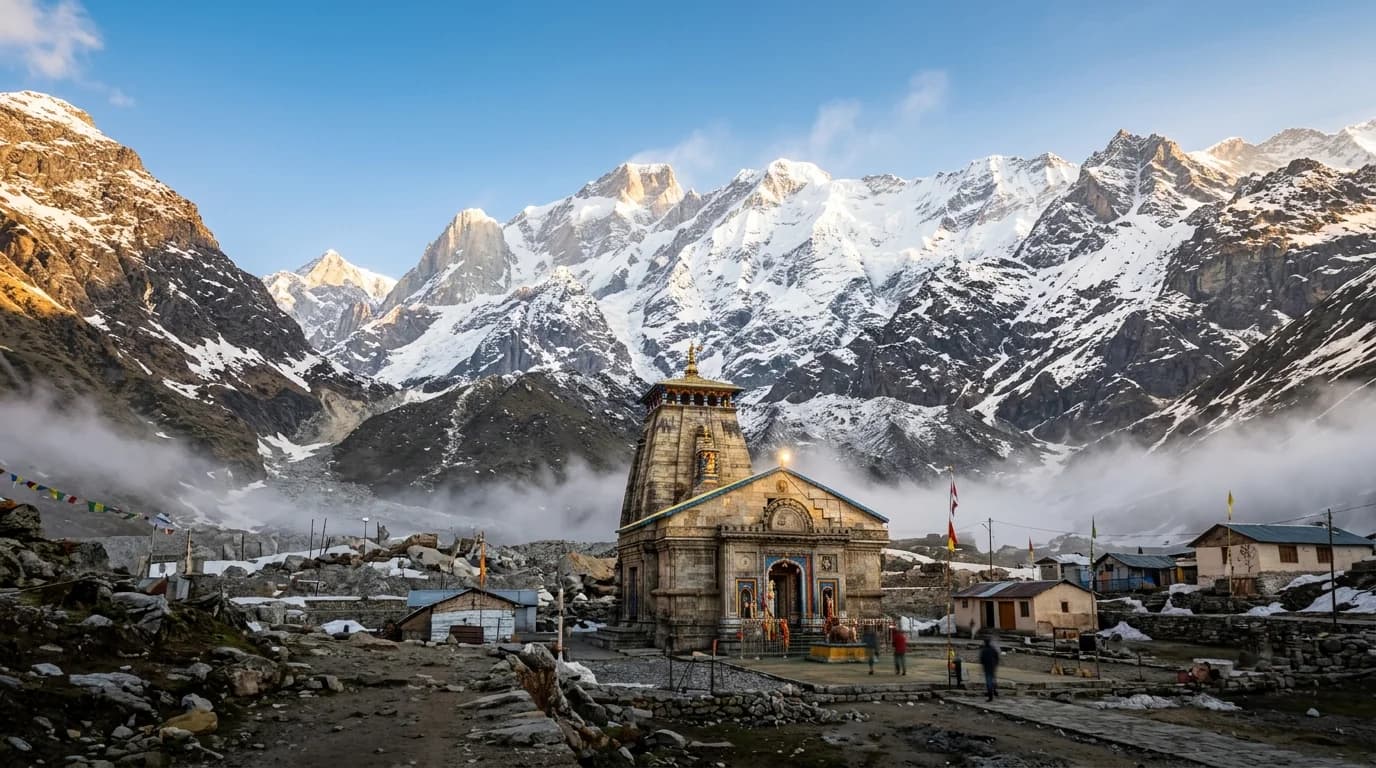 Nagara
Originating in northern and central India, Nagara temples evoke the sacred peaks of Mount Meru. The central spire (Shikhara) curves gently inward toward the crowning Amalaka stone disc and Kalasha pot.
Historical Epoch:Gupta, Pratihara, Chandela & Solanki Dynasties (5th - 13th century CE)
Salient Features:Curvilinear beehive-shaped Shikhara spires · Elevated stone plinth (Jagati) · Absence of towering boundary gopurams · Sub-spires (Urushringas) creating rhythmic vertical ascent
Iconic Sites:Kandariya Mahadeva Temple, Khajuraho, Sun Temple, Modhera, Lingaraja Temple, Bhubaneswar, Kedarnath Temple, Garhwal Himalayas
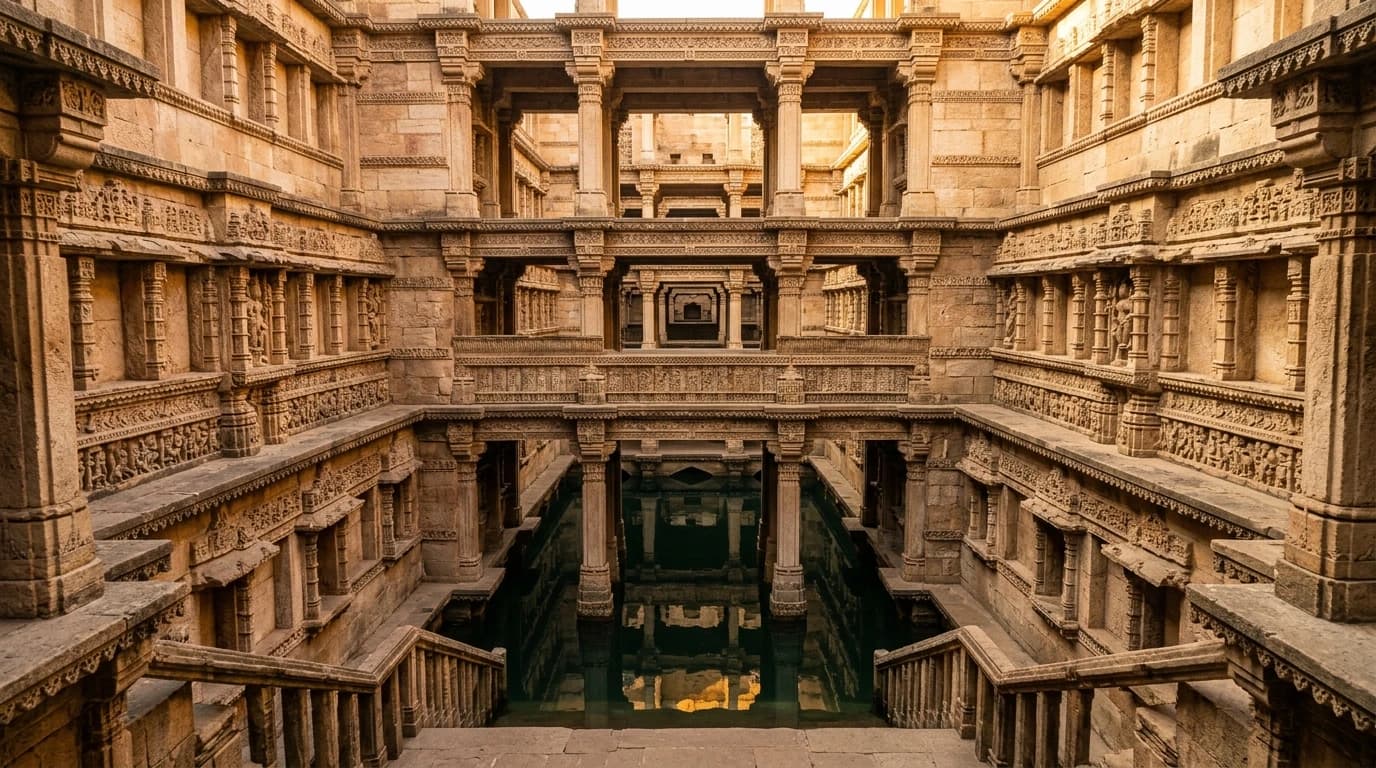 Vernacular & Stepwells
In water-scarce regions of Gujarat and Rajasthan, architects inverted traditional temple architecture downward into the earth, creating multi-tiered subterranean corridors with sculpted shrines to access shifting aquifers.
Historical Epoch:Sompura and Solanki architects (7th - 15th century CE)
Salient Features:Multiple subterranean pavilion stories connected by stone staircases · Natural passive evaporative cooling keeping water cool in desert heat · Intricately carved stone alcoves with Vishnu, Varaha, and water deities · Civic social sanctuaries for pilgrims and trade caravans
Iconic Sites:Rani ki Vav, Patan (UNESCO World Heritage), Chand Baori, Abhaneri (3,500 symmetrical narrow steps), Adalaj Stepwell, Ahmedabad, Agrasen ki Baoli, New Delhi
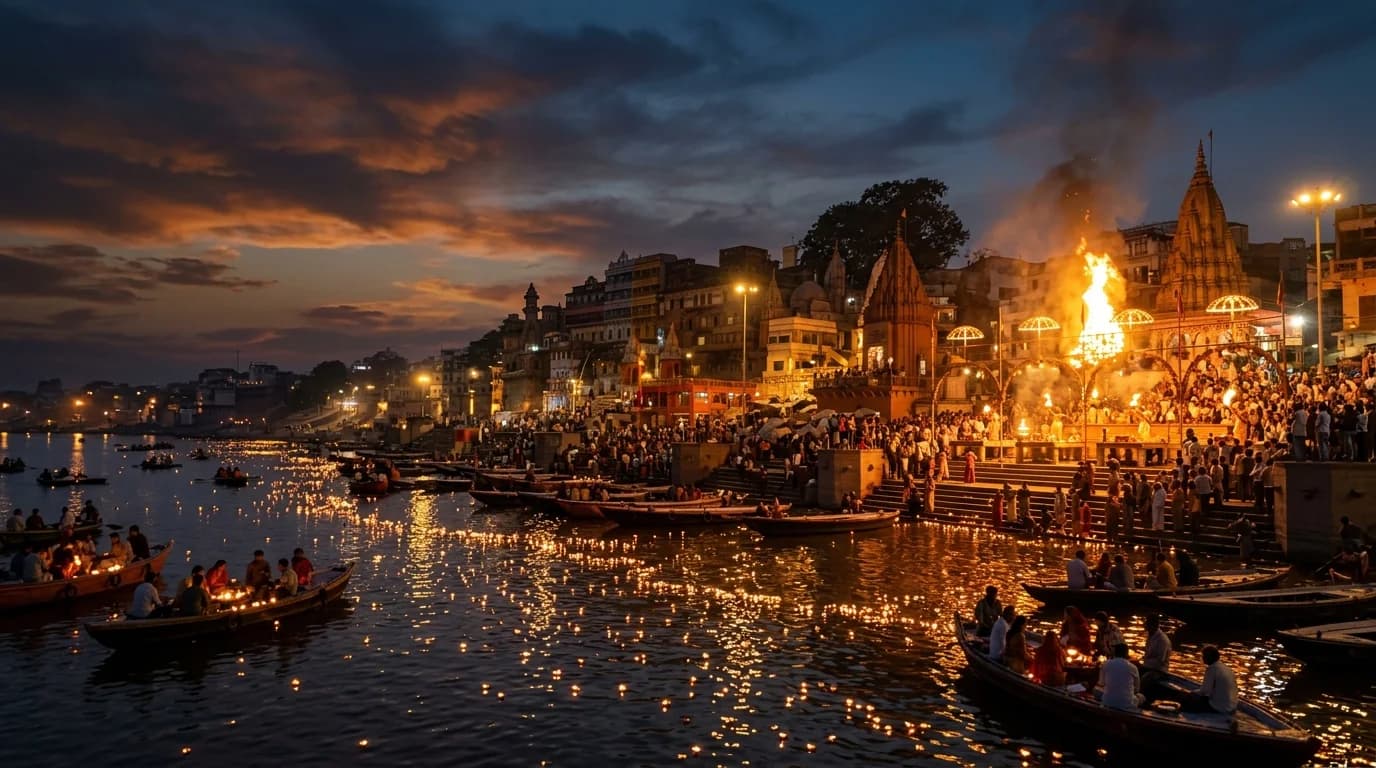 Forts & Settlements
Monumental stone stairways stepping directly into sacred rivers, stabilizing riverbanks against seasonal monsoon floods while providing platforms for sunrise meditation, ablutions, and sacred cremation rites.
Historical Epoch:Kashi, Ujjain, Nashik, Haridwar (Millennia-long continuous development)
Salient Features:Massive stone embankments withstanding monsoonal water level fluctuations · River-facing palace bastions built by royal patron lineages across India · Submerged lower platforms during monsoons that re-emerge in autumn · Continuous sacred public space for millions of pilgrims
Iconic Sites:Assi and Dashashwamedh Ghats, Varanasi, Ram Ghat on Shipra River, Ujjain, Har Ki Pauri, Haridwar, Kushavarta Kund on Godavari River, Trimbakeshwar