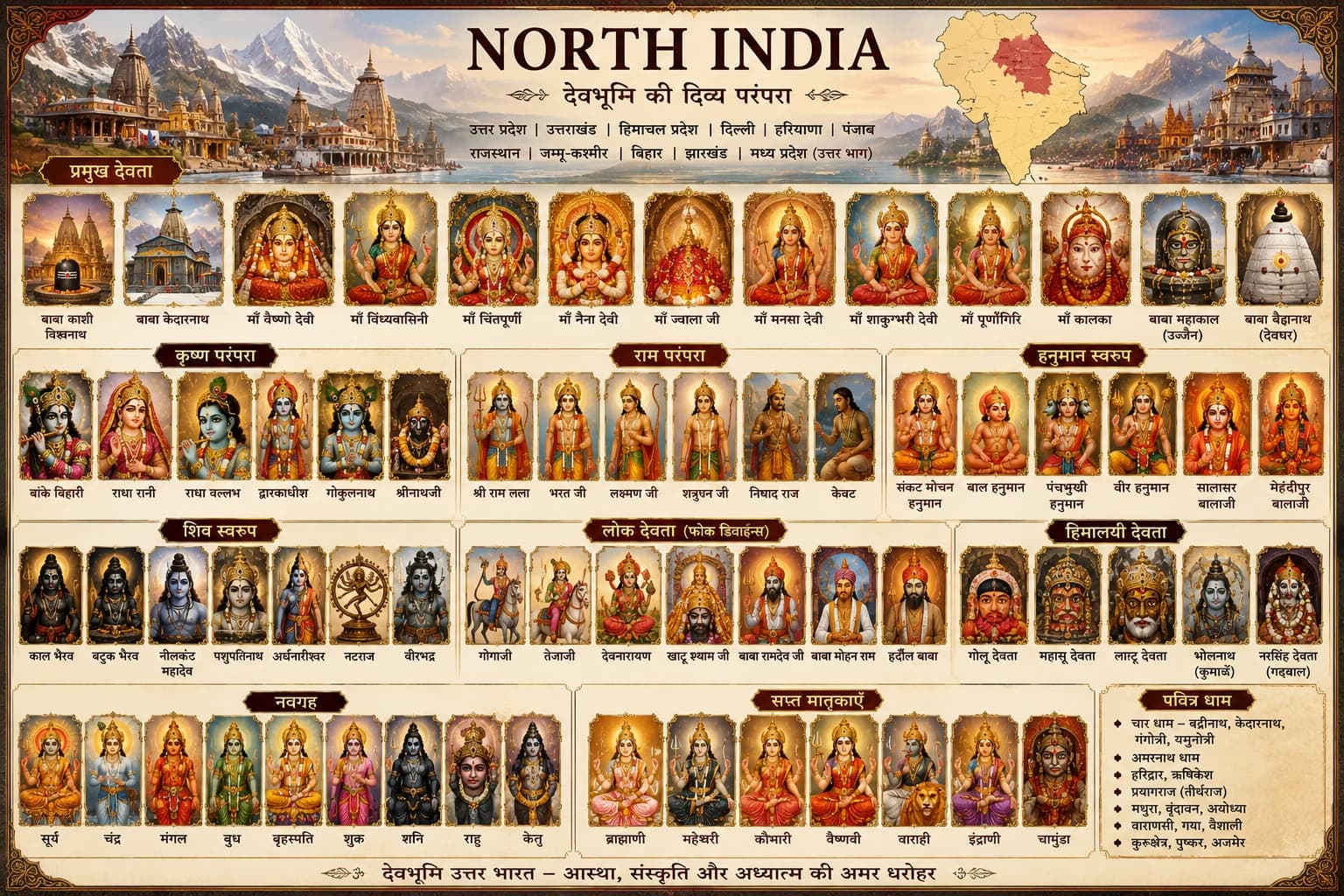
 North India
Himalayan sanctuaries, sacred river valleys, and classical poetic lineages.
Architecture:Nagara-style stone temples with curvilinear Shikharas (e.g. Kedarnath, Kashi Vishwanath), Kath Kuni interlocking timber-stone seismically resilient mountain dwellings, and historic Awadhi gateways.
Textiles:Kashmiri Pashmina shawls, Phulkari geometric embroidery from Punjab, delicate Chikankari white-on-white needlework from Lucknow, and woven woolen Pattus of Himachal.
Music & Dance:Hindustani Classical music (Dhrupad and Khayal traditions across historic Gwalior, Agra, and Kirana Gharanas), Kathak classical dance, and folk ballads of Braj and Punjab.
Living Customs:Sacred riverfront Sandhya Aarti at Haridwar and Varanasi, Lohri winter solstice bonfires, and reverence for family lineage elders (Charan Sparsh).
Cuisine:Earthen Tandoor hearth cooking, seasonal mustard greens (Sarson) with maize flatbreads, saffron-infused milk preparations, and cooling fennel-coriander spice pastes.
Key Epicenters:Varanasi, Kashmir, Ayodhya, Mathura, Himachal Valley, Punjab plains
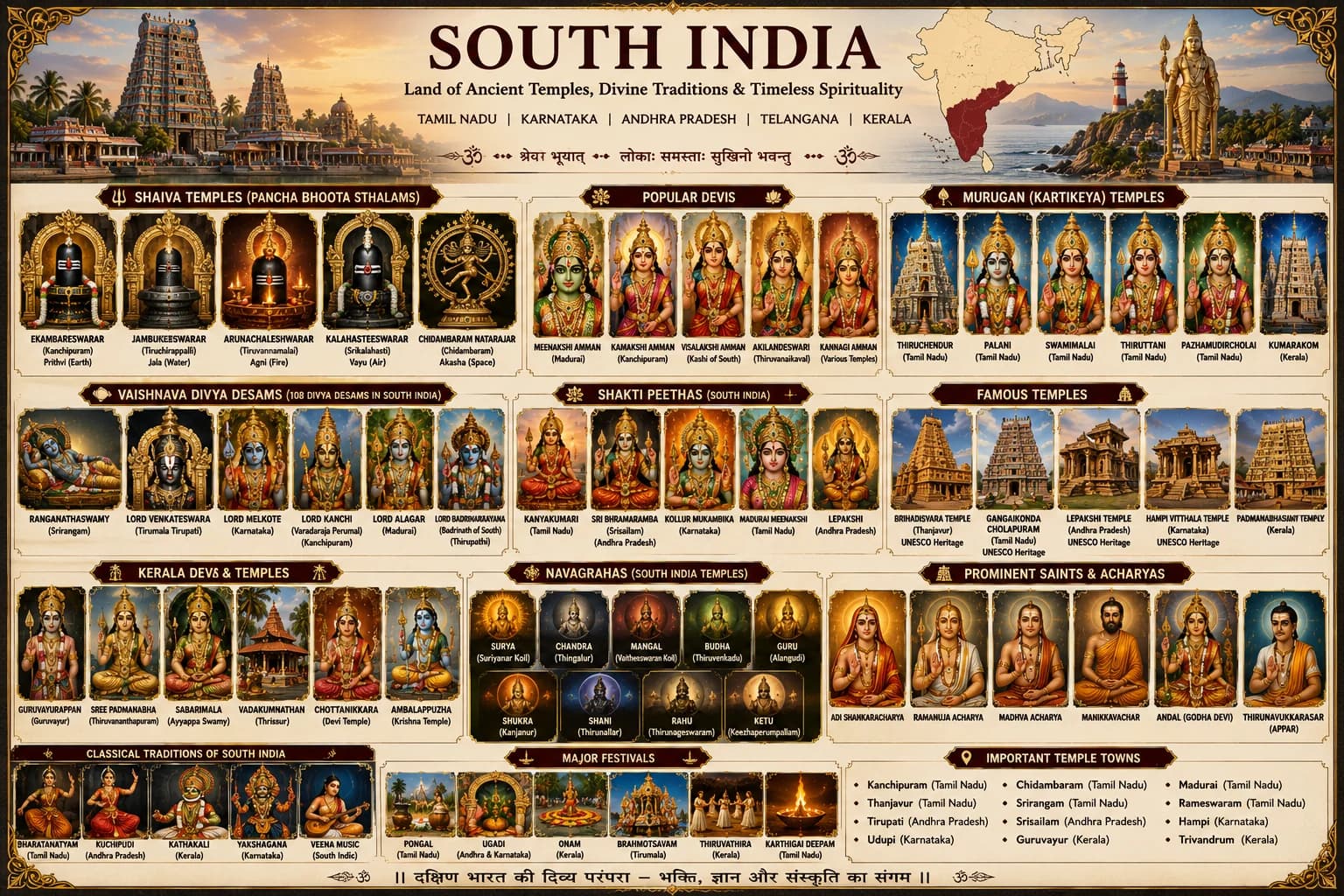 South India
Granite temple citadels, Carnatic devotion, and unbroken classical dance lineages.
Architecture:Dravidian monumental architecture characterized by towering pyramidal Gopurams, pillared thousand-column Mandapams, and monolithic granite Vimanas (e.g. Brihadeeswara Temple, Madurai Meenakshi, Hampi).
Textiles:Pure mulberry Kanchipuram silk sarees with gold Zari temple borders, Kasavu gold-bordered cream dhotis and mundus of Kerala, and Pochampally ikat weaves.
Music & Dance:Carnatic classical music anchored in the Bhakti compositions of Purandara Dasa and the Trinity (Tyagaraja, Muthuswami Dikshitar, Syama Sastri); classical Bharatanatyam, Kathakali, and Mohiniyattam.
Living Customs:Daily threshold rice-flour Kolams drawn before dawn, serving ceremonial feasts on freshly cut banana leaves, and continuous Agamic temple rituals.
Cuisine:Fermented rice and black gram delicacies (Idli, Dosa), spiced tamarind broths (Rasam, Sambar), coconut oil infusions, and freshly ground Malabar peppercorns.
Key Epicenters:Thanjavur, Madurai, Kanchipuram, Udupi, Mysuru, Malabar Coast
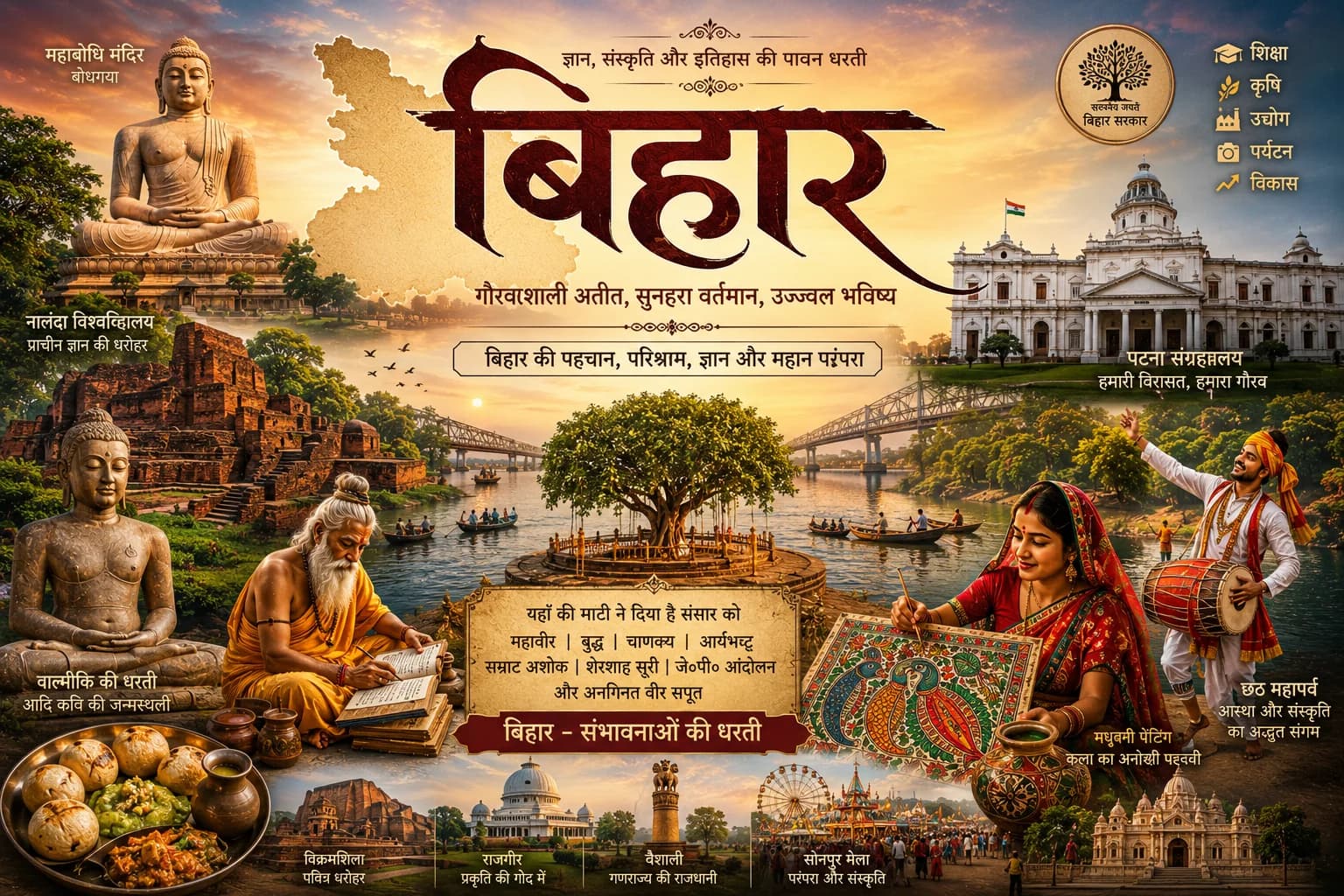
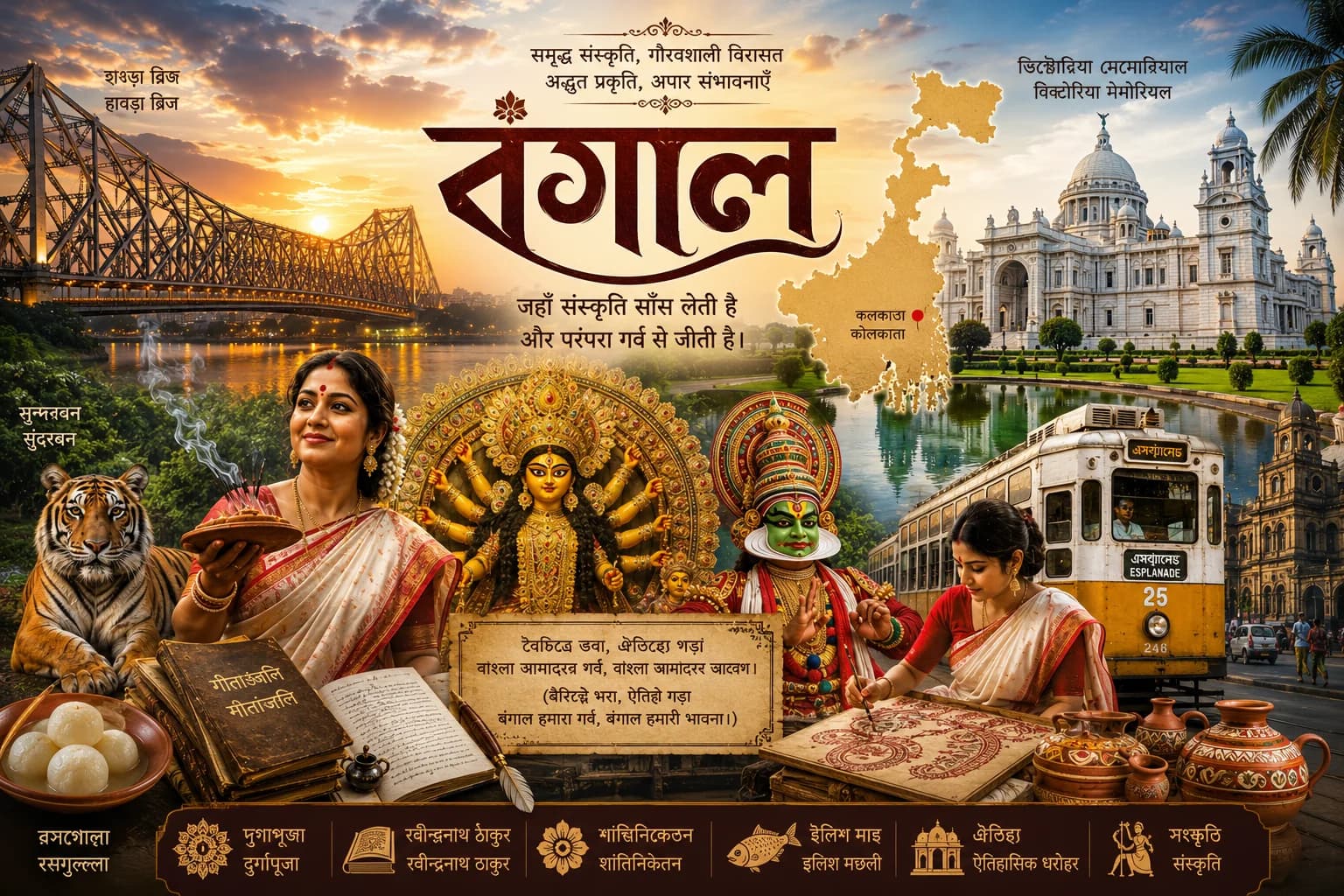 East India
Terracotta temples, mystical Baul melodies, and classical sculpture poetry.
Architecture:Kalinga architectural order with towering Rekha Deulas (Puri Jagannath, Konark Sun Temple), and intricately carved burnt-clay terracotta temples of Bishnupur (Bengal).
Textiles:Airy Jamdani muslin with supplementary weft floral motifs, Baluchari silk depicting mythological epics, Sambalpuri Bandha tie-dye, and tussar silk dhotis.
Music & Dance:Odissi classical dance with fluid Tribhangi postures rooted in temple sculptures, semi-classical Rabindra Sangeet, and the mystical acoustic ektara songs of Baul wanderers.
Living Customs:Alpana rice paste threshold art, the grand community invocation of Durga Puja and Jagannath Ratha Yatra, and Chhath Puja riverbank devotion to the Sun God.
Cuisine:Pungent mustard oil tempering with the aromatic five-spice blend (Panch Phoron), river fish preparations, and chhena-based dairy confectioneries like Rasgulla and Sandesh.
Key Epicenters:Bhubaneswar, Puri, Kolkata, Bishnupur, Mithila, Gaya
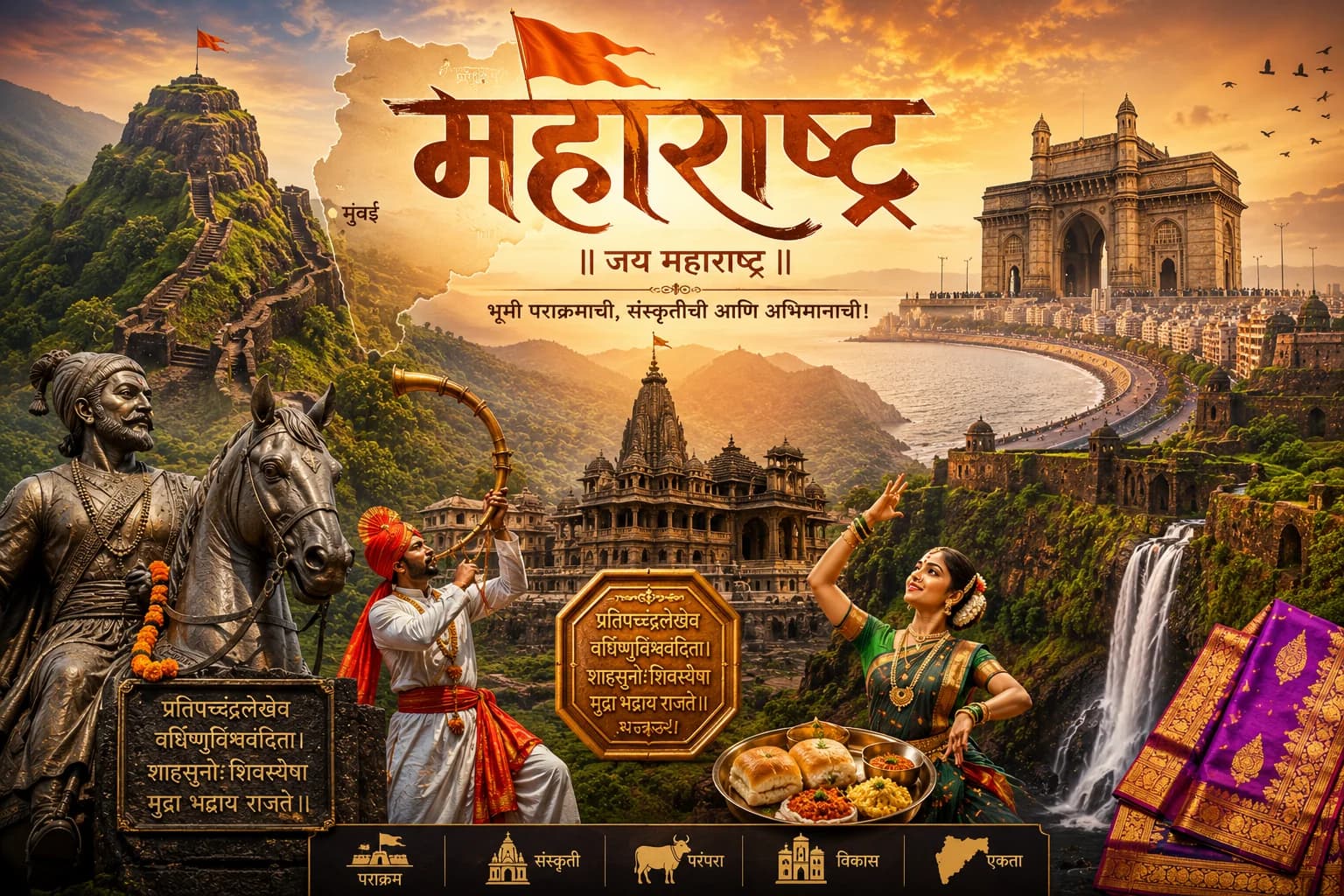
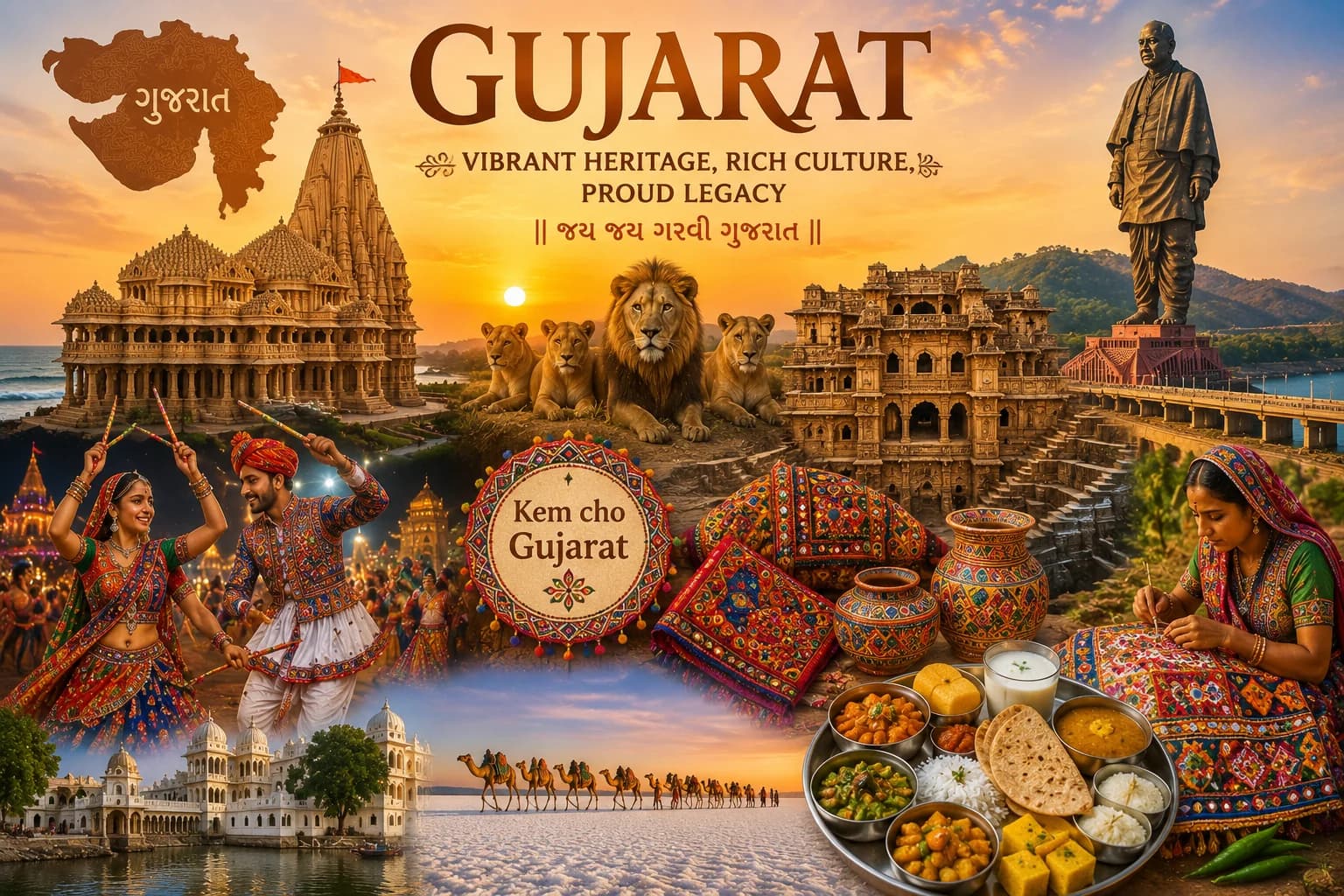 West India
Subterranean stepwells, rugged Sahyadri hill forts, and vibrant folk rhythms.
Architecture:Māru-Gurjara sandstone architecture with subterranean multi-story Stepwells (Rani ki Vav, Adalaj), intricately carved marble Jain temples of Dilwara, and basalt Maratha hill citadels.
Textiles:Double-ikat Patan Patola requiring mathematical silk alignment, Bandhani tie-dye of Kutch, Paithani silk sarees with peacock Zari motifs, and vibrant mirror-work Chaniya Cholis.
Music & Dance:Garba and Dandiya circular folk dance during Navaratri, dynamic energetic Lavani folk theater of Maharashtra, and devotional Haveli Sangeet lineages.
Living Customs:Ganesh Chaturthi civic installations, honoring river waters, and welcoming guests with jaggery and water as a gesture of enduring sweetness.
Cuisine:Balanced sweet-sour-spicy Gujarati thalis, high-protein Maharashtrian misal and peanut gravies, bajra flatbreads, and sun-dried lentil preserves (papad and vadi).
Key Epicenters:Ahmedabad & Patan, Pune & Konkan, Kutch, Udaipur & Mewar, Nashik
 Central India
Ancient sandstone carvings, tribal lore, and historic royal weaver towns.
Architecture:Khajuraho sandstone temples displaying world-renowned relief sculpture and celestial balance, the Sanchi Stupa with carved Torana gateways, and Gwalior fort ramparts.
Textiles:Gossamer Chanderi cotton-silk weaves woven since Vedic times, fine Maheshwari sarees patronized by Queen Ahilyabai Holkar, and Bagh block-print mud resist fabrics.
Music & Dance:Ancient Dhrupad roots centered around historic Gwalior, Pandavani folk ballad epics of Chhattisgarh, and tribal Karma dance rhythms.
Living Customs:Sanctified river pilgrimages along the holy Narmada (Narmada Parikrama) and worship of sacred forest groves (Sarnas).
Cuisine:Malwa poha and jalebi, roasted wheat dumplings (Bafla) steeped in pure desi ghee, and wild seasonal forest berries, mahua, and pulses.
Key Epicenters:Ujjain, Khajuraho, Maheshwar, Gwalior, Bhopal, Bastar
 Northeast India
Golden Muga silks, river island monasteries, and sacred bamboo crafts.
Architecture:Ahom dynasty brick and stone masonry (Rang Ghar, Kareng Ghar), wooden Satras (Vaishnavite monasteries) of Majuli, and living root bridges woven from living Ficus roots in Meghalaya.
Textiles:Assamese Muga silk—the naturally golden, durable wild silk, Eri (peace silk), and handwoven ceremonial gamosas with red geometric borders.
Music & Dance:Sattriya classical dance codified in the 15th century by Saint Srimanta Sankardeva, the rhythmic spring Bihu dance, and Manipuri Raas Leela dance-dramas.
Living Customs:Reverence for living biodiversity, zero-waste community bamboo construction, and agricultural harvest thanksgiving ceremonies.
Cuisine:Indigenous fermented bamboo shoots, alkaline Khar preparations, fragrant Joha sticky rice, and fresh wild herbs cooked with minimal oil.
Key Epicenters:Majuli Island, Guwahati (Kamakhya), Imphal Valley, Shillong, Nagaland hills