
Atithi Devo Bhava & Namaste: The Upanishadic Ethics of Hospitality, Anjali Mudra, and the Metaphysics of Sacred Greetingअतिथि देवो भव एवं नमस्ते: औपनिषदिक आतिथ्य धर्म, अञ्जलि मुद्रा और अभिवादन विज्ञान
From the Shikshavalli Injunctions of the Taittiriya Upanishad and the Sixteen Upacharas of Guest Veneration to the Pranic Circuitry of Anjali Mudra and Charan Sparsh
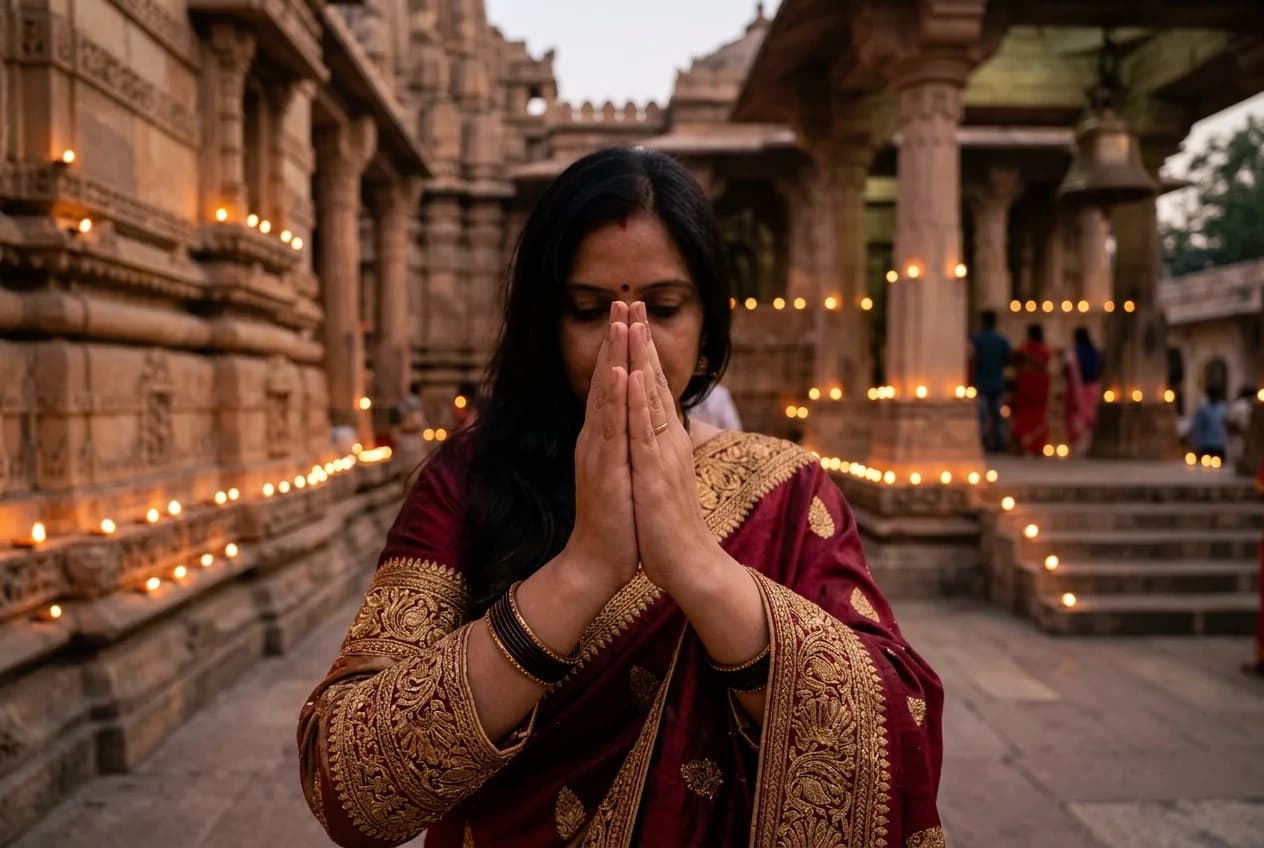
“Let your mother be unto you a living deity; let your father be unto you a living deity; let your preceptor be unto you a living deity; let the unannounced guest (Atithi) be unto you a living deity.”
— Taittirīya Upaniṣad, Śikṣāvallī (1.11.2)In the Vedic and Dharmashastric civilizational framework, interpersonal encounter is never reduced to a secular social contract or utilitarian transaction. Every meeting between two human beings is governed by the ontological recognition of the indwelling Absolute (Ātman / Puruṣa) within the other. This metaphysical premise manifests in three foundational daily disciplines of Indian life: Atithi-satkāra (the sacred duty of hospitality toward the unannounced traveler), Namaste / Añjali Mudrā (the non-contact salutation joining the palms over the heart center), and Abhivādana / Caraṇa-sparśa (the bowing and touching of elders’ feet). Anchored in the Atharvaveda (Atithipati Sūkta 9.6), the Taittirīya and Kaṭha Upaniṣads, and the Gṛhyasūtras, these practices transform the domestic household (Gṛhastha-āśrama) into a sacrificial altar where offering water, seat, and nourishment to a stranger equals performing a Vedic Soma-yāga. Simultaneously, the physical mechanics of Añjali Mudrā and Caraṇa-sparśa integrate yogic subtle-body physiology (Nāḍī polarity) with hygienic non-contact boundary preservation (Śuddhi). This codex examines the etymology of Atithi, the liturgical sequence of guest reception (Arghya, Pādya, Madhuparka), the grammatical and pranic anatomy of Namaste, and the intergenerational transmission of grace in Abhivādana.
1. Etymological & Upanishadic Foundations of Atithi-Dharma
अतिथिधर्मस्य व्युत्पत्तिः औपनिषदिकं च प्रातिपदिकम्The Sanskrit noun Atithi (अतिथि) is frequently mistranslated in modern parlance as any invited social guest or acquaintance. In rigorous grammatical and Dharmaśāstric usage, however, an invited guest from one's own town or kinship circle is termed a Prāghūrṇaka or Abhyāgata, whereas an Atithi has a strictly defined temporal and spatial etymology codified by Manu (Manusmṛti 3.102) and Parāśara:
A traveler, pilgrim, or mendicant scholar who arrives at the threshold unexpectedly, without prior appointment or calendrical fixture (Tithi), and who abides for no more than a single night (Ekarātra) before continuing their journey.
Derived by Pāṇinian commentators (Uṇādi-sūtra 4.2) from the verbal root at- (सातत्यगमने—"to go constantly"), signifying the wayfarer who embodies the transient, ungrasped flow of cosmic existence.
1.1 The Atharvaveda (9.6): Hospitality as a Complete Vedic Yajña
अथर्ववेदः (९.६) — अतिथिसत्कारस्य सोमयागतुल्यताThe entire sixth hymn of the ninth book of the Atharvaveda (Atithipati Sūkta, 62 verses) is dedicated to proving an extraordinary ritual equivalence: every single step of welcoming and feeding an Atithi inside a householder’s home maps one-to-one onto the solemn liturgy of a Vedic Soma sacrifice:
The domestic foyer instantly converts into a sanctified altar of oblation the moment an arrival is observed without irritation or resistance.
The householder strips away mundane social selfhood and enters consecrated priestly status through courteous reception.
Domestic water drawn from the well becomes the lustral water carried forward in solemn Soma ceremonies.
The guest’s physical resting place mirrors the seat consecrated for Indra and the Visvedevas on the sacrificial turf.
The food steps are direct oblations poured into the living digestive fire (Vaiśvānara Agni) burning inside the stomach of the guest.
1.2 The Warning of the Kaṭha Upaniṣad (1.1.7–9): The Guest as Vaiśvānara Agni
कठोपनिषद् (१.१.७–९) — वैश्वानराग्नेः रूपेणातिथ्यागमनम्In the opening narrative of the Kaṭha Upaniṣad, young Naciketas arrives at the abode of Yama (Lord of Dharma and Death) while Yama is away, and waits at the threshold for three nights without food or water. Upon Yama’s return, his ministers warn him with a canonical Vedic verse:
"As living Fire (Vaiśvānara Agni) himself does an Atithi enter a house. The wise perform the appeasement (Śānti) of that fire by immediately offering water for his feet (hara vaivasvatodakam). Should a guest remain unfed in the home of an unmindful host, that unquenched fire consumes all the host’s hopes, expectations, fruits of good fellowship, pleasant speech, sacrifices (Iṣṭa), charitable works (Pūrta), progeny, and cattle." Consequently, Yama bows before the boy Naciketas and grants him three boons—one for each night he waited unhonored—catalyzing the highest philosophical revelation on the immortality of the Ātman.
2. Nr̥-Yajña: The Sixteen Liturgical Protocols of Atithi-Satkāra
नृयज्ञः — अतिथिसत्कारस्य षोडशोपचाराःWithin the Pañca Mahāyajñas (Five Daily Sacrifices) ordained for every householder in the Śatapatha Brāhmaṇa (11.5.6.1) and Taittirīya Āraṇyaka (2.10), Nr̥-Yajña (also called Manuṣya-Yajña—the sacrifice to humanity) is fulfilled specifically through Atithi-pūjana. Even if a householder lives in extreme material poverty—subsisting solely by gleaning fallen ears of grain from harvested fields (Uñchavṛtti, as illustrated in the Mahābhārata’s Āśvamedhika Parva story of the golden mongoose) or possessing no food at all—the Manusmṛti (3.101) and Āpastamba Dharmasūtra (2.4.8.2) declare that four fundamental offerings can never fail in any virtuous household:
“A mat of woven grass (Tṛṇāni), space upon the clean earth to rest (Bhūmi), cool water (Udaka), and fourthly, sweet and truthful words of welcome (Sūnṛtā Vāk)—these four are never lacking in the home of the noble.”
— Manusmṛti 3.101; cf. Āpastamba Dharmasūtra 2.4.8.2In the Āśvalāyana and Pāraskara Gṛhyasūtras, receiving a revered guest mirrors the Ṣoḍaśopacāra Pūjā (sixteen-part temple worship of a consecrated deity):
1. Pratyutthāna (Rising & Approaching)
Step 1Rising immediately from one’s seat upon seeing the guest at the gate and walking forward to meet them with a serene countenance (Sumukha).
The host must not wait for the traveler to knock or shout; observing the visitor crossing the courtyard threshold triggers immediate kinetic rising, dispelling lethargy and honoring the divine arrival.
2. Abhivādana / Namaskāra
Step 2Joining palms in Añjali Mudrā or performing Caraṇa-sparśa based on age, spiritual lineage, or kinship.
Uttering the oral greeting (Namaste / Namaskāra) with eye contact and a slight flexion of the neck, acknowledging the divine spark dwelling within the wayfarer.
3. Viṣṭara / Āsana (The Seat)
Step 3Offering a woven Kuśa grass cushion, wooden Pīṭha plank, or clean woolen rug.
The guest is seated on a pristine plane elevated above the bare dust, providing immediate spinal decompression after continuous pedestrian transit.
4. Pādya (Foot-Washing Water)
Step 4Pouring cool water over the traveler’s dust-covered feet into a bronze basin (Kāṁsya-pātra).
Physiologically designed to draw excess systemic heat downward from the head and eyes after walking bare-shod or in sandals under the tropical sun, soothing the plantar nerve endings.
5. Arghya & Ācamana (Hand & Sipping Water)
Step 5Offering fragrant water infused with Tulasī, sandalwood, or cardamom in a copper vessel for rinsing hands and thrice sipping.
Purifies the buccal cavity and upper respiratory tract; resets digestive mucosal hydration prior to consuming food or engaging in philosophical dialogue.
6. Madhuparka (The Nectarine Welcome Drink)
Step 6A synergistic emulsion of curd (Dadhi), raw honey (Madhu), and clarified cow’s butter (Ghṛta).
Described in the Śatapatha Brāhmaṇa and Gṛhyasūtras as the sovereign welcome beverage. Regionalized in Western and Northern India as Guḍa-Jala (jaggery and cool earthenware-pot water) or spiced buttermilk (Takra), which instantaneously restores blood glucose, electrolytes, and mucosal hydration after arduous travel.
7. Annadāna (Consecrated Nourishment)
Step 7The host and hostess never eat before the guest has been fully fed with warm, freshly prepared Sāttvika food.
Manusmṛti (3.116) strictly commands: अतिथिं भोजयित्वा तु स्वयं भुञ्जीत मानवः ("Having fully sated the guest, the householder may himself eat"). Cf. Ṛgveda 10.117.6: केवलाघो भवति केवलादी ("He who cooks and eats solely for himself eats nothing but sin").
8. Anuvrajana (Escorting at Departure)
Step 8Upon departure, the host walks behind or alongside the guest up to the village boundary, a body of water, or a sacred tree.
Scripturally defined as walking "up to the water’s edge or village frontier" (आ जलात् आ सीमानात्), bidding them farewell with "पुनरागमनाय च" (Punar āgamanāya ca—"Not a final goodbye, but until your auspicious return").
3. Namaste & Añjali Mudrā: Grammar, Subtle Anatomy, and Non-Contact Purity
नमस्ते एवं अञ्जलि मुद्रा: व्याकरणं, सूक्ष्मशारीरिकं च असंस्पर्शशुद्धिःAcross all strata of Indian society, the universal gesture of greeting, reverence, and leave-taking is the joining of both palms before the chest or forehead accompanied by the spoken word Namaste (नमस्ते) or Namaskāra (नमस्कार).
3.1 Grammatical & Philosophical Etymology of Namaste
नमस्ते शब्दस्य व्याकरणं पारमार्थिकं च रहस्यम्Pāṇinian Sanskrit grammar (Aṣṭādhyāyī 8.3.40: नमस्पुरासोर्गत्योः) governs the Sandhi assimilation.
Derived from the verbal root √nam (प्रह्वत्वे शब्दने च—"to bend, to bow down, to incline, to yield"). Esoterically analyzed in the Nārada Parivrājaka and Āgamic traditions as न (Na) + मम (Mama)—"Not mine" (the complete dissolution of egoic proprietorship Mamākāra and individual arrogance Ahaṅkāra).
The enclitic dative singular form of the second-person pronoun Yuṣmad (तुभ्यम् / Tubhyam—"unto You").
Philosophical Synthesis
Thus, Namaste literally declares: "I bow unto You; before the Divine Self (Ātman) dwelling within you, my individual ego (Ahaṅkāra) ceases to assert itself." Because the greeting addresses the immutable Ātman rather than the transient social rank, age, or wealth of the outer persona, the exact same gesture is offered to a temple deity, a sovereign, a parent, a peer, or a stranger.
3.2 The Yogic & Pranic Circuitry of Añjali Mudrā
अञ्जलिमुद्रायाः नाडीप्राणपरिसञ्चलनम्In the Nāṭya Śāstra (9.127–129) and Nandikeśvara’s Abhinaya Darpaṇa (Verse 176), when two Patāka (flat, extended) hands are brought together palm-to-palm, the resulting seal is the first of the 24 double-hand gestures (Saṁyuta Hastas): Añjali Mudrā (अञ्जलि मुद्रा)—derived from the root añj- ("to honor, to anoint, to make manifest") and signifying the hollowed cavity formed by joining both hands as a vessel of offering (Pūṭāñjali).
Sympathetic activation, extraverted energy, vital metabolic heat.
Parasympathetic calming, introverted contemplative stillness, cooling nectar.
Closing the Circuit at Anāhata Cakra
As long as the two hands remain separate, energy flows outward into dualistic action (Karma-indriya). The moment the ten fingertips—which contain the highest density of peripheral mechanoreceptors and terminal Nāḍī meridians—press gently together directly in front of the sternum (Anāhata / Hṛdaya Cakra, the seat of the Jīvātman), the solar (Piṅgalā) and lunar (Iḍā) circuits are short-circuited into equilibrium, drawing awareness inward toward the central Suṣumṇā axis.
The Subtle Hollow (Kapotākāra)
Orthodox Āgamic manuals specify that the palms should not be crushed flat like boards; rather, the knuckles flex slightly to enclose a tiny hollow space between the palms—like a closed lotus bud (Padma-kośa) or a dove (Kapota)—representing the Dahākāśa (the subtle space within the lotus of the heart described in Chāndogya Upaniṣad 8.1.1).
3.3 The Three Elevations of Añjali (Nāṭya Śāstra 9.128 & Abhinaya Darpaṇa 177)
अञ्जलिमुद्रायाः त्रयः उन्नतिक्रमाः| Vertical Elevation | Anatomical Locus & Cakra | Prescribed Recipient | Metaphysical & Postural Significance |
|---|---|---|---|
1. Śirasi (Above the Crown / Forehead) शिरसि संस्थितः | Sahasrāra / Ājñā Sahasrāra — 2 to 4 inches above the head or at the Ājñā Cakra (Bhrūmadhya between eyebrows). | Devas (Consecrated Deities) and the Supreme Absolute (Para-Brahman). (ईश्वर एवं देवता) | Total surrender of the intellect (Buddhi) and crown center to transcendent Consciousness. |
2. Mukhe (Before the Face / Chin) मुखे संस्थितः | Viśuddhi / Ājñā Viśuddhi / Ājñā — Thumb-tips resting lightly near the chin or lips, fingertips at the brow. | Gurus (Spiritual Preceptors), Ācāryas, Parents, and Revered Elders. (गुरुजन, आचार्य एवं माता-पिता) | Aligns speech (Vāk) and discriminative vision with the lineage of wisdom (Guru-paramparā). |
3. Urasi (At the Heart Center) उरसि संस्थितः | Anāhata Anāhata Cakra — Thumbs resting lightly against the sternum over the cardiac plexus. | Fellow Human Beings, Guests (Atithi), and Peers. (अतिथि, समवयस्क एवं सर्वजन) | Horizontal recognition of equal Ātmanic dignity from heart to heart (हृदयेन हृदयं संस्पृश्य). |
3.4 Hygienic & Pranic Boundary Preservation (Asaṁsparśa-Śuddhi)
असंस्पर्शशुद्धिः — सूक्ष्मजैविकारोग्यसंरक्षणम्Unlike the Western handshake or embrace—which requires physical skin-to-skin contact (Saṁsparśa) between strangers—Añjali Mudrā achieves profound emotional warmth and eye-to-eye reverence while maintaining complete physical non-contact.
In Āyurvedic epidemiology (Janapadodhvamsa, Caraka Saṁhitā Vimānasthāna Ch. 3, where Caraka explicitly lists Gātra-saṁsparśa [physical touch] as a primary vector of contagious disease transmission Aupasargika Roga) as well as in yogic Prāṇa-śuddhi, avoiding casual palmar contact preserves both microbial hygiene and the integrity of the individual’s subtle bio-energetic aura.
4. Caraṇa-Sparśa & Pratyabhivādana: The Science of Intergenerational Reverence
चरणस्पर्शः प्रत्यभिवादनं च — ज्येष्ठप्रणामस्य विज्ञानम्4.1 The Dharmashastric Philosophy of Abhivādana (Manusmṛti 2.120–121)
मनुस्मृतौ अभिवादनतत्त्वम् (२.१२०–१२१)When greeting parents (Mātā-Pitā), grandparents, spiritual preceptors (Ācārya / Guru), and elders of wisdom, Indian tradition prescribes bowing low to touch their feet (Caraṇa-sparśa or Pāda-grahaṇa), followed by the elder placing their open right palm upon the bowed head in blessing (Āśīrvāda). In Chapter 2 of the Manusmṛti (Verse 120), Manu provides a remarkably subtle physiological and energetic explanation:
"When an elder of ripened wisdom (Sthavira) approaches, the vital breaths (Prāṇāḥ) of a youth naturally stir and rise upward; by rising from his seat (Pratyutthāna) and bowing down in salutation (Abhivādana), the youth grounds and recovers those vital currents in equilibrium. For one who habitually practices Abhivādana and serves the wise, four things steadily increase: longevity (Āyus), sacred knowledge (Vidyā), noble renown (Yaśas), and vital strength (Balam)."
4.2 The Cross-Handed Mechanics (Vyatyasta-Pāṇi) & Closed-Loop Bio-Circuit
व्यत्यस्तपाणिपादग्रहणम् — ऊर्जावलयसंवृत्तिःIn Manusmṛti (2.72) and the Āpastamba Dharmasūtra (1.2.5.19–22), touching the feet of a preceptor or parent is not a casual bend at the waist with one hand; it is a precise geometric Mudrā called Vyatyasta-pāṇi Upasaṅgrahaṇa (Cross-Handed Foot Clasping):
As the younger person bows forward (or performs Sāṣṭāṅga / Pañcāṅga Praṇāma), they cross their forearms at the wrists so that their right hand touches the elder’s right foot and their left hand touches the elder’s left foot. Why cross the hands? When two people face each other, the youth’s right side faces the elder’s left side; if the youth reaches straight down without crossing, Piṅgalā (right/solar) meets Iḍā (left/lunar) in reverse polarity. Crossing the hands (Vyatyasta-pāṇi) connects Right-to-Right (Piṅgalā to Piṅgalā) and Left-to-Left (Iḍā to Iḍā).
Simultaneously, the elder raises their right hand (Dakṣiṇa-hasta in Abhaya / Varada Mudrā) and places it gently upon the crown (Brahmarandhra / Sahasrāra) of the bowed youth while uttering the oral benediction (Pratyabhivādana—such as Āyuṣmān bhava, Cirañjīvī bhava, Saubhāgyavatī bhava, or Vidyāvān bhava).
Unidirectional Toroidal Circulation (Śiras-to-Pāda)
This creates a closed, unidirectional toroidal bio-circuit: mature contemplative grace (Tapas and Anugraha) flows downward through the elder’s feet into the youth’s hands and simultaneously from the elder’s right palm directly into the youth’s cerebral crown, while the youth’s physical inversion humbles egoic rigidity and increases cerebral blood perfusion.
5. Comparative Matrix of Sacred Greeting & Hospitality Idioms Across India
अभिवादनस्य आतिथ्यपरम्पराणां च अखिलभारतीयस्तुलनात्मकव्यूहःWhile anchored in the universal Upanishadic ethic of Atithi Devo Bhava, diverse linguistic, regional, and Sampradayic ecosystems across India developed distinct ritual gestures, greetings, and signature hospitality offerings:
| Regional Idiom & Geography | Spoken Salutation & Etymology | Gestural & Ritual Protocol | Signature Welcome Offering (Madhuparka Equivalent) | Textual & Sampradayic Anchor |
|---|---|---|---|---|
Pan-Indian Sanskritic & Smārta संस्कृत / स्मार्त(All India (Temples, Vedic Gurukulas, Traditional Ashrams)) | Namaste / Namaskāra (नमस्ते); Praṇāma (प्रणाम) to elders. From √nam ("to bow/surrender the ego") + te ("unto thee"). Addressing the indwelling Ātman. | Añjali Mudrā at chest/forehead; cross-handed Caraṇa-sparśa (Vyatyasta-pāṇi) to parents and Gurus. | Pañcāmṛta / Madhuparka (curd, honey, ghee) or copper-vessel water (Tāmra-jala) with Tulasī. Offered in pure bell-metal or copper vessels to neutralize bio-toxins and refresh travelers. | Taittirīya Upaniṣad, Manusmṛti (Ch. 2–3), Gṛhyasūtras. |
Tamilakam & Dravidian South தமிழ் / திராவிடம்(Tamil Nadu, Kerala, Andhra Pradesh, Karnataka) | Vaṇakkam (வணக்கம்—from root Vaṇaṅku, "to bow low in humility"); Namaskāram; Dāsoham (Śaiva) / Adiyēn Rāmānuja Dāsan (Śrīvaiṣṇava). Root vaṇaṅku denotes supple yielding and elimination of rigid individual pride. | Añjali with head bowed; full Sāṣṭāṅga (8-limbed for men) or Pañcāṅga (5-limbed for women) prostration (Abhivādana reciting one’s Gotra, Sūtra, and name). | Pānagam (jaggery, dried ginger Sukku, cardamom, and lemon water) or Nīrmōr (spiced buttermilk) + Tāmbūlam (betel leaf, areca nut, turmeric, flowers). Restores electrolyte balance rapidly in tropical heat; Tāmbūlam confers auspiciousness (Maṅgala). | Tirukkuṟaḷ (Ch. 9: Viruntōmpal—10 couplets on Hospitality); Āgamas. |
Braj, Awadh & Gangetic Plains अवधी / ब्रजभाषा(Uttar Pradesh, Bihar, Madhya Pradesh) | Rām-Rām (राम-राम—whose numerical Devanagari gematria sums to 54 + 54 = 108, equaling a full Mālā); Jai Śrī Kṛṣṇa / Rādhe-Rādhe; Pāyallagī (foot-touching). Invocation of the Supreme Divinity whose dual utterance completes the sacred bead-count of 108. | Touching knees/feet of elders (Caraṇa-sparśa) and touching one’s own heart/forehead afterward. | Guḍ-Pānī (lump of unrefined sugarcane jaggery followed by cool earthen-pot Matkā water) or Sattu cooling drink. Jaggery immediately replenishes liver glycogen; earthen-pot water provides gentle alkaline cooling. | Tulsīdāsa’s Rāmacaritamānasa; Braj Vaiṣṇava Bhakti canons. |
Rajasthan & Gujarat राजस्थानी / ગુજરાતી(Marwar, Mewar, Saurashtra, Kutch) | Khammā Ghaṇī (खम्मा घणी—Prakrit Kṣamā Ghana, "Abundant forgiveness and grace unto you"); Padhāro Mhāre Des; Jai Śrī Kṛṣṇa / Jai Jinendra. Seeks mutual forgiveness for intentional and unintentional transgressions (Kṣamāpaṇā). | Deep waist-bow with Añjali or touching the hem of the elder’s garment (Pāva-dhok). | Guḍ-Dhāṇī & water; Kesar-Kāhāvā or spiced buttermilk (Chhāś); applying Kumkum-Akṣata Tilak at the threshold. Tilak applied at Bhrūmadhya consecrates arrival; Chhāś with roasted cumin digests dry arid wind. | Jain Śrāvakācāra texts (Jina-bimba & Sādhu Vandana) & Puṣṭimārga liturgy. |
Maharashtra & Konkan मराठी / कोकणी(Maharashtra, Goa, North Karnataka) | Namaskāra; Rām-Rām; Hari Om / Jai Hari Viṭṭhala (Vārakarī Sampradāya). Communal egalitarian greeting acknowledging every individual as a manifest form of Lord Vitthala. | In the Vārakarī pilgrimage (Wārī), every devotee—regardless of caste, age, or gender—bows down to touch the feet of every other devotee as Māulī (Mother Jñāneśvara/Viṭṭhala). | Guḷ-Pāṇī (jaggery and cool water on a brass tray) + Haḷadī-Kuṅkū and coconut (Śrīphala) for departing guests. Conveys total hospitality followed by protective feminine blessing (Saubhāgya) through turmeric-vermilion. | Sant Jñāneśvara’s Jñāneśvarī & Sant Tukārām’s Abhaṅgas. |
Bengal, Odisha & Assam বাংলা / ଓଡ଼ିଆ / অসমীয়া(Eastern & Northeastern India) | Praṇāma / Nomoshkār (নমস্কার); Jay Jagannātha (Odisha); Sewā / Nomoshkār (Assam). Total loving submission (Sewā) and invocation of the cosmic Lord of the Universe (Jagannātha). | Touching elder’s feet (Praṇāma) and bringing the fingertips to the forehead and chest; in Assam, offering a handwoven white-and-red Gamosā around the guest’s neck with a bowed Xorai brass tray. | Ḍāber Jal (tender coconut water) or Miṣṭi-ukh + Tamol-Pān (fresh areca nut and betel leaf on a brass Bota). Tender coconut provides sterile isotonic hydration; Gamosā confers highest handloom honor. | Śrīmanta Śaṅkaradeva’s Nāma-Dharma; Caitanya Caritāmṛta. |
6. Tiruvaḷḷuvar’s Viruntōmpal: The Classical Tamil Ethics of the Open Door
திருவள்ளுவரின் விருந்தோம்பல் — அறத்துப்பால் இல்லறவியல்No treatment of Indian hospitality is complete without Chapter 9 (Viruntōmpal விருந்தோம்பல் — "The Cherishing of Guests," Couplets 81–90) of the Tirukkuṟaḷ by the classical Tamil sage Tiruvaḷḷuvar (c. 1st century BCE – 2nd century CE). In Tamil, the word Viruntu (விருந்து) literally means "newness" or "the newly arrived stranger"—identical in semantic precision to the Sanskrit Atithi. Tiruvaḷḷuvar situates the entire purpose of domestic property (Illaram / Gṛhastha) in Viruntōmpal:
"Why do householders live inside homes and toil to cultivate the earth? Solely that they may nourish the newly arrived guest (விருந்தோம்பி) and offer protective grace."
Householder life possesses no autonomous moral legitimacy if it hoards wealth; the agrarian domestic hearth exists as an instrument for community preservation.
"Even if one possessed the ambrosia of immortality (Amiltam / Amṛta), to consume it inside one’s house while an unannounced guest waits outside the door is utterly ignoble."
Even the supreme elixir of deathlessness becomes spiritual poison when consumed behind closed doors while another person hungers at the gate.
"The Aniccam blossom withers merely upon being smelled close-up; the heart of a guest withers the instant the host’s face even slightly turns away (முகம் திரிந்து நோக்கக் குழையும் விருந்து)."
In one of the finest couplets in world literature, Tiruvaḷḷuvar compares the psychological sensitivity of a guest to the delicate Aniccam flower. True hospitality, therefore, resides not in the material lavishness of the banquet, but in the unfeigned radiance of the host’s eyes (Sumukha) at the threshold.
Architectural Manifestation: The Tiṇṇai and Oṭṭa Veranda
திண்ணை மற்றும் ஒட்டலோ — വാസ്തുവിദ്യയും അതിഥിധർമ്മവുംThis ethic of Atithi-satkāra and Viruntōmpal physically shaped traditional Indian residential architecture across every region. The architecture of the threshold served as a semi-public sanctuary ensuring that no traveler was left without refuge:
A raised, shaded masonry platform running along the street facade of Agrahāram and Chettinad homes. Features polished stone or red-oxide plastered brick benches with a built-in raised headrest at one end and a recessed wall niche (Māḍam) for an earthen water pot (Kūjā) and brass tumbler.
Elevated plinths extending beyond the front carved wooden doorway into the street, providing cushioned resting platforms and bird feeders where wandering sannyasins and merchants could lodge without disturbing the household inner court.
An open front veranda paved with polished cow-dung or Shahabad stone, fitted with a built-in wooden swing (Jhūlā) and low benches where guests are greeted before being invited into the inner Devaghar or dining hall.
An ornate, gabled gateway entrance (Padippura) with built-in stone seats on either side of the gate, leading to an open front pillared veranda (Pūmukham) with intricately carved wooden pillars where travelers could rest under natural timber shade.
Civic & Architectural Ethos
Built with stone or lime-plastered brick benches, the Tiṇṇai ensured that even if a weary traveler arrived at midnight after the household had retired, they always had a dry, cool, dignified shelter and drinking water waiting for them at the threshold without ever being left on the bare street.
7. Primary & Secondary Bibliography
मूलशास्त्रीयग्रन्थाः अनुसन्धानसाहित्यं चPrimary Sanskrit & Classical Tamil Sources
Harvard Oriental Series, Vols. 7–8. Cambridge, MA: Harvard University Press, 1905.
New York: Oxford University Press, 1998.
Oxford World’s Classics. Oxford: Oxford University Press, 1999.
New York: Oxford University Press, 2005.
Madras: South India Saiva Siddhanta Works Publishing Society, 1957 (Repr. 1986).
Calcutta: The Asiatic Society, 1957.
Modern Indological, Ritual & Anthropological Scholarship
Leiden & Köln: E. J. Brill, 1980 (Detailed analysis of Arghya, Madhuparka, Abhivādana, and Atithi reception in the Gṛhyasūtras).
Chicago: The University of Chicago Press, 1993 (Sections on the Guest, the Dakṣiṇā, and the Domestic Fire).
Journal of the American Oriental Society 28 (1907): 120–134.
New York: Oxford University Press, 1996.
Pune: Bhandarkar Oriental Research Institute (BORI), 1974 (Chapter VI: Abhivādana [Salutation], pp. 335–345; Chapter XXI: Pañca Mahāyajñas & Atithi-satkāra, pp. 749–756).
Delhi: Oxford University Press, 1996 (Chapters on the domestic fire, hospitality, and sacrificial food).