
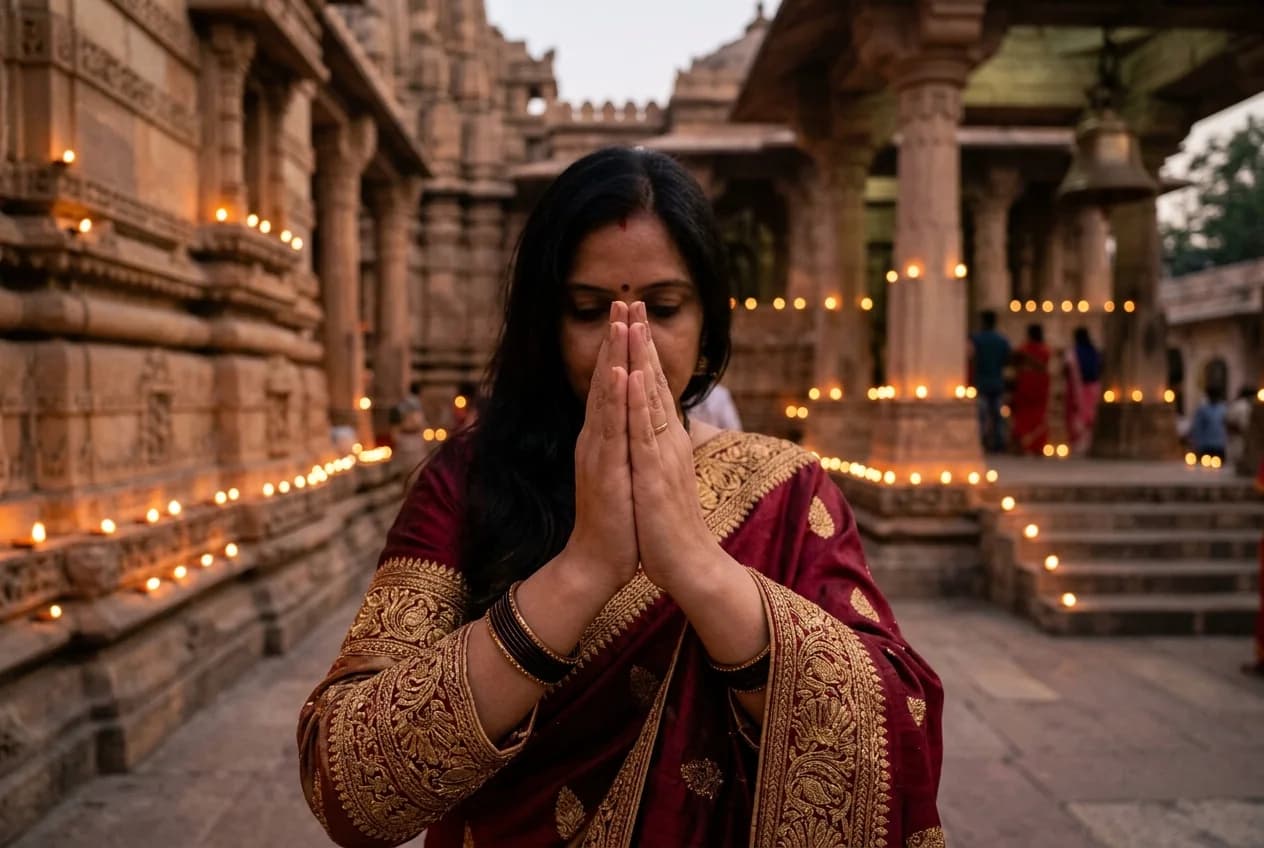
Overview: What is it?
In the Indian worldview, a guest who arrives without prior announcement (A-tithi: "one who has no fixed calendar date") is greeted not as an inconvenience, but as the Supreme Reality in human form. Codified in the Taittiriya Upanishad as "Atithi Devo Bhava", this tradition elevates everyday hospitality into a profound spiritual discipline.
Meaning and Significance
In Sanatan Dharma, no tradition exists solely as an empty outer mechanical ritual. Each custom reflects a harmonious synthesis of spiritual metaphysics, cultural continuity, and inner psychological balance:
Hospitality forms the fourth pillar of the Pancha Maha Yajna (Manushya Yajna). Feeding a hungry visitor, quenching thirst, and providing refuge dissolves narrow selfishness, recognizing the shared divinity dwelling in all living beings.
Indian homes across all states maintain thresholds adorned with mango leaves (Toran), threshold geometric art (Rangoli/Kolam), and water vessels to cleanse travel-worn feet before entering.
Welcoming strangers with genuine warmth counteracts social isolation, fosters community cohesion, and teaches children humility, service, and generosity.
Historical and Scriptural Context
मातृदेवो भव । पितृदेवो भव । आचार्यदेवो भव । अतिथिदेवो भव ॥
“May your mother be a divine entity unto you; may your father be a divine entity unto you; may your teacher be a divine entity unto you; may your guest be a divine entity unto you.”
एकरात्रं तु निवसन्नतिथिर्ब्राह्मणः स्मृतः । अनित्यं हि स्थितो यस्मात्तस्मादतिथिरुच्यते ॥
“A guest who stays for one night is called an Atithi, for their stay is temporary, reminding the householder of the transient nature of mortal life.”
How It Is Practiced
Preparation & Readiness
- 1Sweep and wash the front entrance each morning.
- 2Draw fresh geometric rice-flour patterns (Kolam / Rangoli) at the threshold.
- 3Keep drinking water, sweets or fruits ready for unexpected visitors.
Core Observance Sequence
- 1Greeting with folded hands (Namaskaram / Pranam) and a warm smile.
- 2Offering a seat and cool water immediately upon arrival.
- 3Inquiring gently about health and journey comfort without intrusive curiosity.
- 4Sharing home-cooked meals (Annadanam) before the host eats.
- 5Accompanying the departing guest to the outer door with folded hands and blessings.
Customs reflect deep familial love and local etiquette. While traditional ideals encourage boundless warmth, practical safety and healthy boundaries are naturally respected in modern living.
Regional and Traditional Variations
Sanatan traditions accommodate geographical diversity, regional language idioms, and family customs without losing their unifying essence:
Northern Traditions
Offering water and sweets (Pani-Mithai) is mandatory in Uttar Pradesh and Punjab; touching the feet of elders is customary.
Southern Traditions
In Tamil Nadu and Kerala, guests are served on freshly washed banana leaves with sambar, rasam, and payasam, accompanied by Kolam floor art.
Eastern Traditions
In West Bengal and Assam, guests are honored with betel leaves, areca nut (Tamul-Pan), and the traditional woven Gamusa cloth.
Western Traditions
In Rajasthan and Gujarat, "Padharo Mhare Desh" culture welcomes visitors with jaggery, water, and rich buttermilk.
Note: Despite climatic and culinary differences, the underlying ethos of revering the guest as God remains unbroken from the Himalayas to Kanyakumari.
Frequently Asked Questions
Why are Rangoli and Kolam drawn at the threshold?
Beyond aesthetics, traditional Kolams were made using edible rice flour to feed tiny ants and insects (Bhuta Yajna), sanctifying the home's entrance with harmless compassion.
What is the significance of touching an elder's feet (Charan Sparsh)?
It symbolizes surrender of ego before wisdom and experience. When the seeker bends to touch feet, the elder naturally places their hands upon the seeker's head, creating a reciprocal flow of affection and blessing.
Related Traditions & Observances
Primary Sources & Canonical Citations
- Taittiriya Upanishad, Shiksha Valli
- Manusmriti, Chapter 3
- Bhartrihari's Niti Shatakam