
Overview: What is it?
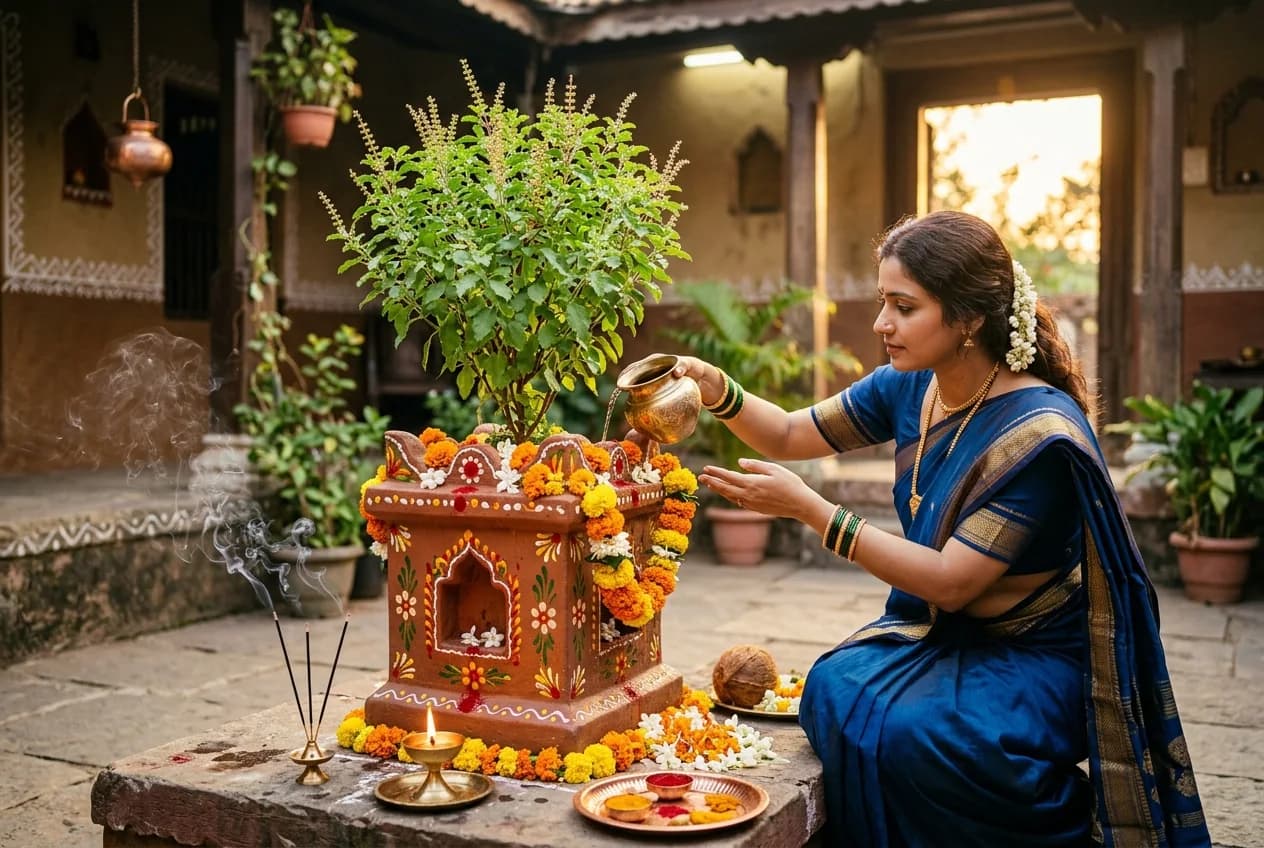
Sanatan Dharma utilizes an elegant visual vocabulary of sacred symbols and ritual objects. Rather than abstract idols, objects such as the Tilak on the forehead, the brass or copper Kalash filled with water, the oceanic Conch (Shankha), and the resonant bell (Ghanta) are spiritual antennas calibrated to awaken psychological awareness and evoke the sacred in everyday life.
Meaning and Significance
In Sanatan Dharma, no tradition exists solely as an empty outer mechanical ritual. Each custom reflects a harmonious synthesis of spiritual metaphysics, cultural continuity, and inner psychological balance:
The Tilak awakens the Ajna Chakra (the energetic center of intuition between eyebrows). Sandalwood cools agitation; sacred ash (Bhasma) reminds us of bodily impermanence; vermilion (Kumkum) invokes vitality. The Purna Kalash represents the cosmos filled with the primordial waters of creation.
Marking the forehead with Tilak welcomes guests, honors students entering exams, and accompanies every auspicious celebration, serving as an emblem of cultural integrity.
The acoustic chime of a bronze bell produces a prolonged reverberation that balances the left and right hemispheres of the brain, instantly clearing distracting thought patterns.
Historical and Scriptural Context
अग्निरिति भस्म वायुरिति भस्म जलमिति भस्म स्थलमिति भस्म व्योमेति भस्म ॥
“Fire is sacred ash, air is sacred ash, water is sacred ash, earth is sacred ash, space is sacred ash—all physical matter ultimately resolves into holy ash.”
“In the mouth of the Kalash resides Vishnu; in its neck is Shiva; in its base is Brahma; and within its waters dwell all the sacred rivers.”
How It Is Practiced
Preparation & Readiness
- 1Select natural, pure ingredients: genuine sandalwood paste (Chandan), pure Kumkum, or cow dung Vibhuti / Bhasma.
- 2Use clean water or Ganga jal for mixing.
Core Observance Sequence
- 1Apply Tilak with the right ring finger (Anamika) or thumb, moving upward with a devotional prayer.
- 2For Shaiva traditions: apply three horizontal lines of sacred ash (Tripundra) across the forehead.
- 3For Vaishnava traditions: apply two vertical white clay lines joined at the base (Urdhva Pundra) with a red or yellow line in the center.
- 4To prepare a Kalash: fill a clean brass or copper pot with water, place mango leaves around the rim, seat a consecrated coconut above, and tie sacred thread (Moli) around its neck.
- 5Ring the bell with the left hand while waving the Aarti or offering flowers with the right.
Variations of Tilak styles (such as Madhva, Ramanuja, Gaudiya, Smartha) represent rich lineage identities rather than sectarian conflict. All point toward inward remembrance.
Regional and Traditional Variations
Sanatan traditions accommodate geographical diversity, regional language idioms, and family customs without losing their unifying essence:
Northern Traditions
Red rolí/kumkum with whole grains of uncooked rice (Akshat) applied at celebrations, pujas, and farewells.
Southern Traditions
White vibhuti applied horizontally by Shaivites; distinctive red and white Urdhva Pundra worn by Sri Vaishnavas.
Eastern Traditions
Sandalwood and red sindoor commonly worn; Shankha (conch) blown at dusk and during all ceremonial openings.
Western Traditions
Sandalwood paste mixed with saffron applied generously at temples and during festive rituals.
Note: Each mark upon the forehead is an open declaration that the wearer seeks to perceive life not through mere physical eyes, but through the eye of spiritual discernment.
Frequently Asked Questions
Why is the Tilak applied between the eyebrows?
This spot corresponds to the Ajna Chakra and pineal gland area. Applying cooling sandalwood or gentle pressure stimulates concentration, relieves headaches, and centers meditation.
What does the coconut atop the Kalash symbolize?
The rough fibrous outer shell represents the ego and human head; when cracked open, the pure white kernel and sweet water represent the untainted divine soul dwelling within.
Related Traditions & Observances
Primary Sources & Canonical Citations
- Jabala Upanishad
- Varaha Purana, Ritual Liturgy
- Devi Bhagavatam, 11th Skandha