
Life-Cycle Traditions
The classical Samskaras are transitional ceremonies designed to consecrate, refine, and sanctify human consciousness at pivotal biological, psychological, and social junctures. Supported by Grihya Sutras and communal blessings, they transform natural biological events into conscious spiritual commitments.
Key Observances & Focal Points
- Garbhadhana & Pumsavana prenatal rites
- Namakarana (Sacred naming ceremony)
- Annaprashana (First intake of solid food)
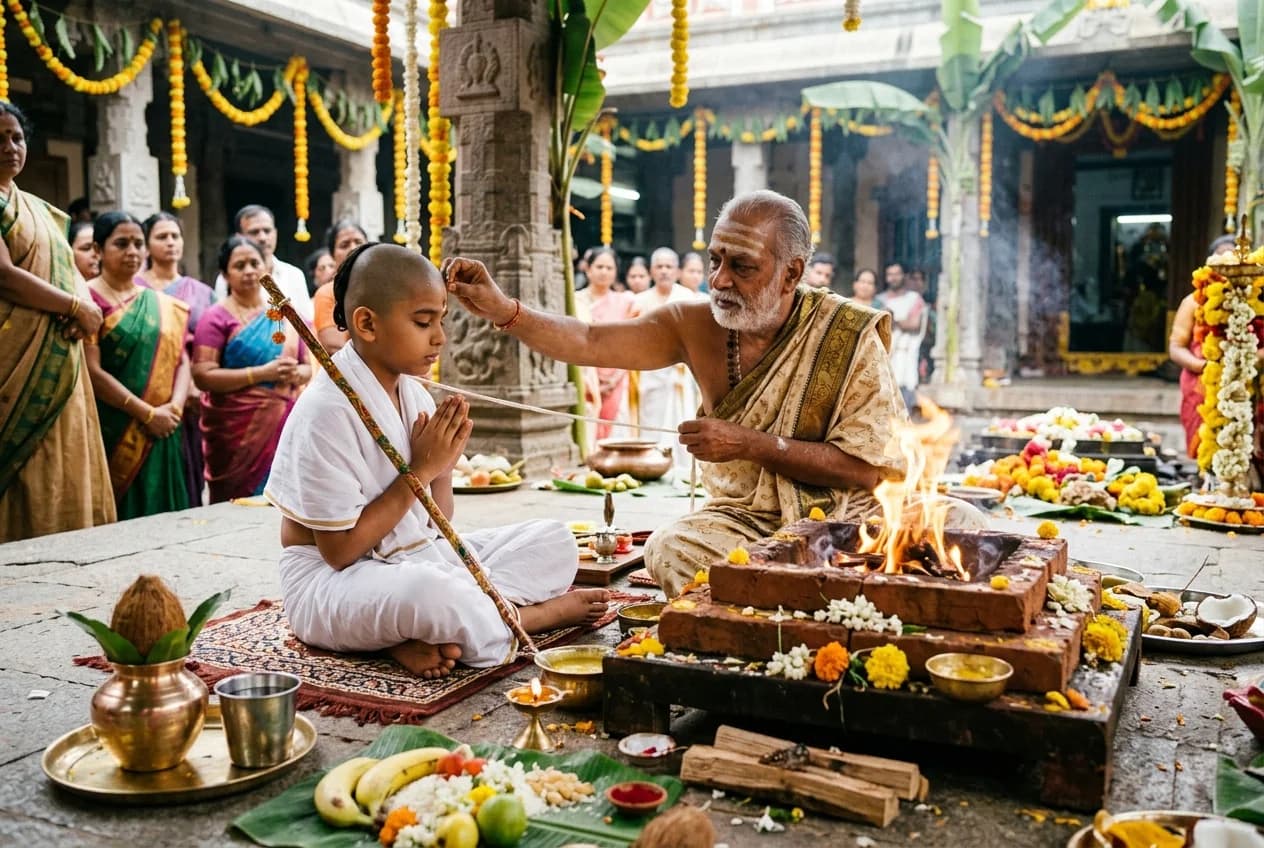
- Upanayana (Vedic initiation & sacred thread)
- Vivaha (Sacred matrimony & saptapadi)
- Antyeshti (Final transitional departure)
Explore Guides in this Category
Upanayana: The Rite of Sacred Initiation and Second Birth
The classical rite of spiritual investiture, receiving the Yajnopavita (sacred thread), learning the Savitri-Gayatri Mantra, and entering the student phase of life (Brahmacharya Ashrama).
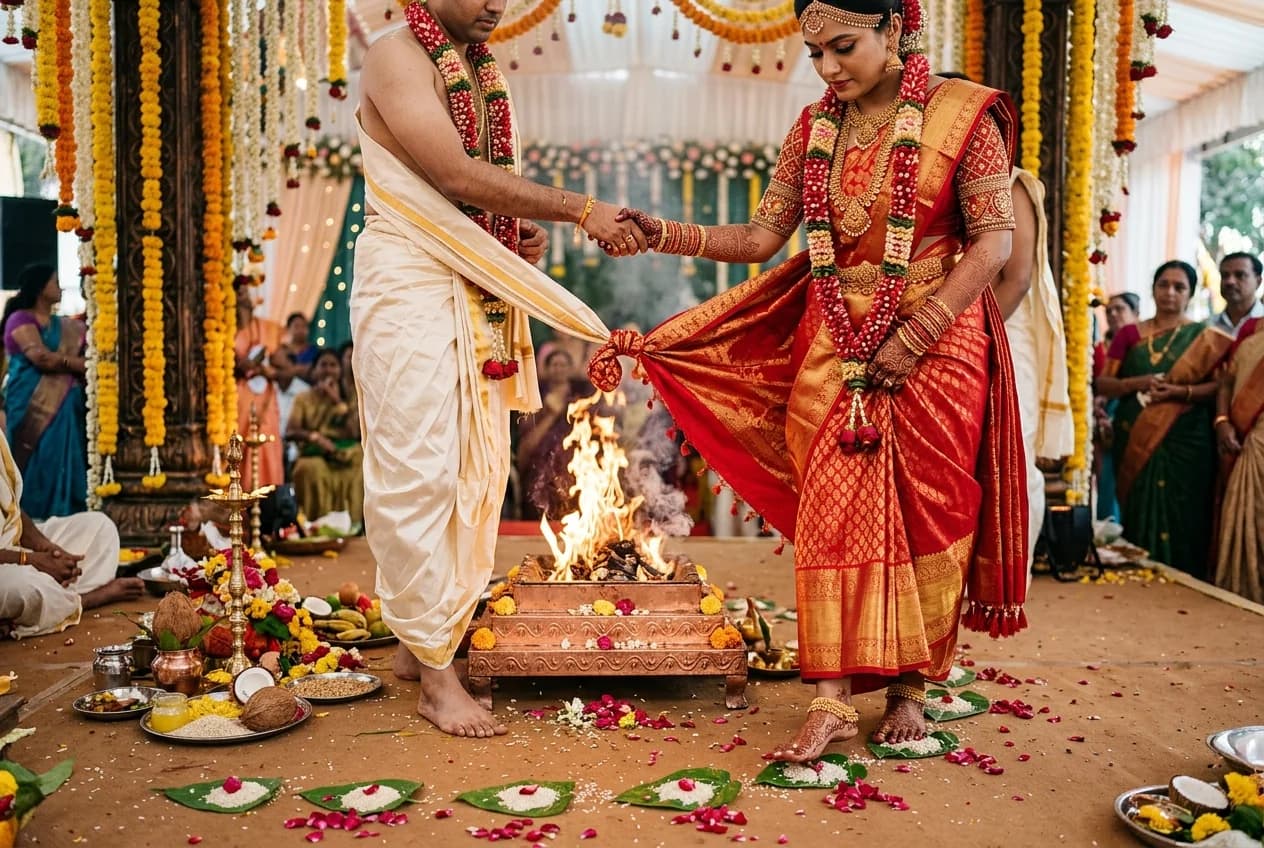
Vivaha Samskara: The Seven Steps of Sacred Matrimony
The profound sacred oaths of Hindu marriage: the ritual of Kanyadana, Panigrahana, Agni Pradakshina, and the Saptapadi (Seven Steps) of lifelong partnership.
Respecting Regional, Sampradaya & Familial Diversity
In Sanatan Dharma, traditions are not governed by a single centralized decree. Instead, observances gracefully honor Desha (geographical region), Kala (temporal circumstances), and Kula-Achara (familial lineage). While the inner spiritual intent remains universal, external expressions, languages, floral offerings, and culinary preparations reflect the rich tapestry of Indian civilization.