
Karwa Chauth (Karak Chaturthi)
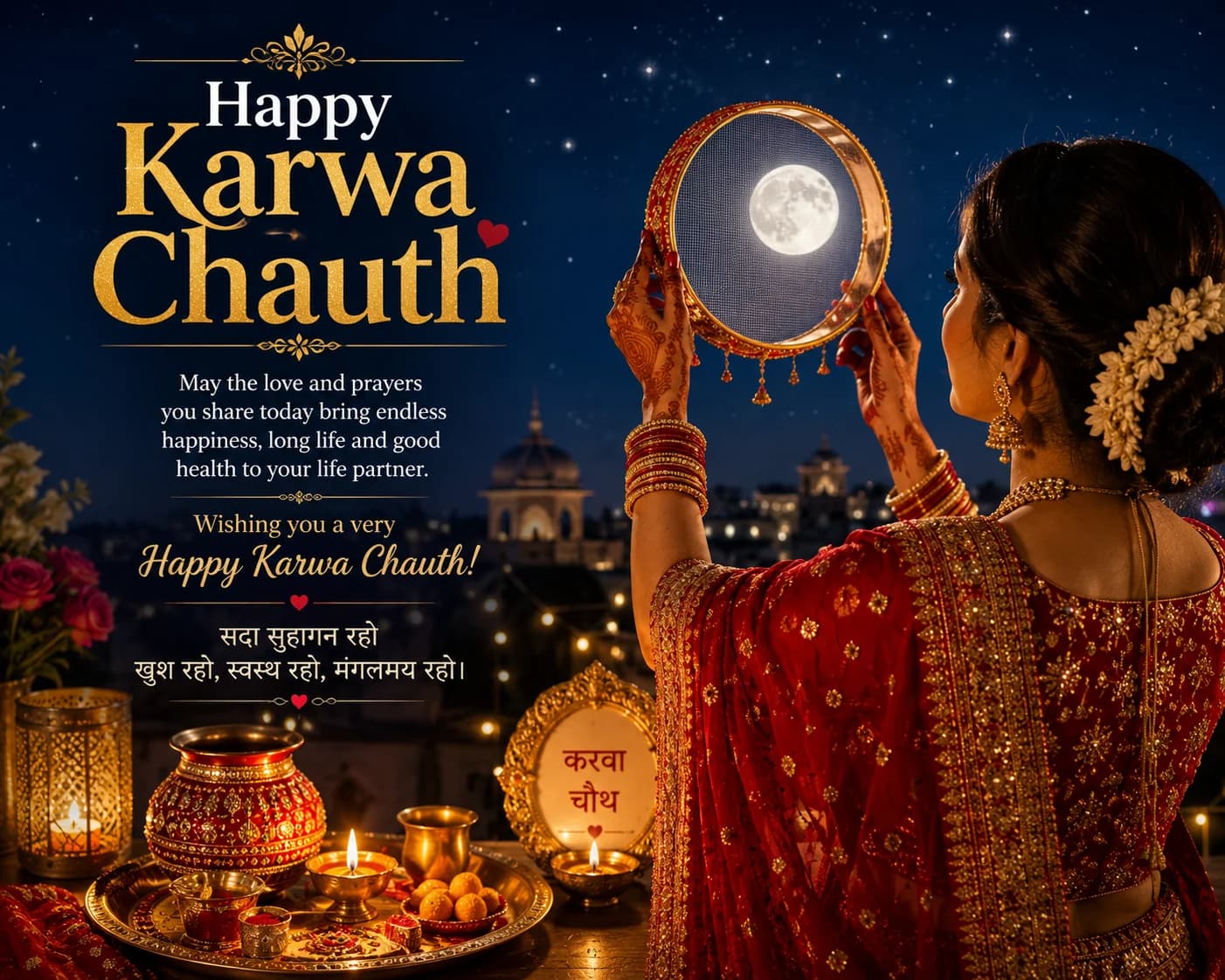
Karwa Chauth is a sacred day-long Nirjala (waterless) fast observed by married Hindu women for the health, longevity, and prosperity of their husbands.
 Chaturthi (4th Lunar Tithi)
Lexical, Linguistic & Historical Contextऐतिहासिक समीक्षा
In classical Sanskrit lexicography (Amarakosha 2.9.32: kamandaluh kundika ca karakah) and Dharma-Shastric digests (Vratarka, Vrataraja, and Nirnayasindhu), the ritual vessel is strictly termed Karaka—a spherical terracotta or copper pot fitted with a lateral spout (Toti), symbolizing the physical body (Ghata) brimming with Prana (vital water) and crowned with grain and sweetness on its lid (Saravaka). Archaeological spouted Karaka vessels excavated at Indraprastha (Delhi) and Hastinapura attest to the antiquity of spouted libation vessels in North Indian domestic rites.
०१. Nirukta & Etymological Exegesisनिरुक्तम् एवं व्युत्पत्तिः
Traditional Sanskrit hermeneutic breakdown of sacred nomenclature, Paninian verbal roots (dhātu), and theological derivations:
Compound of Karaka (an earthen or copper water-pot fitted with a spout, from verbal root kṛ) + Caturthī (the fourth lunar tithi). Literally: 'The Fourth Lunar Day of the Sacred Spouted Water-Vessel.'
Vernacular Tadbhava evolution in Western Hindi, Punjabi, and Rajasthani from Sanskrit Karaka -> Prakrit Karaa -> Karavā (spouted earthen pot) and Caturthī -> Cautha.
Named in the Nirnayasindhu and Skanda Purana after the Ikshvaku monarch Dasharatha, whose queens observed the Karaka austerity for royal protection and marital preservation.
Designated in the Vratarka and Vrataraja as the supreme autumn Nirjala Vrata observed by married women (Suvasinis) for Akhanda Saubhagya (unbroken marital felicity, longevity, and dharmic partnership).
०२. Astronomical Ephemeris & Dharma-Śāstra Rulesखगोलीय निर्णयः एवं सिद्धान्तः
In the Purnimanta lunar calendar of North, Central, and Western India, Karwa Chauth falls on Kartika Krishna Chaturthi (reckoned as Ashvina Krishna Chaturthi in the Amanta calendar). Because the culmination of the fast requires offering Arghya to the risen Moon, the governing astronomical parameter in the Nirnayasindhu and Dharmasindhu is Chandrodaya-Vyapini Chaturthi—when the fourth lunar tithi prevails at local moonrise, coinciding with the Moon's transit into its sign of supreme exaltation (Vrishabha Rashi) and Rohini Nakshatra.
Chandrodaya-Vyapti & Matri-Viddha (Tritiya Conjunction) Rule
Dharmasindhu & Nirnayasindhu (Pariccheda II, Kartika-Krishna-Paksha-Krityam)Kartika Krishna Chaturthi must prevail at local moonrise (Chandrodaya). If Chaturthi touches moonrise on two consecutive days, or fails to touch moonrise on either day, the first day (Purva—where Chaturthi is conjoined with Tritiya, termed Matri-Viddha) is strictly mandated. Because Tritiya is sacred to Mother Gauri and Chaturthi to Her son Ganesha, their conjunction forms the auspicious Mata-Putra-Yoga, whereas Panchami-viddha is prohibited.
०३. Scriptural Foundations & Puranic Hermeneuticsशास्त्रीय प्रमाणानि एवं परम्पराः
Veeravati, the daughter of the pious Brahmin Vedasharma of Indraprastha and queen of King Sudarshana, observed her first Nirjala Karaka Chaturthi at her parental home. Unable to bear watching her faint from thirst before moonrise, her seven brothers lit a fire behind a Pipal tree on a hillock and held up a sieve to mimic the rising moon. The moment she broke her fast prematurely upon this false moonrise, her husband fell into a coma-like affliction. Guided by Goddess Indrani and Maa Parvati, Veeravati observed every monthly Chaturthi and kept the subsequent Kartika Krishna Karaka Chaturthi with unshakeable Tapas, restoring her husband to full health and consciousness.
When Arjuna departed for the Indrakila mountains to perform penance for the Pashupata Astra and the Pandavas faced acute peril in exile, Draupadi sought refuge in Bhagwan Shri Krishna. Krishna imparted the Karaka Chaturthi Vrata originally revealed by Lord Shiva to Goddess Parvati. During the evening liturgy, the Mahabharata narrative of Sati Savitri—who engaged Yamaraja in dharmic discourse through the radiance of her Pativratya Tapas and reclaimed Satyavan's life—is recited alongside Veeravati's chronicle.
०४. Philosophical & Ayurvedic Tattvaतात्त्विक विमर्शः एवं आयुर्वेद विज्ञानम्
Adhyātmik Significance
आध्यात्मिक तात्पर्यम् · Inner MetaphysicsIn Yogic and Tantric symbolism, the clay Karaka represents the human body (Ghata) formed from the five elements (Pancha-Mahabhuta); filling it with pure water signifies stilling the restless Prana, tying the red Mauli around its neck signifies the covenant of Dharma, and lighting a cow-ghee Dipaka atop its lid signifies the awakened Atma-Jyoti. Viewing the exalted Moon (Soma—the presiding deity of Manas) and subsequently one's spouse through a finely perforated sieve (Chalani) symbolizes filtering out egoic grievances, mental projections, and karmic flaws to behold the partner as a sacred reflection of Shiva-Shakti.
Ayurvedic Ṛtu-Sandhi
ऋतुसन्धि विज्ञानम् · Seasonal Bio-HarmonyOccurring four days after Sharad Purnima as autumn begins transitioning toward early winter (Hemanta), a single-day sunrise-to-moonrise Nirjala Upavasa (13–14 hours) triggers cellular autophagy, clears residual metabolic toxins (Ama), and resets Jatharagni (digestive fire) before the heavy anabolic winter diet begins.
Dietary & Fasting Science
उपवास विज्ञानम् · Metabolic & Sattvic AharaThe traditional pre-dawn Sargi consumed during Brahma-Muhurta is an Ayurvedic slow-release formulation: Pheni/Sevaiyan cooked in pure cow's milk provides complex carbohydrates and lipids that slow gastric emptying; soaked almonds, walnuts, and pistachios supply sustained essential fatty acids; and tender coconut water with pomegranate (Dadima) replenishes intracellular potassium and electrolytes (Tarpaka), preventing mucosal dryness (Trishna) and Vata-Pitta aggravation during the waterless day.
०५. Canonical Anuṣṭhāna Vidhi & Liturgical Orderपूजा क्रमः एवं मन्त्र विधानम्
Prescribed Canonical Samagrī (पूजोपकरणानि):
Brahma-Muhurta Sargi & Dawn Nirjala Sankalpa
ब्राह्ममुहूर्त सर्गी एवं निर्जला व्रत संकल्पWake before dawn, bathe, and partake of the auspicious Sargi blessed by the mother-in-law. Immediately prior to sunrise, hold water, Akshata, and a betel nut in the right palm to take the formal Nirjala Vrata Sankalpa for the day.
Pradosha Vedi Sthapana & Shiva-Parivara Pujana
प्रदोष वेदी स्थापना एवं शिव-परिवार पूजनAdorn the home altar or courtyard with rice-paste Aipana/Rangoli and install the image or Thapa of Maa Gauri (Karva Mata), Lord Shiva, Skanda, and Ganesha. Tie sacred Mauli around the spouted clay Karaka pots, apply thirteen dots of Sindura and Roli, and perform Shodashopachara Puja.
Vrata-Katha Shravana & Karaka-Parivartana (Thali Batai)
व्रतकथा श्रवण एवं करक-परिवर्तनHold thirteen grains of wheat and Akshata in the right hand while listening attentively to the canonical narratives of Queen Veeravati, Draupadi, and Sati Savitri. In regional collective gatherings, married women rotate their decorated Karaka platters seven times around the central Gauri altar.
Chandrodaya Chalani-Darshana & Chandra-Arghya
चन्द्रोदय चालनी-दर्शन एवं चन्द्र-अर्घ्यWhen the fourth-day Moon rises in the night sky, place a lit cow-ghee lamp inside the sieve (Chalani), behold the Moon through the sieve, and offer water mixed with raw milk, white sandalwood, and Akshata from the spout of the Karaka while reciting the Chandra-Arghya Mantra. Immediately thereafter, view the spouse's face through the illuminated sieve.
Vayana Dana & Vrata Parana
वायना दान एवं व्रत पारणTake the first sip of water and sweet morsel from the husband's hand, present the consecrated Vayana (Baya) platter and spouted Karaka with Dakshina to the mother-in-law or an elder Suvasini while touching her feet, and conclude the fast with a pure sattvic meal.
Vrat Pāraṇ Canonical Rule (पारण निर्णयः)
Canonical Parana is performed only after direct visual sighting (Darshana) and Arghya offering to the risen Moon on Kartika Krishna Chaturthi. If dense cloud cover completely obscures the Moon, Arghya is offered in the eastern/northeastern direction after the astronomically computed local Chandrodaya time, or by viewing the Shiva-mastaka Chandra in a temple.
०६. Regional Living Traditions & Ethnographyक्षेत्रीय परम्पराः एवं लोकसंस्कृतिः
Defined by the pre-dawn Sargi platter gifted by the mother-in-law (containing Pheni, dry fruits, and Shringara), the Baya gift sent by the bride's maternal home, and afternoon Thali Batai circles where women rotate their Karva platters seven times while singing 'Viro kuriye Karvara, sarv suhagan Karvara.'
Women paint sacred wall and floor murals (Karva Thapa) using rice paste (Pithara), turmeric, and red ochre (Geru) depicting Gauri, Ganesha, the Sun, the Moon, and Veeravati's seven brothers. Two clay Karvas and spun-sugar pots (Chini ke Karve) are worshiped with steamed lentil-rice Faras and sweet Puas.
Celebrated with traditional red-and-gold Bandhej Odhanis, intricate Mehandi mandalas, and special pilgrimage or prayers directed to the historic hilltop shrine of Chauth Mata at Chauth Ka Barwara (Sawai Madhopur).
Observed both as the marital Karaka Chaturthi and as one of the four major annual Sankashti Chaturthis dedicated to Vakratunda Mahaganapati, featuring Til-Guda Laddu and Modaka offerings at moonrise.
०७. Critical Bibliography & Textual Witnessesग्रन्थसूची एवं प्रमाणग्रन्थाः
Primary Sanskrit Texts (मूलसंस्कृतग्रन्थाः)
- Nirṇayasindhu of Kamalākara Bhaṭṭa (1612 CE) — Pariccheda II, Kārtika-kṛṣṇa-karaka-caturthī-nirṇayaḥ (Nirnaya Sagar Press, Mumbai).
- Dharmasindhu of Kāśīnātha Upādhyāya (1790 CE) — Pariccheda II, Karaka-caturthī-vrata-prakaraṇam (Chaukhamba Bharati Academy, Varanasi).
- Vratārka of Śaṅkara Bhaṭṭa (17th century CE) — Caturthī-Vrata-Prakaraṇam: Karaka-Caturthī-Vrata-Vidhiḥ & Kathā (Venkateshwar Press, Mumbai).
- Vratarāja of Viśvanātha Daivajña (1736 CE) — Karaka-caturthī-vratam (Chaukhamba Sanskrit Series, Varanasi).
- Skanda Purāṇa — Kāśī Khaṇḍa & Prabhāsa Khaṇḍa (Caturthī-vrata-māhātmyam).
- Mahābhārata — Vana Parva (Pativratā-māhātmya-parva: Sāvitrī-Upākhyāna, Adhyāyas 291–297) (Critical Edition, BORI, Pune).
Secondary Indological Scholarship (शोधग्रन्थाः)
- Kane, Pandurang Vaman. History of Dharmaśāstra, Vol. V, Part I, Section on 'Karaka-caturthī,' p. 292. BORI, Pune, 1958.
- Pearson, Anne Mackenzie. Because It Gives Me Peace of Mind: Ritual Fastings in the Religious Lives of Hindu Women. SUNY Press, 1996.
- McGee, Mary. 'Desired Fruits: Motive and Intention in the Votive Rites of Hindu Women,' in Roles and Rituals for Hindu Women, ed. Julia Leslie, pp. 71–88. Motilal Banarsidass, 1992.
- Pintchman, Tracy. Guests at God's Wedding: Celebrating Kartik among the Women of Benares. SUNY Press, 2005.
Frequently Asked Questions
How is the observance date of Karwa Chauth (Karak Chaturthi) determined?
In Vedic astronomical calculations, Karwa Chauth (Karak Chaturthi) is observed on Chaturthi (4th Lunar Tithi). Because Hindu calendar days begin with local sunrise (Surya Udaya), exact puja timings (Muhurta) depend on when the auspicious Tithi prevails in your specific geographical location.
Are there fasting (Vrat) guidelines associated with this festival?
Fasting practices vary across families and sampradayas. Common observances range from Phalahar (consuming fruits and milk), fasting until twilight pradosh kaal, to a complete waterless vigil (nirjala). Seekers observe according to personal health and lineage traditions.
What is the core spiritual significance behind this celebration?
Karwa Chauth is a sacred day-long Nirjala (waterless) fast observed by married Hindu women for the health, longevity, and prosperity of their husbands. Celebrating this holy day fosters familial gratitude, charitable sharing (Danam), and attunement with cosmic solar and lunar cycles.
How do regional customs differ across India?
Sanatan Dharma embraces rich regional diversity. While core Vedic mantras and reverence for the divine remain universal, local celebrations reflect distinct linguistic hymns, traditional culinary offerings, and cultural expressions.
Related Festivals & Observances
Ahoi Ashtami
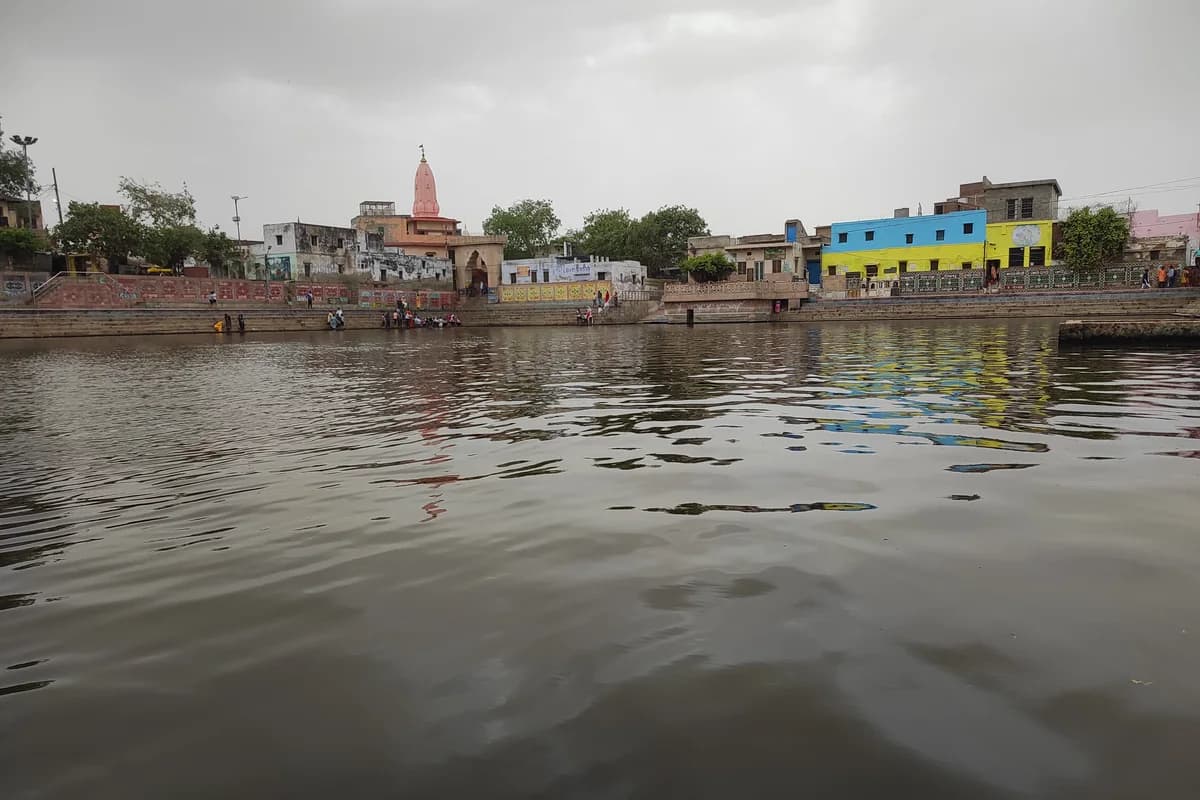
Ahoi Ashtami is a traditional fast observed by mothers on Kartik Krishna Ashtami for the longevity, health, and well-being of their children.
Bathukamma Floral Festival
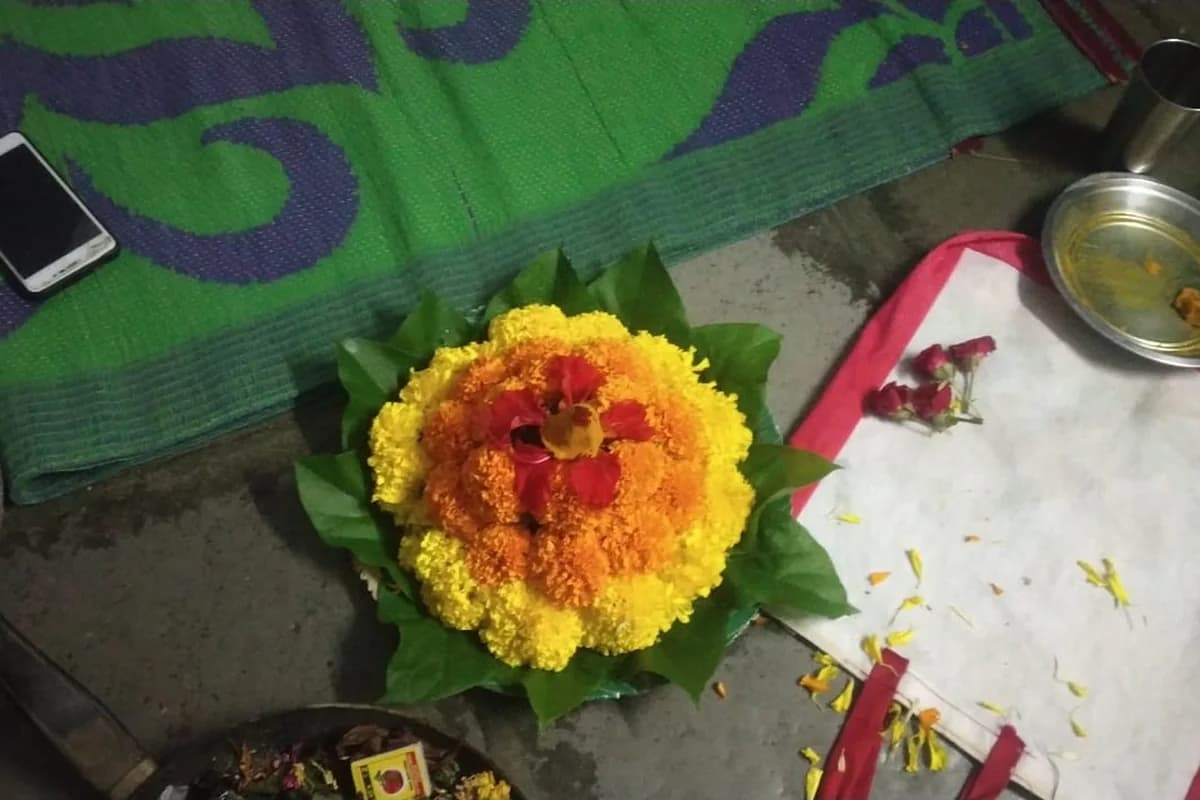
Bathukamma is Telangana's iconic 9-day floral festival celebrated by women during Sharad Navratri, worshiping Goddess Maha Gauri with concentric mounds of seasonal wildflowers.
Bhai Dooj (Yama Dwitiya)
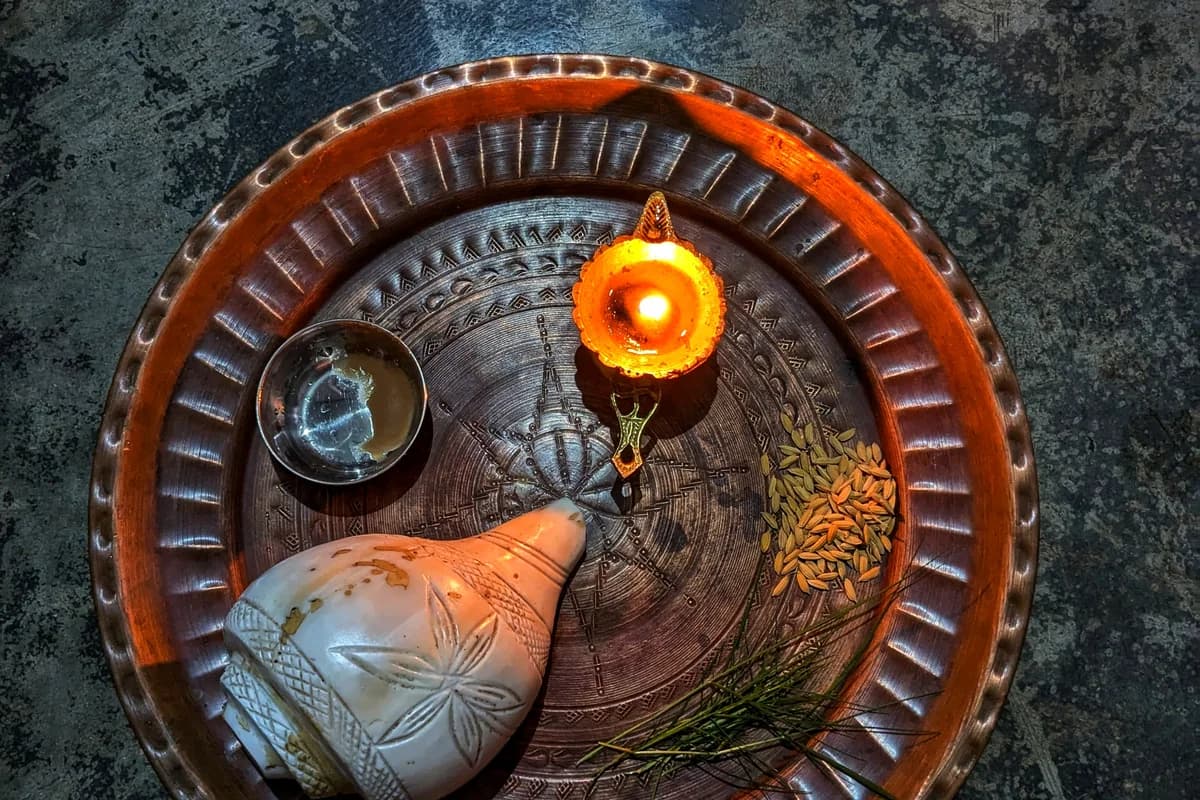
Bhai Dooj concludes the 5-day Diwali festival, celebrating the eternal bond between brother and sister inspired by Goddess Yamuna welcoming Her brother Lord Yama.