
The 18 Mahapuranas (अष्टादश महापुराणानि)(अष्टादश महापुराणानि)
Expansive cosmological compendia preserving ancient genealogy, temple legends (Sthala Mahatmya), festival origins, ritual instructions, and devotional allegories making profound metaphysics tangible for the public
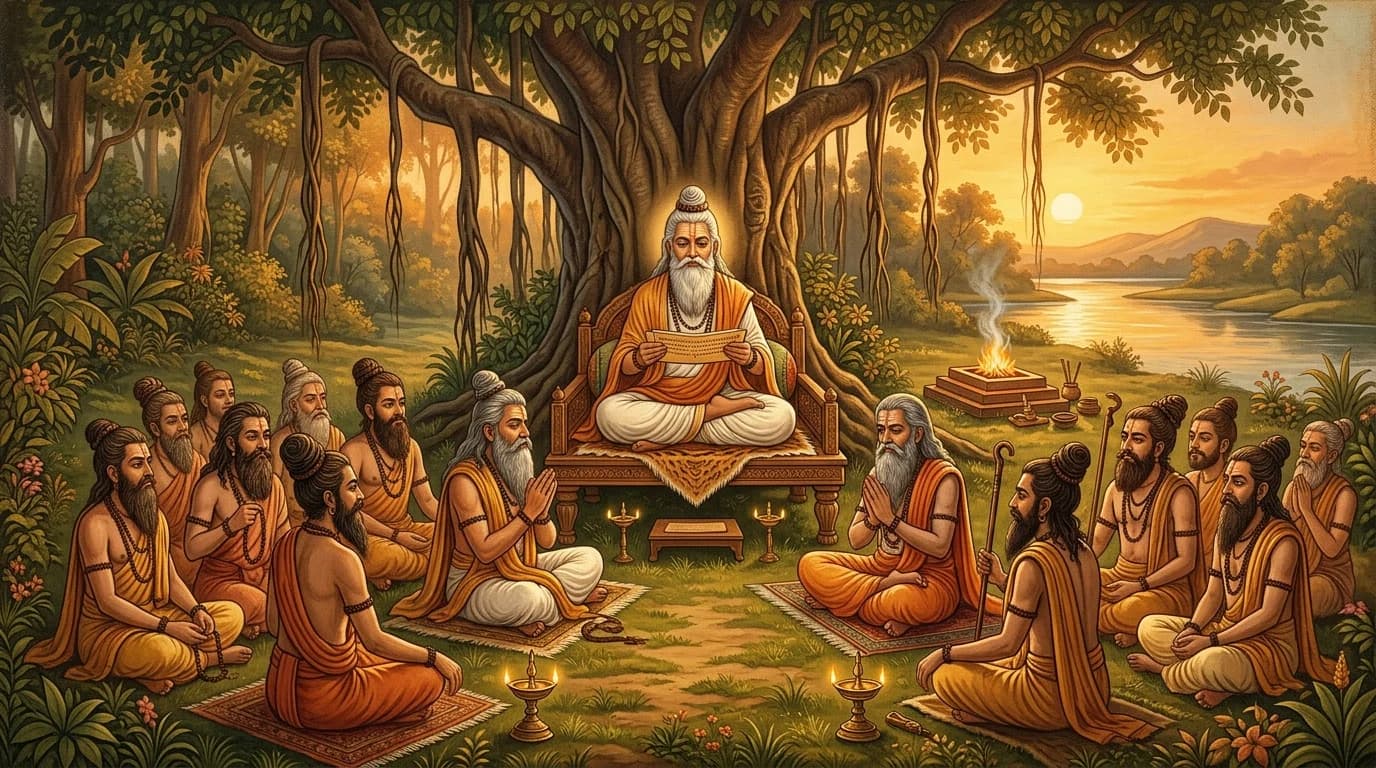
Section 1: Taxonomic Header & Etymology (Nirukta & Vyutpatti)
| Devanagari Forms | पुराणम् (neuter singular: purāṇam; plural: पुराणानि, purāṇāni); अष्टादश महापुराणानि (Aṣṭādaśa Mahāpurāṇāni) |
|---|---|
| IAST Transliteration | Purāṇam / Aṣṭādaśa Mahāpurāṇāni |
| Verbal Root (Dhātu) | Formed from the indeclinable temporal stem purā (पुरा — "in ancient times, primordially, from of old") via Pāṇini Aṣṭādhyāyī 4.3.23 (sāyaṃ-ciraṃ-prāhṇe-prage'vyayebhyaṣ ṭyu-ṭyulau tuṭ ca), which attaches the taddhita suffix ṭyu (-ana), undergoing irregular euphonic coalescence (purā + ana → purāṇa, "that which originates in antiquity and endures across time"). |
| Grammatical Derivation (Vyutpatti) | Classical Sanskrit philology and Nirukta establish the grammatical and conceptual derivation across three classical horizons: (1) Pāṇinian Morphological Analysis: Derived from the indeclinable purā with the suffix ṭyu (-ana), denoting an enduring record of primordial events that remains effective in the present. (2) Yāska’s Nirukta (3.19): Sage Yāska resolves purāṇa through a profound semantic paradox: "Purā navaṃ bhavati iti purāṇam" (पुरा नवं भवति इति पुराणम्) — "That which, though ancient (purā), remains perpetually fresh, vibrant, and new (navaṃ bhavati) in every generation is Purāṇa." (3) Internal Purāṇic Etymologies: In Vāyu Purāṇa 1.203: "Yasmāt purā hy anantīdaṃ purāṇaṃ tena tat smṛtam" ("Because it breathed and lived in ancient times [√an, to breathe], it is remembered as Purāṇa"). In Padma Purāṇa (Sṛṣṭi Khaṇḍa 1.53): "Purā paramparaṃ vaṣṭi purāṇaṃ tena vai smṛtam" ("Because it desires and transmits timeless spiritual tradition from generation to generation, it is called Purāṇa"). |
“That which, though ancient, remains perpetually fresh and new in every generation is Purāṇa.”
— Yāska’s Nirukta 3.19“One must elucidate and amplify the meaning of the Veda through the light of both Itihāsa and Purāṇa.”
— Vāyu Purāṇa 1.201 & Mahābhārata 1.1.204Semantic Evolution & Why “Religion” is an Inadequate Translation
Far from being a purely medieval or post-classical invention, the term Purāṇa appears in the earliest strata of Vedic Śruti alongside the four Saṃhitās:
Proclaims that the Ṛg, Sāma, metrical hymns, Purāṇa, and Yajus arose simultaneously from the primordial cosmic residue (Ucchiṣṭa) of creation.
Reveres Itihāsa-Purāṇa as a sacred liturgical stream recited during the cyclic intervals (Pāriplava nights) of the solemn Aśvamedha sacrifice.
Explicitly proclaims that Itihāsa and Purāṇa were breathed forth effortlessly from the Supreme Brahman alongside the four Vedas.
Sage Sanatkumāra identifies Itihāsa-Purāṇa as the Fifth Veda (Pañcama-Veda), the indispensable key to Vedic comprehension.
Section 2: Abstract & Philosophical Core
How does an ancient civilization transmit subtle Upaniṣadic metaphysics—such as the non-dual nature of Consciousness (Brahman), the law of moral causality (Karma), and the path of liberation (Mokṣa)—not merely to a handful of forest ascetics, but to millions of householders, artisans, children, and pilgrims across every village and century? The answer of Sanātana Dharma is the Purāṇa corpus.
In classical Sanskrit hermeneutics, the Purāṇas perform three indispensable functions within the architecture of Dharma: First, Veda-Upabṛṃhaṇa (वेदोपबृंहण — Amplification and Illumination of the Veda). What the Vedas state in terse, cryptic aphorisms, the Purāṇas expand into vivid, unforgettable narratives, cosmological allegories, and devotional dialogues. Just as a microscope or magnifying glass does not invent a new object but makes invisible details clearly visible to the human eye, Upabṛṃhaṇa makes the esoteric truths of Śruti accessible to all (Strī-śūdra-dvijabandhūnām — Bhāgavata 1.4.25).
Second, Suḥṛt-Sammita Upadeśa (सुहृत्सम्मित उपदेश — Counsel of a Loving Friend). Whereas Vedic injunctions command like a sovereign ruler (Prabhu-sammita), the Purāṇas counsel like an affectionate friend—showing through the lives of Prahlāda, Dhruva, Hariścandra, Ambariṣa, Kapila, Devahūti, and Mārkaṇḍeya how spiritual integrity triumphs over adversity and how arrogance (Asura-bhāva) leads to self-destruction.
Third, Integration of Metaphysics with Sacred Geography, Ecology, and Art. The Purāṇas mapped the entire physical landscape of the Indian subcontinent (Bhāratavarṣa) as a living sacred mandala. Every river (Gaṅgā, Yamunā, Godāvarī, Sarasvatī, Narmadā, Sindhu, Kāverī), mountain (Himālaya, Vindhya, Sahyādri, Mahendra), forest (Naimiṣāraṇya, Daṇḍakāraṇya), and temple town (Kāśī, Prayāga, Ayodhyā, Mathurā, Kāñcī, Ujjayinī, Dvārakā, Rāmeśvaram, Purī) was woven into a shared civilizational memory through Sthala-Māhātmyas (sacred place-chronicles), Vratas (seasonal vows), and Utsavas (festivals).
Section 3: Primary Scriptural Anchors (Śruti, Smṛti, and Itihāsa)
One must elucidate and amplify the Veda through the light of both Itihāsa and Purāṇa; for the Veda itself dreads a person of shallow learning, thinking: "This person will distort my meaning!"
Cited by Śrī Rāmānujācārya in the Śrībhāṣya, Śrī Madhvācārya in the Brahma-sūtra-bhāṣya, and Jīva Gosvāmī in the Tattva-sandarbha, this verse is the cornerstone of traditional scriptural interpretation. Reading Vedic mantras in isolation without the ethical, cosmological, and devotional context preserved in the Itihāsa-Purāṇa leads to literalist distortion (Veda-prahāra); the Purāṇas safeguard the holistic spirit of the Vedas.
Primary cosmic creation (Sarga), periodic dissolution and secondary re-creation (Pratisarga), genealogy of gods and sages (Vaṃśa), the cosmic epochs of the Manus (Manvantaras), and the chronicles of royal dynasties (Vaṃśānucarita)—these are the five defining characteristics (Pañcalakṣaṇa) of a Purāṇa.
Preserved identically in Amarasimha’s 5th-century lexicon Amarakośa and across the major Purāṇas, the Pañcalakṣaṇa formula integrates macrocosmic time (Sarga, Pratisarga, Manvantara) with human history (Vaṃśa, Vaṃśānucarita), situating earthly civilization within a vast, lawful cosmic cycle.
Primary creation (Sarga), secondary differentiation (Visarga), sustenance (Vṛtti), protective incarnations (Rakṣā), cosmic epochs (Manvantaras), genealogies (Vaṃśa), dynastic chronicles (Vaṃśānucarita), dissolution (Saṃsthā), the karmic cause (Hetu), and the Ultimate Transcendent Refuge (Apāśraya)—knowers of the tradition declare a Mahāpurāṇa to be endowed with these ten characteristics, while some enumerate five, distinguishing between major (Mahāpurāṇa) and minor (Upapurāṇa) compilations.
In his Bhāvārthadīpikā commentary on Bhāgavata 2.10.1–7 and 12.7.9–10, Śrīdhara Svāmī points out the teleological genius of the Daśalakṣaṇa architecture: the first nine topics (creation, history, cosmic cycles, and dissolution) are expounded solely to illuminate the tenth and supreme topic—Apāśraya (Brahman / Bhagavān), the changeless Witness and shelter of all beings.
Two beginning with Ma (Matsya, Mārkaṇḍeya), two with Bha (Bhāgavata, Bhaviṣya), three with Bra (Brahma, Brahmāṇḍa, Brahmavaivarta), four with Va (Viṣṇu, Vāyu/Śiva, Vāmana, Varāha), and those beginning with A (Agni), Nā (Nārada), Pad (Padma), Liṅga, Kū (Kūrma), and Ska (Skanda [alongside Garuḍa])—these are the eighteen Purāṇas enumerated distinctly.
Preserved across Sanskrit grammatical and paurāṇika oral lineages, this metric mnemonic allows students and scholars to memorize the entire eighteen-text canon effortlessly using initial phonemes.
That unwavering intensity of love which the non-discriminating feel toward fleeting sense-objects—may that same unbroken love never depart from my heart as I meditate upon Thee! (Viṣṇu Purāṇa 1.19.85) ... Across all eighteen Purāṇas, Maharṣi Vyāsa's ethical teaching is distilled into two truths: serving the welfare of others is virtue (Puṇya), and harming others is sin (Pāpa).
Spoken by the child-sage Prahlāda in the Viṣṇu Purāṇa, this prayer sublimates human attachment: Bhakti does not destroy emotion but re-channels its full intensity toward the Divine. The accompanying classical Subhāṣita crystallizes the universal moral mandate governing the entire 400,000-verse corpus.
Section 4: Structural Architecture — The 18 Mahāpurāṇas, Upapurāṇas & Triguṇa Matrix
Both the Matsya Purāṇa (Adhyāya 53), the Viṣṇu Purāṇa (3.6.21–24), and the Bhāgavata Mahāpurāṇa (12.13.4–9) record the exact traditional order and verse-metrics (Grantha-saṅkhyā, totaling 400,000 Ślokas) of the eighteen Mahāpurāṇas, complemented by eighteen recognized Upapurāṇas:
1. The Canonical Inventory of the 18 Mahāpurāṇas (अष्टादश महापुराण तालिका)
The eighteen Mahāpurāṇas constitute a collective 400,000-verse sacred corpus preserving cosmogony, dynastic genealogies, philosophical dialogues, temple sciences, and cultural geography:
| No. | Mahāpurāṇa & Sanskrit Title | Traditional Extent | Structural Divisions | Key Treatises, Themes & Philosophical Highlights |
|---|---|---|---|---|
| 1 | Brahma (Ādi) Purāṇa ब्रह्मपुराणम् Brahma Purāṇam | 10,000 Ślokas | Divided into Pūrva and Uttara Bhāgas (245 Adhyāyas) | Revered as the Ādi-Purāṇa. Preserves cosmology, solar and lunar genealogies, and extensive sacred geography of Utkala/Odisha (Purusottama-kṣetra / Jagannātha, Konark, Ekāmra) and the Gautamī (Godāvarī) Māhātmya. |
| 2 | Padma Purāṇa पद्मपुराणम् Padma Purāṇam | 55,000 Ślokas | Second largest Purāṇa, divided into 6 Khaṇḍas (Sṛṣṭi, Bhūmi, Svarga, Pātāla, Kriyā-yoga-sāra, and Uttara) | Houses the celebrated Gītā-Māhātmya, Bhāgavata-Māhātmya, Rāma-Sahasranāma, Viṣṇu-Sahasranāma, and the extensive pilgrimage manual for Puṣkara and the Gaṅgā. |
| 3 | Viṣṇu Purāṇa विष्णुपुराणम् Viṣṇu Purāṇam | 23,000 Ślokas (~6,400 extant) | Divided into 6 Aṃśas (narrated by Sage Parāśara to Maitreya) | The most structurally compact and classical exemplar of the Pañcalakṣaṇa model; foundational text for Śaṅkara’s and Rāmānuja’s Bhāṣyas (Prahlāda-carita, Dhruva-carita, Bharata/Jaḍabharata, Kṛṣṇa-carita). |
| 4 | Vāyu / Śiva Mahāpurāṇa वायुपुराणम् / शिवमहापुराणम् Vāyu / Śiva Mahāpurāṇam | 24,000 Ślokas | Vāyu: 4 Pādas (Prakriyā, Anuṣaṅga, Upodghāta, Upasaṃhāra). Śiva: 7 extant Saṃhitās (Vidyeśvara, Rudra, Śatarudra, Koṭirudra, Umā, Kailāsa, Vāyavīya) | Classical lists alternate between Vāyu and Śiva Purāṇa. Expounds the 12 Jyotirliṅgas, Pañcākṣara Mantra theology, Śivādvaita philosophy, and the cosmic dance of Naṭarāja. |
| 5 | Śrīmad Bhāgavata Mahāpurāṇa श्रीमद्भागवतमहापुराणम् Śrīmad-Bhāgavata-Mahāpurāṇam | 18,000 Ślokas | Divided into 12 Skandhas (335 Adhyāyas, narrated by Śukadeva Gosvāmī to King Parīkṣit) | Acclaimed as the ripened fruit of the Vedic tree (Nigama-kalpataror galitaṃ phalam — 1.1.3). Houses the Kapila-Gītā (Sk. 3), Rāsa-Pañcādhyāyī (Sk. 10), and Uddhava-Gītā (Sk. 11). |
| 6 | Nāradīya (Bṛhannāradīya) Purāṇa नारदपुराणम् Nāradīya Purāṇam | 25,000 Ślokas | Divided into Pūrva (4 Pādas) and Uttara Bhāgas (narrated by Sanatkumāra et al. to Nārada) | Preserves an encyclopedic syllabus of the 6 Vedāṅgas (astronomy, grammar, prosody, etymology), a complete summary index of all 18 Mahāpurāṇas, and Bhakti-tattva. |
| 7 | Mārkaṇḍeya Purāṇa मार्कण्डेयपुराणम् Mārkaṇḍeya Purāṇam | 9,000 Ślokas | 137 Adhyāyas (dialogue between Sage Mārkaṇḍeya and Jaimini’s birds) | Houses the Devī Māhātmya (Durgā Saptaśatī / Caṇḍī) in Adhyāyas 81–93 (700 verses)—the supreme canonical scripture of Śākta philosophy—alongside Queen Madālasā’s non-dual lullaby to her sons. |
| 8 | Agni (Āgneya) Purāṇa अग्निपुराणम् Agni Purāṇam | 15,400 Ślokas | 383 Adhyāyas (spoken by Agni to Sage Vasiṣṭha) | A monumental encyclopedia of classical Indian sciences: temple architecture (Vāstu & Śilpa), iconography, poetics (Alaṅkāra-śāstra), dramaturgy, Āyurveda, gemology, archery (Dhanurveda), and civil law. |
| 9 | Bhaviṣya Purāṇa भविष्यपुराणम् Bhaviṣya Purāṇam | 14,500 Ślokas | Divided into 4 Parvas (Brāhma, Madhyama, Pratisarga, Uttara) | Expounds solar worship (Sūryopāsanā / Sāmba tradition), temple consecration, the calendar of seasonal festivals (Vratas and Tithis), and charitable civic duties (Iṣṭāpūrta). |
| 10 | Brahmavaivarta Purāṇa ब्रह्मवैवर्तपुराणम् Brahmavaivarta Purāṇam | 18,000 Ślokas | Divided into 4 Khaṇḍas (Brahma, Prakṛti, Gaṇeśa, and Śrī-Kṛṣṇa-Janma Khaṇḍa) | Celebrates creation as the blissful manifestation (Vivarta) of Parabrahman Śrī Kṛṣṇa and Śrī Rādhā alongside the five forms of Mūla-Prakṛti (Durgā, Lakṣmī, Sarasvatī, Sāvitrī, Rādhā). |
| 11 | Liṅga Mahāpurāṇa लिङ्गमहापुराणम् Liṅga Mahāpurāṇam | 11,000 Ślokas | Divided into Pūrva (108 Adhyāyas) and Uttara (55 Adhyāyas) Bhāgas | Expounds the metaphysical theology of the Aliṅga (formless Absolute Śiva) and the Liṅga (the cosmic pillar of infinite light, Jyotirliṅga-stambha), Aṣṭamūrti cosmology, and Pāśupata Yoga. |
| 12 | Varāha Purāṇa वराहपुराणम् Varāha Purāṇam | 24,000 Ślokas | 217 Adhyāyas (spoken by Lord Viṣṇu as Varāha to Bhūdevī / Mother Earth) | Houses the Mathurā-Māhātmya, Nāciketa-upākhyāna, Dharma-saṃhitā, and the famous Varāha Carama Śloka on the Lord remembering His devotee at the final hour of departure. |
| 13 | Skanda Mahāpurāṇa स्कन्दमहापुराणम् Skanda Mahāpurāṇam | 81,100 Ślokas | The Largest of all 18 Mahāpurāṇas, organized either into 7 Khaṇḍas or 6 Saṃhitās | Houses the Kāśī Khaṇḍa, Kedāra Khaṇḍa, Utkala Khaṇḍa, Sūta Saṃhitā (with Mādhavācārya’s commentary), and the Guru Gītā. |
| 14 | Vāmana Purāṇa वामनपुराणम् Vāmana Purāṇam | 10,000 Ślokas | 95 Adhyāyas (narrated by Sage Pulastya to Nārada) | Harmoniously celebrates both Lord Trivikrama / Vāmana (King Bali’s selfless surrender) and Lord Śiva-Pārvatī (marriage of Umā and Maheśvara), alongside the sacred geography of Kurukṣetra (Saromāhātmya). |
| 15 | Kūrma Purāṇa कूर्मपुराणम् Kūrma Purāṇam | 17,000 Ślokas | Divided into Pūrva and Uttara Vibhāgas (spoken by Lord Viṣṇu in the form of Kūrma) | Houses two gems of philosophical synthesis: the Īśvara Gītā (11 chapters in the Uttara-vibhāga, where Lord Śiva expounds non-dual Yoga and Vedānta, commented upon by Vijñānabhikṣu) and the Vyāsa Gītā. |
| 16 | Matsya Purāṇa मत्स्यपुराणम् Matsya Purāṇam | 14,000 Ślokas | 291 Adhyāyas (spoken by Matsya Avatāra to Vaivasvata Manu) | Celebrated for the Sāvitrī narrative, Prayāga and Narmadā Māhātmyas, and classic chapters (Adhyāyas 252–270) on temple architecture (Vāstu-vidyā) and sacred sculpture (Pratimā-lakṣaṇa). |
| 17 | Garuḍa Mahāpurāṇa गरुडमहापुराणम् Garuḍa Mahāpurāṇam | 19,000 Ślokas | Divided into Ācāra Khaṇḍa, Preta / Dharma Khaṇḍa, and Brahma (Mokṣa) Khaṇḍa | Spoken by Lord Viṣṇu to Garuḍa. Combines daily ethics, worship, Āyurveda, gemology (Ratna-parīkṣā), and Nīti-sāra in the Ācāra Khaṇḍa with eschatology and Antyeṣṭi rites in the Preta Khaṇḍa. |
| 18 | Brahmāṇḍa Purāṇa ब्रह्माण्डपुराणम् Brahmāṇḍa Purāṇam | 12,000 Ślokas | Concluding the 18-canon with 4 Pādas (Prakriyā, Anuṣaṅga, Upodghāta, Upasaṃhāra) | Houses the Adhyātma Rāmāyaṇa, and in its Lalitopākhyāna (Uttara Bhāga), the Śrī Lalitā Sahasranāma and Lalitā Triśatī revealed by Lord Hayagrīva to Sage Agastya. |
2. The Triguṇa Classification & The Mīmāṃsā Hermeneutic of Nahi-Nindā-Nyāya
The Padma Purāṇa (Uttara Khaṇḍa 236.18–21) groups the 18 Purāṇas into three sets of six associated with the cosmic functions of Viṣṇu (Sāttvika), Brahmā (Rājasika), and Śiva/Agni (Tāmasika), while the Skanda Purāṇa (Sūta Saṃhitā) offers a complementary classification elevating Śaiva and Śākta canons. Classical Smārta and Vedānta masters (such as Vijñānabhikṣu, Appayya Dīkṣita, and Madhusūdana Sarasvatī in the Prasthānabheda) clarify that all 18 Mahāpurāṇas are authored by the same Maharṣi Vyāsa; they do not contradict one another. Rather, through the Mīmāṃsā principle of Nahi-nindā-nyāya (praising the chosen deity [Iṣṭa-devatā] under contemplation to cultivate single-pointed devotion, never to demean other forms of the One Absolute), each Purāṇa serves as a portal to the same Supreme Brahman (Śiva and Viṣṇu being ontologically identical, as declared in Harivaṃśa 2.125.29 and Skanda Purāṇa: "Śivāya viṣṇurūpāya śivarūpāya viṣṇave").
Hermeneutic Aim: Cultivate unshakeable moral equilibrium, surrender (Śaraṇāgati), and cosmic sustainment through the contemplation of divine grace and preservation.
Hermeneutic Aim: Expound cosmic cosmogenesis, dynamic creation, genealogies of dynasties, and the temporal rituals (Vratas) governing active householder life.
Hermeneutic Aim: Here "Tamas" denotes not spiritual ignorance, but the cosmic power of withdrawal, deep meditation, destruction of egoic limitations, and ascetic renunciation.
3. The 18 Upapurāṇas (अष्टादश उपपुराणानि)
Alongside the 18 Mahāpurāṇas, the Kūrma and Devī Bhāgavata Purāṇas codify 18 Upapurāṇas (Secondary Purāṇas), which preserve regional temple traditions, local pilgrimage itineraries, iconography, and Śākta/Saura liturgies:
| No. | Upapurāṇa & Sanskrit Title | Liturgical Focus, Deity & Scope |
|---|---|---|
| 1 | Sanatkumāra Purāṇa सनत्कुमार उपपुराणम् Sanatkumāra Upapurāṇam | Spiritual discourses and cosmography revealed by Sanatkumāra. |
| 2 | Narasiṃha Purāṇa नारसिंह उपपुराणम् Narasiṃha Upapurāṇam | Celebrates the incarnations of Viṣṇu, especially Narasiṃha Avatāra. |
| 3 | Bṛhannāradīya Purāṇa बृहन्नारदीय उपपुराणम् Bṛhannāradīya Upapurāṇam | Detailed exposition of Bhakti, Vratas, and moral ethics. |
| 4 | Śivadharma Purāṇa शिवधर्म उपपुराणम् Śivadharma Upapurāṇam | Early Śaiva canon detailing daily worship, initiation, and charity. |
| 5 | Durvāsā Purāṇa दुर्वासा उपपुराणम् Durvāsā Upapurāṇam | Discourses associated with Sage Durvāsā on ascetic vows. |
| 6 | Kapila (Kāpila) Purāṇa कपिल उपपुराणम् Kāpila Upapurāṇam | Synthesis of Sāṃkhya metaphysics and devotional practice. |
| 7 | Mānavīya Purāṇa मानवीय उपपुराणम् Mānavīya Upapurāṇam | Traditions of Manu on ethical conduct and statecraft. |
| 8 | Auśanasa Purāṇa औशनस उपपुराणम् Auśanasa Upapurāṇam | Legal ordinances and social duties linked to Śukrācārya. |
| 9 | Vāruṇa Purāṇa वारुण उपपुराणम् Vāruṇa Upapurāṇam | Waters, cosmic equilibrium, and seasonal purification rites. |
| 10 | Kālikā Purāṇa कालिका उपपुराणम् Kālikā Upapurāṇam | Supreme scripture of Goddess Kāmākhyā, Śākta rituals, and Tantra. |
| 11 | Sāmba Purāṇa साम्ब उपपुराणम् Sāmba Upapurāṇam | Primary scripture of solar worship (Saura tradition and Mitravana). |
| 12 | Nandi Purāṇa नन्दि उपपुराणम् Nandi Upapurāṇam | Narrations of Nandiśvara and sacred bull iconography. |
| 13 | Saura Purāṇa सौर उपपुराणम् Saura Upapurāṇam | Solar theology, astronomy, and Śaiva-Saura integration. |
| 14 | Pārāśara Purāṇa पाराशर उपपुराणम् Pārāśara Upapurāṇam | Genealogies and moral jurisprudence from Sage Parāśara. |
| 15 | Āditya Purāṇa आदित्य उपपुराणम् Āditya Upapurāṇam | Hymns to the twelve Ādityas and solar healing. |
| 16 | Māheśvara Purāṇa माहेश्वर उपपुराणम् Māheśvara Upapurāṇam | Śaiva ascetic traditions, Liṅga consecration, and Yoga. |
| 17 | Devī Bhāgavata / Bhāgavata Upapurāṇa देवीभागवत उपपुराणम् Devī-Bhāgavatam | Monumental 12-Skandha Śākta epic glorifying Mahāmāyā / Bhuvaneśvarī. |
| 18 | Vāsiṣṭha Purāṇa (alongside Viṣṇudharmottara) वासिष्ठ उपपुराणम् / विष्णुधर्मोत्तर Vāsiṣṭha Upapurāṇam / Viṣṇudharmottara | Classical arts, iconography (Citrasūtra), dance (Nṛtta), and moral duties of sages. |
Section 5: Comparative Darśana & Sampradāya Perspectives (Bhāṣya Analysis)
Across the classical philosophical systems (Ṣaḍdarśana) and post-classical Sampradāyas, Dharma is investigated through distinct epistemological and metaphysical frameworks:
1. Advaita Vedānta
Ādi Śaṅkarācārya, Śrīdhara Svāmī, & Madhusūdana SarasvatīĀdi Śaṅkarācārya quotes the Viṣṇu Purāṇa, Mārkaṇḍeya Purāṇa, and Kūrma Purāṇa extensively in his Brahma-sūtra-bhāṣya and Gītā-bhāṣya. In the 14th century CE, Śrīdhara Svāmī (Pontiff of the Govardhana Maṭha tradition in Purī) authored the two most influential Sanskrit commentaries in Purāṇic history: Bhāvārthadīpikā on the Bhāgavata and Ātmaprakāśa on the Viṣṇu Purāṇa. Śrīdhara Svāmī demonstrates that the Purāṇas crown Advaita metaphysics: the one non-dual Consciousness is experienced as Brahman, Paramātman, or Bhagavān according to the seeker’s meditative orientation. In Advaita, Purāṇic Bhakti melts the ego’s hardness (Druta-citta), preparing the intellect for non-dual realization.
2. Viśiṣṭādvaita Vedānta
Śrī Rāmānujācārya, Viṣṇucitta (Engaḷāḻvān), & Sudarśana SūriFollowing Yāmunācārya, Śrī Rāmānujācārya reveres the Viṣṇu Purāṇa as the Purāṇa-ratna ("Gem among Purāṇas"). In the Śrībhāṣya and Vedārthasaṅgraha, Rāmānuja cites dozens of verses from the Viṣṇu Purāṇa to establish two core Viśiṣṭādvaitic doctrines: first, how the individual soul possesses both substantive consciousness and expanding attributive consciousness (Dharmabhūta-jñāna, like a flame and its radiance); and second, how the entire cosmos of sentient souls and insentient matter constitutes the real, organic body (Śarīra / Śakti) of Śrīman Nārāyaṇa (tat-sarvaṃ vai hares tanuḥ — Viṣṇu Purāṇa 1.22.38).
3. Dvaita Vedānta
Śrī Madhvācārya & Vijayadhvaja TīrthaMadhvācārya authored the Bhāgavata-tātparya-nirṇaya, commenting on 1,600 key verses across all 12 Skandhas and quoting over 200 Purāṇic sources to prove that the Bhāgavata is the definitive exegesis of the Brahma Sūtras. For Dvaita, the Purāṇas establish the absolute sovereignty of Lord Hari (Hariḥ parataraḥ), the reality of the physical universe (Jagat-satyatva), fivefold eternal difference (Pañca-bheda), and the transformative power of ninefold devotion (Navavidhā Bhakti taught by Prahlāda in Bhāgavata 7.5.23).
4. Acintya-Bhedābheda & Śuddhādvaita
Śrī Caitanya Mahāprabhu, Jīva Gosvāmī, & VallabhācāryaIn the Ṣaṭ-sandarbhas, Jīva Gosvāmī elevates the Bhāgavata as the supreme epistemic pramāṇa because it is the Samādhi-bhāṣā—the direct realization experienced by Maharṣi Vyāsa in unclouded meditative absorption (Bhāgavata 1.7.4–7). Vallabhācārya similarly establishes the Bhāgavata as the fourth and crowning Prasthāna (alongside the Upaniṣads, Gītā, and Brahma Sūtras), teaching Puṣṭi-Mārga—the path of divine grace and unconditional love for Śrī Kṛṣṇa.
5. Śaiva, Śākta, & Integrative Vedānta
Vijñānabhikṣu, Appayya Dīkṣita, & Bhāskararāya MakhinIn his Īśvaragītā-bhāṣya on the Kūrma Purāṇa, Vijñānabhikṣu harmonizes Sāṃkhya-Yoga dualism with Vedāntic non-dualism through Lord Śiva. Appayya Dīkṣita demonstrates in the Śivārkamaṇidīpikā that Śaiva Purāṇas preserve unblemished non-dualism. In the Devī Māhātmya (Mārkaṇḍeya Purāṇa) and Devī Bhāgavata, Bhāskararāya Makhin (Guptavatī commentary) explicates Ultimate Reality as Cit-Śakti—the Divine Mother who manifests as the cosmic matrix while bestowing the supreme wisdom that dissolves all illusion.
Section 6: Purāṇic Cosmology (Kāla-Gaṇanā), Sacred Geography, & Encyclopedic Sciences
Uniquely among ancient world civilizations, the Purāṇas formulated a vast, mathematically rigorous cosmology spanning from sub-atomic instants (Paramāṇu and Truṭi) to hundreds of trillions of solar years, while mapping the geography of Bhāratavarṣa as an organic spiritual landscape:
1. Purāṇic Time-Scales (Kāla-Māna — Viṣṇu Purāṇa 1.3 & Bhāgavata 3.11)
The Purāṇic temporal architecture calculates cosmic time across four cyclic yugas, manvantaras, and kalpas governed by astronomical precision:
1 Mahāyuga (Caturyuga)
महायुग (चतुर्युग)Composed of four declining epochs: (1) Kṛta (Satya) Yuga = 1,728,000 years (4x); (2) Tretā Yuga = 1,296,000 years (3x); (3) Dvāpara Yuga = 864,000 years (2x); (4) Kali Yuga = 432,000 years (1x).
1 Manvantara (Epoch of a Manu)
मन्वन्तरEach governed by a specific Manu, Saptarṣis, Indra, and Avatāra. Fourteen Manvantaras occur in a single Day of Brahmā, joined by Sandhi twilight intervals.
1 Kalpa (One Day of Brahmā)
कल्प (ब्रह्मणः दिनम्)Culminates in a cosmic night of equal length (4.32 billion years) marked by Naimittika Pralaya (periodic dissolution during Brahmā’s sleep). Total 24-hour cycle = 8.64 billion years.
Mahā-Kalpa (Life of Brahmā / Dvi-Parārdha)
महाकल्प (द्विपरार्ध — १०० ब्रह्म-वर्षाणि)100 divine years of Brahmā, concluding in Prākṛtika Pralaya, wherein all physical elements, space, time, and cosmic intellect dissolve back into unmanifest Prakṛti and Brahman.
2. Sacred Geography (Bhuvana-Kośa & Tīrtha-Māhātmya)
“The land that lies north of the ocean and south of the snow-clad Himālayas is called Bhārata, and there dwell the descendants of Bharata.”
— Viṣṇu Purāṇa 2.3.1In the Bhuvana-kośa chapters (Viṣṇu Purāṇa 2.3, Mārkaṇḍeya 54–57, Vāyu 45), the Purāṇas articulate the cultural and ecological unity of Bhāratavarṣa. Through the 12 Jyotirliṅgas (Śiva Purāṇa), the 51 Śakti Pīṭhas (Devī Bhāgavata & Kālikā Purāṇa), the 108 Divya Deśams & Svayaṃvyakta Kṣetras (Padma / Varāha / Brahmāṇḍa), and the Sapta-Purīs and Kumbha Tīrthas, the Purāṇas transformed pilgrimages (Tīrtha-yātrā) into a living network uniting North, South, East, and West India.
Codified in the Śiva Mahāpurāṇa (Koṭirudra Saṃhitā), spanning Somnāth (Gujarat), Mallikārjuna (Andhra), Mahākāleśvara & Oṃkāreśvara (MP), Kedārnāth (Himālayas), Bhīmāśaṅkara, Tryambakeśvara & Gṛṣṇeśvara (Maharashtra), Viśvanātha (Kāśī), Vaidyanāth (Jharkhand), Nāgeśvara (Gujarat), and Rāmeśvaram (Tamil Nadu).
Codified in the Devī Bhāgavata and Kālikā Purāṇa, sacred spots sanctified where parts of Satī’s body fell—weaving the geography of India, Nepal, Bangladesh, and Pakistan into the living body of the Divine Mother.
Ayodhyā, Mathurā, Māyā (Haridwār), Kāśī (Varanasi), Kāñcī, Avantikā (Ujjain), and Dvārāvatī (Dvārakā)—revered in the Skanda, Garuḍa, and Padma Purāṇas as portals of supreme liberation.
Badrināth in the North, Rāmeśvaram in the South, Dvārakā in the West, and Jagannāth Purī in the East; alongside the Kumbha Mela convergence at Prayāga, Haridwār, Ujjain, and Nāsik.
Section 7: Living Praxis — Kathā-Śravaṇa, Vratas, & Festival Traditions
The Purāṇas are not static manuscripts locked in academic archives; they remain the beating heart of living Hindu practice, public culture, and communal ethics:
1. Saptāha-Kathā & Purāṇa-Pravacana Traditions
भागवत सप्ताह एवं पुराण-प्रवचनThe oral recitation and exposition of the Purāṇas (Kathā-śravaṇa—such as the seven-day Bhāgavata Saptāha instituted in the Padma Purāṇa, the nine-day Devī Bhāgavata Navāha during Navarātri, and the Śiva Mahāpurāṇa Kathā during the month of Śrāvaṇa) remains one of the most vibrant communal spiritual institutions in India, uniting classical Sanskrit scholarship, vernacular commentary, music (Saṅkīrtana), and community feeding (Anna-dāna).
2. The Lived Calendar of Vratas and Utsavas
व्रत-पर्व-उत्सव एवं पञ्चाङ्ग विधानVirtually every sacred observance on the Hindu Pañcāṅga calendar derives its liturgical procedure (Vidhi) and narrative inspiration (Vrata-kathā) directly from the Purāṇas: Ekādaśī (from the Padma and Skanda Purāṇas), Mahāśivarātri (Śiva and Liṅga Purāṇas), Śāradīya & Vāsantika Navarātri (Mārkaṇḍeya and Devī Bhāgavata), Rāma Navamī and Kṛṣṇa Janmāṣṭamī (Bhaviṣya, Skanda, and Bhāgavata), Gaṇeśa Caturthī (Mudgala and Brahmavaivarta), and Kārtika Dīpotsava / Dīpāvalī (Padma and Skanda Purāṇas).
3. Dāna, Iṣṭāpūrta & Civic Ethics
दान, इष्टापूर्त एवं लोककल्याणThe Purāṇas institutionalized public welfare (Iṣṭāpūrta) as supreme spiritual merit: building water reservoirs (Vāpī/Kūpa/Taḍāga), consecrating community forests and shade trees (Vṛkṣa-ropaṇa), building pilgrim rest houses (Dharmaśālās), and free community food kitchens (Anna-chatras).
Section 8: Verified Academic & Traditional Bibliography
Primary Sanskrit texts cited according to their standard critical editions, supplemented by classical commentaries and twentieth-century Indological scholarship: